

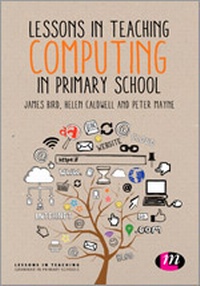
Lessons in Teaching Computing in Primary Schools
1st Edition
Published on 18. July 2014
Book
Hardback
160 pages
978-1-4462-9589-2 (ISBN)
Description
Lesson planning in line with the new Primary National Curriculum!
Structured around the number and place value sections of the programmes of study within the National Curriculum (DfE, 2013), this book provides practical examples and lesson ideas on how number and place value can be taught within the primary classroom. Children need an in-depth understanding of our number system in order to access effectively other elements of the number curriculum; this is an area of maths that is a high focus throughout the primary curriculum. The accompanying commentary before and after each lesson plan, informs some of the decisions that you will make as part of the planning process. Potential challenges associated with the lesson, including common errors and misconceptions children encounter are also discussed. The authors recognise that each class is unique and so you will find suggestions after each lesson on how it can be adapted and developed to suit your teaching needs. Did you know that this book is part of the Lessons in Teaching series?
Table of Contents Teaching the national curriculum for mathematics / Teaching number and place value / Planning: telling the 'story' of the lesson / Year 1: One more than, one less than / year 2: Place value / Year 2: Using <> and = signs / Year 3: Patterns when counting in multiples / Year 4: Negative numbers / Year 4: Roman Numerals / Year 5: Big numbers / Year 6: Understanding decimals / Year 6: Reading scales / Moving on / Glossary of terms / Models, images and practical resources
WHAT IS THE LESSONS IN TEACHING SERIES?
Suitable for any teacher at any stage of their career, the books in this series are packed with great ideas for teaching engaging, outstanding lessons in your primary classroom. The Companion Website accompanying the series includes extra resources including tips, lesson starters, videos and Pinterest boards.
Books in this series: Lessons in Teaching Grammar in Primary Schools, Lessons in Teaching Computing in Primary Schools, Lessons in Teaching Number and Place Value in Primary Schools, Lessons in Teaching Reading Comprehension in Primary Schools, Lesson in Teaching Phonics in Primary Schools
Structured around the number and place value sections of the programmes of study within the National Curriculum (DfE, 2013), this book provides practical examples and lesson ideas on how number and place value can be taught within the primary classroom. Children need an in-depth understanding of our number system in order to access effectively other elements of the number curriculum; this is an area of maths that is a high focus throughout the primary curriculum. The accompanying commentary before and after each lesson plan, informs some of the decisions that you will make as part of the planning process. Potential challenges associated with the lesson, including common errors and misconceptions children encounter are also discussed. The authors recognise that each class is unique and so you will find suggestions after each lesson on how it can be adapted and developed to suit your teaching needs. Did you know that this book is part of the Lessons in Teaching series?
Table of Contents Teaching the national curriculum for mathematics / Teaching number and place value / Planning: telling the 'story' of the lesson / Year 1: One more than, one less than / year 2: Place value / Year 2: Using <> and = signs / Year 3: Patterns when counting in multiples / Year 4: Negative numbers / Year 4: Roman Numerals / Year 5: Big numbers / Year 6: Understanding decimals / Year 6: Reading scales / Moving on / Glossary of terms / Models, images and practical resources
WHAT IS THE LESSONS IN TEACHING SERIES?
Suitable for any teacher at any stage of their career, the books in this series are packed with great ideas for teaching engaging, outstanding lessons in your primary classroom. The Companion Website accompanying the series includes extra resources including tips, lesson starters, videos and Pinterest boards.
Books in this series: Lessons in Teaching Grammar in Primary Schools, Lessons in Teaching Computing in Primary Schools, Lessons in Teaching Number and Place Value in Primary Schools, Lessons in Teaching Reading Comprehension in Primary Schools, Lesson in Teaching Phonics in Primary Schools
Reviews / Votes
This book provides subject knowledge, takes a look at effective teaching of computing in primary schools and provides high quality exemplary lessons. The lessons are accompanied by analysis of what makes them good and this useful approach gives teachers a springboard for preparing theirn own computing lessons, armed with the confidence that what they are doing really works. The book includes algorithms , programming and digital content for KS1 and programming, physical computing, networks, digital information and technology for KS2. Written by highly experienced authors, the book encourages thinking through its lesson plans, discussions and activities. -- Parents in TouchMore details
Series
Language
English
Place of publication
Exeter
United Kingdom
Publishing group
Sage Publications Ltd
Target group
Professional and scholarly
Dimensions
Height: 246 mm
Width: 171 mm
Weight
454 gr
ISBN-13
978-1-4462-9589-2 (9781446295892)
Copyright in bibliographic data and cover images is held by Nielsen Book Services Limited or by the publishers or by their respective licensors: all rights reserved.
Schweitzer Classification
Other editions
New editions
James Bird | Helen Caldwell | Peter Mayne
Lessons in Teaching Computing in Primary Schools
Book
04/2017
2nd Edition
Learning Matters Ltd
€128.80
Shipment within 15-20 days
Persons
Helen Caldwell is the curriculum lead for Primary Computing in Teacher Education at the University of Northampton. Her teaching covers the use of technology across primary subjects, implementing the computing curriculum and assistive technologies for SEN.
Content
Algorithms and computational thinking in Key Stage 1
Programming in KS1
Manipulating digital data in KS1
Programming in KS2
Physical Computing in KS2
Understanding computer networks in KS2
Searching wisely for digital information in KS2 - Adam Scribbans
Using technology purposefully in KS2
Extending computing to meet individual needs in KS2 - Sway Grantham and Alison Witts
Embedding computational thinking: moving from graphical to text-based languages - Mark Dorling
Programming in KS1
Manipulating digital data in KS1
Programming in KS2
Physical Computing in KS2
Understanding computer networks in KS2
Searching wisely for digital information in KS2 - Adam Scribbans
Using technology purposefully in KS2
Extending computing to meet individual needs in KS2 - Sway Grantham and Alison Witts
Embedding computational thinking: moving from graphical to text-based languages - Mark Dorling