

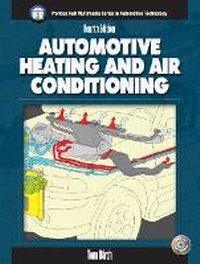
Automotive Heating and Air Conditioning
4th Edition
Published on 11. August 2005
Book
Paperback/Softback
528 pages
978-0-13-118491-6 (ISBN)
Description
Extensively illustrated, clearly written, and state-of-the-art in focus, this comprehensive MHVAC manual is ideal for both novice and advanced technicians. ASE-based in coverage, it focuses on the generic theory that underlies the operation, diagnosis, and repair of the MHVAC units and subassemblies found in the many makes and types of vehicles students will likely encounter on the job. Features 52 Real-World Fixes (case studies) showing how technicians have solved and repaired difficult problems, and 85 Service Tips (procedures that can bring a job to completion faster or ensure a more thorough repair). The volume has the support of much of the RVAC and Santech Industries cooling system repair industry. KEY TOPICS: Complete coverage of the theory, service and repair aspects of automotive heating and air conditioning. Also includes an index for the "How to Service Operations." MARKET: A reference for working automotive MVAC technicians.
More details
Edition
4th edition
Language
English
Place of publication
United States
Publishing group
Pearson Education (US)
Target group
Professional and scholarly
Dimensions
Height: 268 mm
Width: 276 mm
Thickness: 20 mm
Weight
1078 gr
ISBN-13
978-0-13-118491-6 (9780131184916)
Copyright in bibliographic data and cover images is held by Nielsen Book Services Limited or by the publishers or by their respective licensors: all rights reserved.
Schweitzer Classification
Other editions
New editions

Thomas W. Birch
Automotive Heating and Air Conditioning
Book
03/2009
5th Edition
Pearson
€59.51
Article exhausted; check for reprint
Previous edition
Thomas W. Birch
Automotive Heating and Air Conditioning
Book
10/2003
3rd Edition
Pearson
€65.71
Article exhausted; check for reprint
Content
(NOTE: Most chapters begin with Learning Objectives, and Terms to Learn sections and concludes with Chapter Quiz and Review Questions.)
1. Service Information, Fasteners, Tools, and Safety.
Vehicle Identification.
Service Information.
Steel Classification.
Threaded Fasteners.
Basic Tool List.
Measuring Tools.
Safety Tips for Technicians.
Electrical Cord Safety.
Fire Extinguishers.
2. Environmental and Hazardous Materials.
Introduction.
Occupational Safety and Health Act (OSHA).
Hazardous Waste.
Resource Conservation and Recovery Act (RCRA).
Clean Air Act.
Material Safety Data Sheets (MSDS).
Asbestos Exposure Hazard.
Proper Disposal.
3. Basics of Heating and Air Conditioning.
Introduction.
Heat.
Heat Measurement.
Comfort.
4. Heat Movement Theory.
Introduction.
Heat Movement.
States of Matter.
Latent and Sensible Heat.
Boiling Points.
Saturated Vapors and the Pressure-Temperature Relationship.
Pressure: Gauge and Absolute.
Refrigerants.
5. Refrigerants and the Environment.
Introduction.
Legislation.
Recovery and Recycling.
Refrigerants.
Refrigerant Safety Precautions.
6. Moving Heat: Heating and Air Conditioning Principles.
Introduction.
Heating Load.
Cooling Load.
Compression Cooling.
7. Air Conditioning Systems.
Introduction.
Low Side Operation.
High Side Operation.
Lines and Hoses.
8. Air Conditioning Systems Components.
Introduction.
Compressors.
Condensers.
Expansion Devices.
Evaporators.
Receiver-Driers and Accumulators.
Hoses and Lines.
Electrical Switches and Evaporator Temperature Controls.
Rear A/C Systems.
Aftermarket A/C Units.
9. Heating Systems.
Introduction.
Operation.
Heater Core.
Hoses.
Control Valves.
Dual Heating Systems.
Aftermarket Heating Systems.
10. Air Management Systems.
Introduction.
Cases and Ducts.
Control Head.
Rear Air Distribution Systems.
Automatic Temperature Control and Semiautomatic Temperature Control.
Rear Window Defroster.
11. HVAC System Inspection and Trouble Diagnosis Procedures.
Inspect HVAC System.
12. A/C System Inspection and Diagnosis.
Connect Gauge Set to a System.
Test System Performance.
Measure Relative Humidity.
Perform a Stress Test.
Verify Refrigerant Charge Level, Hands-On Check.
Verify Refrigerant Charge Level, Delta T.
Verify Refrigerant Charge Level, Subcooling.
Check TXV Operation.
Locate Refrigerant Leak, Electronic Detector or Soap Solution.
Locate Refrigerant Leak, Fluorescent Tracer.
Vacuum Test a Single A/C Component for Leaks.
13. Heating and Air Management Systems Inspection and Diagnosis.
Check Heater Core Circulation.
Check Heater Core for Leaks.
Troubleshoot Vacuum Control System.
14. HVAC System Electrical or Electronic Controls: Theory, Inspection, and Diagnosis, and Repair.
Measure Voltage.
Measure Voltage Drop.
Measure Resistance.
Measure Amperage Using and Inductive Pickup.
Measure Amperage Using Meter Leads.
Splice a Wire.
15. Refrigerant Service Operations.
Identify Refrigerant in a System.
Identify Presence of a Sealant.
Recover Refrigerant.
Recover Contaminated Refrigerant Without Using Recovery Unit.
Recycle Refrigerant.
Check PT Relationship.
Install an In-line Filter.
Install an In-line Filter in a Metal Line.
Determine Oil charge.
Evacuate a System.
Charge a System Using a Charging Station.
Charge a System Using a Charging Station.
Retrofit a System.
Install a Sealant.
16. A/C System Repair.
Remove a Compressor.
Replace a Compressor.
Remove a Clutch Assembly.
Replace a Clutch Assembly.
Remove a Lip-type Shaft Seal.
Replace a Lip-type Shaft Seal.
Remove a Two-part Shaft Seal.
Replace a Two-piece Shaft Seal.
Remove a Reed Valve Assembly.
Replace a Reed Valve Assembly.
Make a Rotating, Compressor Bench Check.
Make Compressor Leak Checks.
Check Oil Level in a Compressor With a Dipstick.
Check Oil Level in a Compressor Without a Dipstick.
Repair a Leaky Line Fitting, Threaded Connector.
Repair a Leaky Line Fitting, Spring Lock Connector.
Remove and Replace Refrigerant Hose or Metal Line.
Attach a Barb Fitting Using a Finger-style Crimp.
Attach a Beadlock Fitting Using a Bubble-style Crimp.
Repair a Refrigerant Hose.
Remove and Replace a Major A/C Component.
17. Cooling System Inspection, Trouble Diagnosis, and Service.
Measure Coolant Concentration and Condition Using Test Strips.
Measure Coolant Concentration Using a Refractometer.
Measure Coolant Concentration Using a Hydrometer.
Measure Coolant System Voltage.
Change Coolant.
Change Coolant Using a Coolant Exchange Unit.
Fill a Cooling System Using an Airlift Tool.
Quick Check a Belt Noise Problem.
Remove and Replace a Drive Belt, Set Tensioner.
Remove and Replace a Drive Belt, Automatic Tensioner.
Check Belt Tensioner Operation.
Remove and Replace a Hose.
Check a Cooling System.
Pressure Test a Radiator Cap, Hand Pump Tester.
Pressure Test a Cooling System, Hand Pump Tester.
Pressure Test a Cooling System, Pressure Regulator and Shop Air.
Test for Combustion Leak, Pressure Tester.
Test for Combustion Leak, Gas Bubbles.
Test for Combustion Leak, CO2 Presence.
Test a Thermostat.
Quick Check a Fan Clutch.
Test a Fan Clutch.
Test a Fan Clutch.
Test a Fan for Cavitation.
Flush a Cooling System, Handheld Flushing Gun.
Remove and Replace a Core Plug.
Check for Fan Runout.
Remove and Replace a Radiator.
Remove and Replace a Thermostat.
Remove and Replace a Water Pump.
Appendix A: ASE Certification and Task List.
Appendix B: Temperature-Pressure Charts.
Appendix C: A/C Service Procedure Documents.
Appendix D: EPA SNAP-Approved Refrigerants as Substitutes for CFC-12.
Appendix E: Potential Compressor Problems with R-134a.
Appendix F: English-Metric Conversion Table.
Appendix G: Bolt Torque Tightening Chart.
Appendix H: Full-Size Illustrations of Fittings.
Appendix I: Refrigerant Numbering System.
Glossary.
Index.
1. Service Information, Fasteners, Tools, and Safety.
Vehicle Identification.
Service Information.
Steel Classification.
Threaded Fasteners.
Basic Tool List.
Measuring Tools.
Safety Tips for Technicians.
Electrical Cord Safety.
Fire Extinguishers.
2. Environmental and Hazardous Materials.
Introduction.
Occupational Safety and Health Act (OSHA).
Hazardous Waste.
Resource Conservation and Recovery Act (RCRA).
Clean Air Act.
Material Safety Data Sheets (MSDS).
Asbestos Exposure Hazard.
Proper Disposal.
3. Basics of Heating and Air Conditioning.
Introduction.
Heat.
Heat Measurement.
Comfort.
4. Heat Movement Theory.
Introduction.
Heat Movement.
States of Matter.
Latent and Sensible Heat.
Boiling Points.
Saturated Vapors and the Pressure-Temperature Relationship.
Pressure: Gauge and Absolute.
Refrigerants.
5. Refrigerants and the Environment.
Introduction.
Legislation.
Recovery and Recycling.
Refrigerants.
Refrigerant Safety Precautions.
6. Moving Heat: Heating and Air Conditioning Principles.
Introduction.
Heating Load.
Cooling Load.
Compression Cooling.
7. Air Conditioning Systems.
Introduction.
Low Side Operation.
High Side Operation.
Lines and Hoses.
8. Air Conditioning Systems Components.
Introduction.
Compressors.
Condensers.
Expansion Devices.
Evaporators.
Receiver-Driers and Accumulators.
Hoses and Lines.
Electrical Switches and Evaporator Temperature Controls.
Rear A/C Systems.
Aftermarket A/C Units.
9. Heating Systems.
Introduction.
Operation.
Heater Core.
Hoses.
Control Valves.
Dual Heating Systems.
Aftermarket Heating Systems.
10. Air Management Systems.
Introduction.
Cases and Ducts.
Control Head.
Rear Air Distribution Systems.
Automatic Temperature Control and Semiautomatic Temperature Control.
Rear Window Defroster.
11. HVAC System Inspection and Trouble Diagnosis Procedures.
Inspect HVAC System.
12. A/C System Inspection and Diagnosis.
Connect Gauge Set to a System.
Test System Performance.
Measure Relative Humidity.
Perform a Stress Test.
Verify Refrigerant Charge Level, Hands-On Check.
Verify Refrigerant Charge Level, Delta T.
Verify Refrigerant Charge Level, Subcooling.
Check TXV Operation.
Locate Refrigerant Leak, Electronic Detector or Soap Solution.
Locate Refrigerant Leak, Fluorescent Tracer.
Vacuum Test a Single A/C Component for Leaks.
13. Heating and Air Management Systems Inspection and Diagnosis.
Check Heater Core Circulation.
Check Heater Core for Leaks.
Troubleshoot Vacuum Control System.
14. HVAC System Electrical or Electronic Controls: Theory, Inspection, and Diagnosis, and Repair.
Measure Voltage.
Measure Voltage Drop.
Measure Resistance.
Measure Amperage Using and Inductive Pickup.
Measure Amperage Using Meter Leads.
Splice a Wire.
15. Refrigerant Service Operations.
Identify Refrigerant in a System.
Identify Presence of a Sealant.
Recover Refrigerant.
Recover Contaminated Refrigerant Without Using Recovery Unit.
Recycle Refrigerant.
Check PT Relationship.
Install an In-line Filter.
Install an In-line Filter in a Metal Line.
Determine Oil charge.
Evacuate a System.
Charge a System Using a Charging Station.
Charge a System Using a Charging Station.
Retrofit a System.
Install a Sealant.
16. A/C System Repair.
Remove a Compressor.
Replace a Compressor.
Remove a Clutch Assembly.
Replace a Clutch Assembly.
Remove a Lip-type Shaft Seal.
Replace a Lip-type Shaft Seal.
Remove a Two-part Shaft Seal.
Replace a Two-piece Shaft Seal.
Remove a Reed Valve Assembly.
Replace a Reed Valve Assembly.
Make a Rotating, Compressor Bench Check.
Make Compressor Leak Checks.
Check Oil Level in a Compressor With a Dipstick.
Check Oil Level in a Compressor Without a Dipstick.
Repair a Leaky Line Fitting, Threaded Connector.
Repair a Leaky Line Fitting, Spring Lock Connector.
Remove and Replace Refrigerant Hose or Metal Line.
Attach a Barb Fitting Using a Finger-style Crimp.
Attach a Beadlock Fitting Using a Bubble-style Crimp.
Repair a Refrigerant Hose.
Remove and Replace a Major A/C Component.
17. Cooling System Inspection, Trouble Diagnosis, and Service.
Measure Coolant Concentration and Condition Using Test Strips.
Measure Coolant Concentration Using a Refractometer.
Measure Coolant Concentration Using a Hydrometer.
Measure Coolant System Voltage.
Change Coolant.
Change Coolant Using a Coolant Exchange Unit.
Fill a Cooling System Using an Airlift Tool.
Quick Check a Belt Noise Problem.
Remove and Replace a Drive Belt, Set Tensioner.
Remove and Replace a Drive Belt, Automatic Tensioner.
Check Belt Tensioner Operation.
Remove and Replace a Hose.
Check a Cooling System.
Pressure Test a Radiator Cap, Hand Pump Tester.
Pressure Test a Cooling System, Hand Pump Tester.
Pressure Test a Cooling System, Pressure Regulator and Shop Air.
Test for Combustion Leak, Pressure Tester.
Test for Combustion Leak, Gas Bubbles.
Test for Combustion Leak, CO2 Presence.
Test a Thermostat.
Quick Check a Fan Clutch.
Test a Fan Clutch.
Test a Fan Clutch.
Test a Fan for Cavitation.
Flush a Cooling System, Handheld Flushing Gun.
Remove and Replace a Core Plug.
Check for Fan Runout.
Remove and Replace a Radiator.
Remove and Replace a Thermostat.
Remove and Replace a Water Pump.
Appendix A: ASE Certification and Task List.
Appendix B: Temperature-Pressure Charts.
Appendix C: A/C Service Procedure Documents.
Appendix D: EPA SNAP-Approved Refrigerants as Substitutes for CFC-12.
Appendix E: Potential Compressor Problems with R-134a.
Appendix F: English-Metric Conversion Table.
Appendix G: Bolt Torque Tightening Chart.
Appendix H: Full-Size Illustrations of Fittings.
Appendix I: Refrigerant Numbering System.
Glossary.
Index.