

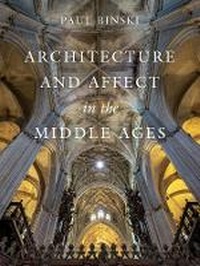
Architecture and Affect in the Middle Ages
1st Edition
Published on 29. October 2024
Book
Hardback
264 pages
978-0-520-40299-7 (ISBN)
Description
How did people living in the Middle Ages respond to spectacular buildings, such as the Gothic cathedrals? While contemporary scholarship places a large emphasis on the emotional content of Western medieval figurative art, the emotion of architecture has largely gone undiscussed. In a radical new approach, Architecture and Affect in the Middle Ages explores the relationship between medieval buildings and the complexity of experience they engendered. Paul Binski examines long-standing misconceptions about the way viewers responded to medieval architecture across Western Europe and in Byzantine and Arabic culture between late antiquity and the end of the medieval period. He emphasizes the importance of the experience itself within these built environments, essentially places of action, space, and structure but also, crucially, of sound and emotion.
Reviews / Votes
"[A] fascinating new book." * Times Literary Supplement *More details
Series
Edition
First Edition
Language
English
Place of publication
Berkerley
United States
Target group
Professional and scholarly
Product notice
Cloth over boards
Illustrations
58 color images
Dimensions
Height: 203 mm
Width: 152 mm
Thickness: 23 mm
Weight
590 gr
ISBN-13
978-0-520-40299-7 (9780520402997)
Copyright in bibliographic data and cover images is held by Nielsen Book Services Limited or by the publishers or by their respective licensors: all rights reserved.
Schweitzer Classification
Other editions
Additional editions
Paul Binski
Architecture and Affect in the Middle Ages
E-Book
10/2024
1st Edition
Naval Institute Press
€49.49
Available for download
Person
Paul Binski is Emeritus Professor of the History of Medieval Art at Cambridge University, a Fellow of the British Academy, and a Corresponding Fellow of the Medieval Academy of America.
Content
Contents
Preface and Acknowledgments
Introduction
Making "Sense" of Medieval Architecture
Language, Experience, and Decorum
Gothic Sublimity?
Introducing the Argument
1. Admiratio
Metaphor and Aspect
Columns and Import: Th e Backstory
Great Churches and Rhetorical Occasions
Eusebius: Jerusalem and Tyre
Wonder
Megalomania
2. Tristitia-Laetitia
The Road to Compostela and the Banishment of Grief
Orphic Concord and the Gothic Organum
3. Terror
The Place of Fear
Fruitful Fear
The Thundering Ark: Organs, Bells
4. Sublimia
Suger, Jean de Jandun, Photius
Gothic Angelization and Exhilaration
Utterance
5. Claritas, Jucunditas, Nobilitas
Claritas
Jucunditas
Light, Color, and Countenance
Nobilitas
Conclusion: Spectacle, Genre, and Imitation
Spectacle
Implications and Challenges
Genre
Imitation
Notes
Bibliography
List of Illustrations
Index
Preface and Acknowledgments
Introduction
Making "Sense" of Medieval Architecture
Language, Experience, and Decorum
Gothic Sublimity?
Introducing the Argument
1. Admiratio
Metaphor and Aspect
Columns and Import: Th e Backstory
Great Churches and Rhetorical Occasions
Eusebius: Jerusalem and Tyre
Wonder
Megalomania
2. Tristitia-Laetitia
The Road to Compostela and the Banishment of Grief
Orphic Concord and the Gothic Organum
3. Terror
The Place of Fear
Fruitful Fear
The Thundering Ark: Organs, Bells
4. Sublimia
Suger, Jean de Jandun, Photius
Gothic Angelization and Exhilaration
Utterance
5. Claritas, Jucunditas, Nobilitas
Claritas
Jucunditas
Light, Color, and Countenance
Nobilitas
Conclusion: Spectacle, Genre, and Imitation
Spectacle
Implications and Challenges
Genre
Imitation
Notes
Bibliography
List of Illustrations
Index