

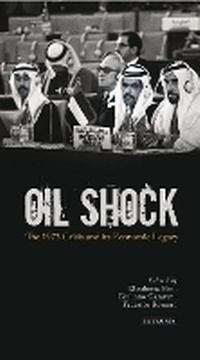
Oil Shock
The 1973 Crisis and its Economic Legacy
Published on 27. May 2016
Book
Hardback
288 pages
978-1-78453-556-8 (ISBN)
Description
The 1973 'Oil Shock' is considered a turning point in the history of the twentieth century. At the time it seemed to mark a definitive shift from the era of low priced oil to the era of expensive oil. For most Western industrialized countries, it became the symbolic marker of the end of an era. For many oil producers, it translated into an unprecedented control over their energy resources, and completed the process of decolonization, leading to a profound redefinition of international relations.This book provides an analysis of the crisis and its global political and economic impact. It features contributions from a range of perspectives and approaches, including political, economic, environmental, international and social history. The authors examine the origins of what was defined as an 'oil revolution' by the oil-producing countries, as well as the far-reaching effects of the 'shock' on the Cold War and decolonization, on international energy markets and the global economy. In doing so, they help place the event in its historical context as a key moment in the transformation of the international economy and of North-South relations.
Reviews / Votes
'The legacies of the oil price increases of the 1970s have never quite stopped unfolding, and continue four decades later to affect us in diverse ways. Oil Shock offers a timely and panoramic survey of the origins and consequences of 1973 at a time when oil, the politics of oil, and the Middle-east are once again back in the headlines.' - Gopalan Balachandran, Professor of International History and Politics, The Graduate Institute Geneva; "This superb collection of essays provides a comprehensive analysis of the 1973 Oil Crisis. Relying on a rich archival research and examining the multiple drivers, facets and reverberations of the crisis, the volume offers important information and insightful interpretations on a pivotal moment in the history of modern international relations. This is essential reading for anyone interested in the 1970s, the Cold War, and the origins of the current global energy regime." - Mario Del Pero, Professor of International History, Science Po Paris; "This book provides an important and valuable contribution to the understanding of the oil shock in 1973 and its long lasting consequences." - Einar Lie, Professor of Economic History, University of Oslo; "Fifty years down the line, the key factors that gave rise to the First Oil Shock (the Middle East in flames, the dearth of "easy oil") are still with us, and yet this anniversary was passed over in near total silence in both the media and academia. This valuable book is the crystallization of the commendable effort on the part of a group of Italian academics to make sure that hard questions about the First Oil Shock continue to be asked." - Juan Carlos Buoe, Research Fellow, Oxford Institute for Energy StudiesMore details
Language
English
Place of publication
United Kingdom
Publishing group
Bloomsbury Publishing PLC
Target group
College/higher education
Dimensions
Height: 218 mm
Width: 146 mm
Thickness: 22 mm
Weight
480 gr
ISBN-13
978-1-78453-556-8 (9781784535568)
Copyright in bibliographic data and cover images is held by Nielsen Book Services Limited or by the publishers or by their respective licensors: all rights reserved.
Schweitzer Classification
Other editions
Additional editions
Elisabetta Bini | Giuliano Garavini | Federico Romero
Oil Shock
The 1973 Crisis and its Economic Legacy
E-Book
05/2016
1st Edition
I.B. Tauris
€32.99
Available for download
Elisabetta Bini | Giuliano Garavini | Federico Romero
Oil Shock
The 1973 Crisis and its Economic Legacy
E-Book
05/2016
I.B. Tauris
€32.99
Available for download
Persons
Elisabetta Bini is Research Fellow at the University of Trieste. She is the author of La potente benzina italiana: Guerra fredda e consumi di massa tra Italia, Stati Uniti e Terzo mondo (1945-1973) and the editor of Working for Oil: Comparative Social Histories of Labor in Petroleum (with Touraj Atabaki and Kaveh Ehsani). Giuliano Garavini is FIRB Research Fellow at the University of Padua and Senior Research Fellow at New York University Abu Dhabi. He is the author of After Empires: European Integration, Decolonization and the Challenge from the Global South, 1957-1986.Federico Romero is Professor of History of Post-War European Cooperation and Integration at the European University Institute (EUI) in Florence.
Content
Introduction by Elisabetta Bini, Giuliano Garavini and Federico Romero
PART 1: ORIGINS
1. The Shocking History of Oil by Bernard Mommer
2. 'First Class Brouhaha': Henry Kissinger and Oil Power in the 1970s by Christopher R. W. Dietrich
3. Iraq and the Oil Cold War: A superpower struggle and the end of Iraq Petroleum Company, 1958-1972 by Philippe Tristani
4. Eight Squeezed Sisters: The Oil Majors and the Coming of the 1973 Oil Crisis by Francesco Petrini
PART 2: CONSEQUENCES5. Shifting Sands: The 1973 Oil Shock and the Expansion of Non-OPEC Supply by Tyler Priest
6. The OECD Oil Committee and the international search for reinforced energy consumer cooperation, 1972-1973 by Marloes Beers
7. Learning to 'Recycle': Petrodollars and the West, 1973-75 by William Glenn Gray
8. Energy Hinge? Oil Shock and Greening American Consumer Culture since the 1970s by Brian Black
9. Energy and Soviet Economic Integration: Foundations of a Future Petrostate by Oscar Sanchez-Sibony
10. Nuclear Energy and the Rise of Environmentalism in the United States by Martin V. Melosi
PART 1: ORIGINS
1. The Shocking History of Oil by Bernard Mommer
2. 'First Class Brouhaha': Henry Kissinger and Oil Power in the 1970s by Christopher R. W. Dietrich
3. Iraq and the Oil Cold War: A superpower struggle and the end of Iraq Petroleum Company, 1958-1972 by Philippe Tristani
4. Eight Squeezed Sisters: The Oil Majors and the Coming of the 1973 Oil Crisis by Francesco Petrini
PART 2: CONSEQUENCES5. Shifting Sands: The 1973 Oil Shock and the Expansion of Non-OPEC Supply by Tyler Priest
6. The OECD Oil Committee and the international search for reinforced energy consumer cooperation, 1972-1973 by Marloes Beers
7. Learning to 'Recycle': Petrodollars and the West, 1973-75 by William Glenn Gray
8. Energy Hinge? Oil Shock and Greening American Consumer Culture since the 1970s by Brian Black
9. Energy and Soviet Economic Integration: Foundations of a Future Petrostate by Oscar Sanchez-Sibony
10. Nuclear Energy and the Rise of Environmentalism in the United States by Martin V. Melosi