

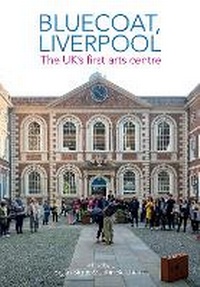
Bluecoat, Liverpool
The UK's first arts centre
Will be published approx. on 23. May 2020
Book
Paperback/Softback
272 pages
978-1-78962-163-1 (ISBN)
Description
Bluecoat is a
unique and much-loved Liverpool institution, its oldest city centre building. This
book tells the fascinating story of its transformation from charity school to
contemporary arts centre, the UK's first. Its early 18th century origins
shed light on the religious and maritime mercantile environment of the growing
port, whose merchants supported the school. Echoes from then are revealed in
themes explored by artists in the 20th century, including slavery
and colonial legacies.
The predominant
focus is on an inclusive building for the arts, starting with colourful bohemian
society, the Sandon, who established an artistic colony in 1907, hosting
significant exhibitions by the Post-Impressionists and many leading modern
British artists. Bluecoat Society of Arts emerged as the building's custodians,
paving the way for the arts centre which, despite financial struggles and wartime
bomb damage, survived and continues to play a prominent role in Liverpool's and
the UK's culture.
Bluecoat is described
as where 'village hall meets the avant-garde'. In its rich story, Picasso,
Stravinsky, Yoko Ono, Captain Beefheart, Simon Rattle and the inspirational
Fanny Calder are just some of the names encountered, as key strands, including
music, visual art, performance and the building's tenants, are traced.
unique and much-loved Liverpool institution, its oldest city centre building. This
book tells the fascinating story of its transformation from charity school to
contemporary arts centre, the UK's first. Its early 18th century origins
shed light on the religious and maritime mercantile environment of the growing
port, whose merchants supported the school. Echoes from then are revealed in
themes explored by artists in the 20th century, including slavery
and colonial legacies.
The predominant
focus is on an inclusive building for the arts, starting with colourful bohemian
society, the Sandon, who established an artistic colony in 1907, hosting
significant exhibitions by the Post-Impressionists and many leading modern
British artists. Bluecoat Society of Arts emerged as the building's custodians,
paving the way for the arts centre which, despite financial struggles and wartime
bomb damage, survived and continues to play a prominent role in Liverpool's and
the UK's culture.
Bluecoat is described
as where 'village hall meets the avant-garde'. In its rich story, Picasso,
Stravinsky, Yoko Ono, Captain Beefheart, Simon Rattle and the inspirational
Fanny Calder are just some of the names encountered, as key strands, including
music, visual art, performance and the building's tenants, are traced.
Reviews / Votes
'Bluecoat is in large measure a celebratory volume, designed to draw attention to the many achievements of the institution and concluding with a heartfelt plea for further support in difficult times.'William Whyte, Northern History
More details
Language
English
Place of publication
Liverpool
United Kingdom
Dimensions
Height: 246 mm
Width: 189 mm
ISBN-13
978-1-78962-163-1 (9781789621631)
Copyright in bibliographic data and cover images is held by Nielsen Book Services Limited or by the publishers or by their respective licensors: all rights reserved.
Schweitzer Classification
Persons
Bryan Biggs has worked at Bluecoat, Liverpool's contemporary arts centre, for over four decades, curating numerous exhibitions, and live art programmes. In 2017 he directed Bluecoat's tercentenary year. He writes on contemporary culture and is co-editor, with Julie Sheldon of Art in a City Revisited (Liverpool University Press, 2009) and, with John Belchem, of Liverpool City of Radicals (Liverpool University Press, 2011). John Belchem, Emeritus Professor of History at the University of Liverpool, is acknowledged as Liverpool's leading historian, whose many publications include editing the Liverpool 800 book, published on the city's 800th anniversary. He recently contributed to the Peterloo Massacre bicentenary programme.