

Southern Exposure
The Overlooked Architecture of Chicago's South Side
Published on 30. October 2019
Book
Paperback/Softback
192 pages
978-0-8101-4098-1 (ISBN)
Description
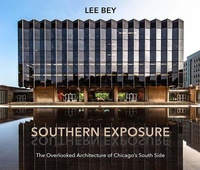
Southern Exposure: The Overlooked Architecture of Chicago's South Side is the first book devoted to the South Side's rich and unfairly ignored architectural heritage. With lively, insightful text and gallery-quality color photographs by noted Chicago architecture expert Lee Bey, Southern Exposure documents the remarkable and largely unsung architecture of the South Side. The book features an array of landmarks-from a Space Age dry cleaners to a nineteenth-century lagoon that meanders down the middle of a working-class neighborhood street-that are largely absent from arts discourse, in no small part because they sit in a predominantly African American and Latino section of town that's better known as a place of disinvestment, abandonment, and violence.
Inspired by Bey's 2017 Chicago Architecture Biennial exhibition, Southern Exposure visits sixty sites, including lesser-known but important work by luminaries such as Jeanne Gang, Frank Lloyd Wright, and Eero Saarinen, as well as buildings by pioneering black architects such as Walter T. Bailey, John Moutoussamy, and Roger Margerum.
Pushing against the popular narrative that depicts Chicago's South Side as an architectural wasteland, Bey shows beautiful and intact buildings and neighborhoods that reflect the value-and potential-of the area. Southern Exposure offers much to delight architecture aficionados and writers, native Chicagoans and guests to the city alike.
Inspired by Bey's 2017 Chicago Architecture Biennial exhibition, Southern Exposure visits sixty sites, including lesser-known but important work by luminaries such as Jeanne Gang, Frank Lloyd Wright, and Eero Saarinen, as well as buildings by pioneering black architects such as Walter T. Bailey, John Moutoussamy, and Roger Margerum.
Pushing against the popular narrative that depicts Chicago's South Side as an architectural wasteland, Bey shows beautiful and intact buildings and neighborhoods that reflect the value-and potential-of the area. Southern Exposure offers much to delight architecture aficionados and writers, native Chicagoans and guests to the city alike.
Reviews / Votes
Southern Exposure is a 35mm love story. Just like relationships, the buildings that Bey photographs reflect our affection and our neglect, and remind us of why we are so devoted to Chicago's South Side. Through these truly awesome images, we are inspired to stop, behold, and not take these treasures for granted." -Mary Pattillo, author of Black on the Block: The Politics of Race and Class in the CityMore details
Series
Language
English
Place of publication
Evanston
United States
Target group
Professional and scholarly
Product notice
Paperback (trade)
Unsewn / adhesive bound
Illustrations
74 colour images
Dimensions
Height: 213 mm
Width: 251 mm
Thickness: 13 mm
Weight
658 gr
ISBN-13
978-0-8101-4098-1 (9780810140981)
Copyright in bibliographic data and cover images is held by Nielsen Book Services Limited or by the publishers or by their respective licensors: all rights reserved.
Schweitzer Classification
Persons
Amanda Williams is a visual artist who trained as an architect. Using colour, she highlights the complexities of how we understand the value of race and class in the built environment. Williams has been critically acclaimed and is often asked to speak on the subject of art in the public realm. Her works have been exhibited widely and are included in the permanent collections of the Art Institute of Chicago and the Museum of Modern Art in New York. She lives and works on the South Side of Chicago.
Lee Bey is a photographer, writer, lecturer, and consultant who documents and interprets the built environment-and the often complex political, social, and racial forces that shape spaces and places. His writing on architecture and urban design has been featured in Architect, Chicago magazine, Architectural Record, and many news outlets. His photography has appeared in Chicago Architect, Old-House Journal, CITE, and in international design publications, including Bauwelt and Modul/r. A former Chicago Sun-Times architecture critic, Bey is also a senior lecturer at the School of the Art Institute of Chicago and served as deputy chief of staff for urban planning under former Chicago mayor Richard M. Daley.
Lee Bey is a photographer, writer, lecturer, and consultant who documents and interprets the built environment-and the often complex political, social, and racial forces that shape spaces and places. His writing on architecture and urban design has been featured in Architect, Chicago magazine, Architectural Record, and many news outlets. His photography has appeared in Chicago Architect, Old-House Journal, CITE, and in international design publications, including Bauwelt and Modul/r. A former Chicago Sun-Times architecture critic, Bey is also a senior lecturer at the School of the Art Institute of Chicago and served as deputy chief of staff for urban planning under former Chicago mayor Richard M. Daley.
Content
Acknowledgments
Introduction
Chapter One: Saving Bronzeville
Chapter Two: 142 Square Miles: Life, History and Architecture on Chicago's South Side
Chapter Three: A Curious Mix of the Ordinary and Extraordinary
Chapter Four: Come Together Now: Schools, Churches and Public Buildings
Chapter Five: To Live and Buy on the South Side: Residential and Commercial Architecture
Chapter Six: The South Side at Rest and Play: Parks and Open Space
Chapter Seven: The Lost South Side
Epilogue
Introduction
Chapter One: Saving Bronzeville
Chapter Two: 142 Square Miles: Life, History and Architecture on Chicago's South Side
Chapter Three: A Curious Mix of the Ordinary and Extraordinary
Chapter Four: Come Together Now: Schools, Churches and Public Buildings
Chapter Five: To Live and Buy on the South Side: Residential and Commercial Architecture
Chapter Six: The South Side at Rest and Play: Parks and Open Space
Chapter Seven: The Lost South Side
Epilogue