

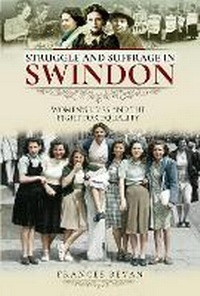
Struggle and Suffrage in Swindon
Women's Lives and the Fight for Equality
Published on 28. May 2019
Book
Paperback/Softback
168 pages
978-1-5267-1821-1 (ISBN)
Description
As the industrial revolution and the coming of the railways transformed the Wiltshire countryside Swindon women were on the front line of change, shaping the new industrial town and transforming the old market one.
Incomers arrived from the great railway centres across the country to create a welcoming, tolerant and creative community with women's contribution at its heart.
Following the incorporation of Old and New Swindon in 1900 innovative women stepped up to the plate; women like Swindon born suffragette Edith New who challenged political conventions and Emma Noble, Swindon's first female councillor, who campaigned to improve living conditions in the town.
During two world wars Swindon women worked in the railway factory in jobs once considered beyond their strength and endurance. Women supported the war effort on the home front, volunteering in what little spare time they had.
Women such as teachers Mary Slade and Kate Handley who during the First World War headed the Prisoners of War Committee, which sent food parcels to soldiers from the Wiltshire Regiment held in German prisoner of war camps. Mary Slade was awarded the MBE in 1920 but her work didn't end there. Mary Slade and her team continued to support the bereaved families beyond the armistice and through to the end of the Second World War.
The story of Swindon women includes artists and actresses, political activists and social reformers and the ordinary women who worked in the factories, raised their children and made a difference.
Incomers arrived from the great railway centres across the country to create a welcoming, tolerant and creative community with women's contribution at its heart.
Following the incorporation of Old and New Swindon in 1900 innovative women stepped up to the plate; women like Swindon born suffragette Edith New who challenged political conventions and Emma Noble, Swindon's first female councillor, who campaigned to improve living conditions in the town.
During two world wars Swindon women worked in the railway factory in jobs once considered beyond their strength and endurance. Women supported the war effort on the home front, volunteering in what little spare time they had.
Women such as teachers Mary Slade and Kate Handley who during the First World War headed the Prisoners of War Committee, which sent food parcels to soldiers from the Wiltshire Regiment held in German prisoner of war camps. Mary Slade was awarded the MBE in 1920 but her work didn't end there. Mary Slade and her team continued to support the bereaved families beyond the armistice and through to the end of the Second World War.
The story of Swindon women includes artists and actresses, political activists and social reformers and the ordinary women who worked in the factories, raised their children and made a difference.
More details
Series
Language
English
Place of publication
Barnsley
United Kingdom
Publishing group
Pen & Sword Books Ltd
Illustrations
25 black and white illustrations
Dimensions
Height: 234 mm
Width: 156 mm
ISBN-13
978-1-5267-1821-1 (9781526718211)
Copyright in bibliographic data and cover images is held by Nielsen Book Services Limited or by the publishers or by their respective licensors: all rights reserved.
Schweitzer Classification
Other editions
Additional editions
E-Book
11/2020
Pen & Sword History
€7.48
Available for download
Person
Frances Bevan is herself an incomer who moved to Swindon more than 30 years ago. Since then she has studied the lives of Swindon women, discovering both the ordinary and the exceptional contributions they have made to the history of the town. Frances also conducts guided walks at Radnor Street Cemetery and other local churchyards telling the stories of the women of Swindon.