

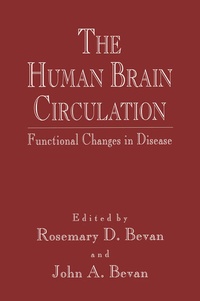
The Human Brain Circulation
Functional Changes in Disease
Published on 12. October 2012
Book
Paperback/Softback
XIV, 456 pages
978-1-4612-6700-3 (ISBN)
Description
Much of our knowledge of the cerebral circulation has been derived from studies of species other than human. There is increas ing recognition of species differences and concern that studies in animals may be misleading if unquestioningly applied to the human. A dramatic example of this occurred in the early his tory of the study of the circulation of the brain. Galen of Pergamo (131-201 AD) described a rete mirabile or "marvelous network" of blood vessels at the base of the human skull that he must have derived from observations of certain animals. This vascular structure was supplied by the carotid arteries which, after penetrating the cranium,"are divided into a large number of very small and thin branches in the region between the cranium and the dura matter. Then . . . intersecting one another they give the impression of having forgotten their way in the brain. But this is not the case. In fact, these numerous arteries rejoin and unite like the roots of a tree trunk. . . . " The authority of Galen's writings dominated scientific thought for about 1500 years. His description of a rete was unques tioned by Leonardo de Vinci, who included it in his anatomical sketches. William Harvey's remarkable observations led to his definitive account of the circulation of blood.
Reviews / Votes
...a worthwhile book that makes a genuine attempt to address the complexities of human cerebrovascular physiology...nowhere else will one find this concentration of recent material addressed specifically to the physiology of human cerebral vasculature.-Journal of NeurosurgeryMore details
Series
Edition
Softcover reprint of the original 1st ed. 1994
Language
English
Place of publication
Totowa
United States
Target group
Professional and scholarly
Professional/practitioner
Illustrations
XIV, 456 p.
Dimensions
Height: 229 mm
Width: 152 mm
Thickness: 26 mm
Weight
683 gr
ISBN-13
978-1-4612-6700-3 (9781461267003)
DOI
10.1007/978-1-4612-0303-2
Schweitzer Classification
Other editions
Additional editions
E-Book
12/2012
Humana
€106.99
Available for download
Book
07/1994
1st Edition
Humana Press Inc.
€160.49
Shipment within 15-20 days
Content
CH. 1. Positron Emission Tomography of the Brain: In Vivo Techniques for Studying Cerebrovascular Pathophysiology.- CH. 2. Some Features of the Functional Anatomy of Human Cerebral Blood Vessels.- CH. 3. Neural Pathways to the Cerebral Circulation in Humans.- CH. 4. Neuropeptides in Human Cerebral Arteries: Occurrence, Characterization, and Receptors.- CH. 5. Norepinephrine and Neuropeptide Y as Neurotransmitters to Cerebral Arteries.- CH. 6. Putative Transmitters in Cerebral Neurogenic Vasodilation.- CH. 7. Is There a Neurogenic Influence on the Diameter of Human Small Pial Arteries?.- CH. 8. Autonomic Receptors in Human Brain Arteries.- CH. 9. Cholinergic Receptors in Human Brain Arteries and Microvessels: Alterations in Alzheimer's Disease.- CH. 10. Peptide Receptors in Human Brain Arteries.- CH. 11. Ion Channels in Cerebral Arteries.- CH. 12. A Comparison of the Properties of EDRF, Nitric Oxide, and S-Nitrocysteine.- CH. 13. Endothelium-Dependent Contraction of Cerebral Arteries.- CH. 14. Myogenic (Stretch-Induced) and Flow-Regulated Tone of Human Pial Arteries.- CH. 15. Mechanisms of Hypoxic and Hypercapnic Cerebral Vasodilatation.- CH. 16. Regulation of Pituitary Circulation.- CH. 17. Aspects of the Choroid Plexus-Cerebrospinal Fluid System.- CH. 18. Collateral Pial Arteries.- CH. 19. The Intracerebral Circulation.- CH. 20. Cerebral Circulation of the Fetus and Newborn.- CH. 21. Functional Changes in the Aging Cerebrovasculature.- CH. 22. Species Differences in Pial Functional Characteristics.- CH. 23. Regulation of the Circulation of the Brain: A Systemic Approach.- CH. 24. Vascular Tissue Preservation Techniques.- CH. 25. In Vitro Small Artery Methodology.- CH. 26. Molecular Aspects of Endothelial Function in Hemostasis, Inflammation, and Thrombosis.- CH. 27.The Role of 21-Aminosteroids in Cerebral Ischemia and Reperfusion.- CH. 28. Therapeutic Potential of L-Arginine, a Precursor of Nitric Oxide, in Focal Cerebral Ischemia.- CH. 29. Acute Vasospasm and Subarachnoid Hemorrhage: Role of Protein Kinase C.- CH. 30. Chronic Cerebrovasospasm: Role of Increased Vascular Wall Rigidity.- CH. 31. Feeding Artery Rigidity and Hemodynamics of Cerebral Arteriovenous Malformations.- CH. 32. Effects of Acute Hypertension on Pial Artery Tone.- CH. 33. Changes in the Cerebral Circulation in Chronic Hypertension.- CH. 34. Can Vascular Headaches Be Triggered by the Autonomic Nervous System?.- CH. 35. Importance of Cerebrovascular Receptors in Cluster Headache.