

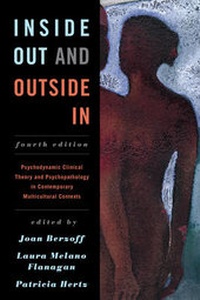
Inside Out and Outside In
Psychodynamic Clinical Theory and Psychopathology in Contemporary Multicultural Contexts
4th Edition
Published on 8. February 2016
Book
Hardback
568 pages
978-1-4422-3683-7 (ISBN)
Description
Inside Out and Outside In has established itself as a foundational book for mental health practitioners in a variety of disciplines who work with clients in complex social environments. It is unique in its focus on the forces that shape people from within and also from their social worlds, with sensitivity to race, gender, sexuality, and class.
The fourth edition features new material and revisions throughout while maintaining the respectful and accessible style for which the book is known. A new chapter on DSM-5 explains its history, social construction, and the most significant changes, such as the configurations of personality disorders and schizophrenia. A new chapter on Cognitive Behavioral Theory and Practice explains the rise in CBT practice, strengths and weaknesses in the approach, and how practitioners can weave it with other theories successfully. In addition to the new chapters, this edition contains new content on gay, lesbian, and transgender people; new case studies representing differences in age, class, culture, race, sexual orientation, and gender; examples on treating clients individually and in groups; new material on infant development; new research on neurobiology and mindfulness, such as mindfulness and survivor guilt; and more.
The fourth edition of Inside Out and Outside In is an up-to-date and essential resource for mental health professionals and students practicing in today's increasingly complex environment.
The fourth edition features new material and revisions throughout while maintaining the respectful and accessible style for which the book is known. A new chapter on DSM-5 explains its history, social construction, and the most significant changes, such as the configurations of personality disorders and schizophrenia. A new chapter on Cognitive Behavioral Theory and Practice explains the rise in CBT practice, strengths and weaknesses in the approach, and how practitioners can weave it with other theories successfully. In addition to the new chapters, this edition contains new content on gay, lesbian, and transgender people; new case studies representing differences in age, class, culture, race, sexual orientation, and gender; examples on treating clients individually and in groups; new material on infant development; new research on neurobiology and mindfulness, such as mindfulness and survivor guilt; and more.
The fourth edition of Inside Out and Outside In is an up-to-date and essential resource for mental health professionals and students practicing in today's increasingly complex environment.
Reviews / Votes
Inside Out and Outside In is a rare and stellar example of how to make an outstanding textbook even better. This exceptional classic work has been updated for the DSM-5, is inclusive of a wide range of diagnostic categories, provides rich examples representing all aspects of diversity, and showcases the application of contemporary psychodynamic theories at their finest. -- Carole Tosone, New York University Silver School of Social Work; editor-in-chief of Clinical Social Work Journal In this era in which clinical training is experiencing such significant pressure, this is an indispensable, accessible book, connecting contemporary generations of social workers to key aspects of our theoretical and conceptual legacy and knowledge base, while underscoring and honoring our profession's historical focus on social justice and intersectionality. -- Caroline Rosenthal Gelman, Silberman School of Social Work at Hunter College, City University of New York This volume's continuing attention to our inside lives, 'outside' lives, and the interplay of the two is enhanced by its ever-increasing attention to multiple dimensions of diversity. Written for helping professionals, it is the best and most accessible resource I know of for learning about the major lines of psychodynamic thinking from its origins to the present, with case examples from practice throughout. -- Jeane W. Anastas, Silver School of Social Work, New York University; past president of the National Association of Social Workers Comprehensive in its breadth of clinical theories, with meaningful critique and application of the cross-cultural dimension, this work is invaluable to clinical training and education. It is not only useful for the beginning clinician, but an important reference for the more seasoned professional. -- Mario L. Starc, The Sanville Institute for Clinical Social Work and PsychotherapyMore details
Edition
Fourth Edition
Language
English
Place of publication
Lanham, MD
United States
Target group
College/higher education
Professional and scholarly
US School Grade: From College Freshman to College Graduate Student
Illustrations
Illustrations; Tables
Dimensions
Height: 237 mm
Width: 157 mm
Thickness: 26 mm
Weight
776 gr
ISBN-13
978-1-4422-3683-7 (9781442236837)
Copyright in bibliographic data and cover images is held by Nielsen Book Services Limited or by the publishers or by their respective licensors: all rights reserved.
Schweitzer Classification
Persons
Joan Berzoff, EdD, is the director of the End of Life Program at the Smith College School for Social Work, where she served as chair of Human Behavior and co-chair of the doctoral program for over twenty-five years. She has authored four textbooks, over thirty-five articles, and lectures widely in the U.S. and internationally. She maintains a private practice in Northampton, Massachusetts.
Laura Melano Flanagan, MSW, teaches at the Smith College School for Social Work and has taught at the Hunter College and New York University Schools of Social Work. She maintains a private practice of psychotherapy and supervision in New York City and is a psychological consultant to various programs for young opera singers.
Patricia Hertz, MSW, is in private practice in the Boston area, where she works with adolescents, adults, couples, and families. She is a clinical consultant at Beth Israel Deaconess Medical Center, Dana Farber Cancer Institute, and the Big Apple Circus Clown Care Unit, and she teaches at the Smith College School for Social Work.
Laura Melano Flanagan, MSW, teaches at the Smith College School for Social Work and has taught at the Hunter College and New York University Schools of Social Work. She maintains a private practice of psychotherapy and supervision in New York City and is a psychological consultant to various programs for young opera singers.
Patricia Hertz, MSW, is in private practice in the Boston area, where she works with adolescents, adults, couples, and families. She is a clinical consultant at Beth Israel Deaconess Medical Center, Dana Farber Cancer Institute, and the Big Apple Circus Clown Care Unit, and she teaches at the Smith College School for Social Work.
Content
Acknowledgments
1. Why Psychodynamic Theories? Why a Biopsychosocial Context?
Joan Berzoff, Laura Melano Flanagan, and Patricia Hertz
2. Drive and Beyond: Freud's Psychoanalytic Concepts
Joan Berzoff
3. Structural Theory
Gerald Schamess
4. Ego Psychology
Gerald Schamess and Robert Shilkret
5. Psychosocial Ego Development: The Theory of Erik Erikson
Joan Berzoff
6. Object Relations Theory
Laura Melano Flanagan
7. The Theory of Self Psychology
Laura Melano Flanagan
8. Attachment Theory
Robert Shilkret and Cynthia J. Shilkret
9. Utilizing Cognitive-Behavioral Interventions in Psychodynamic Practice
Terry B. Northcut, Nina R. Heller, and Shveta Kumaria
10. Relational and Intersubjective Theories
Joan Berzoff
11. Psychodynamic Theories and Gender
Joan Berzoff
12. Coloring Development: Race and Culture in Psychodynamic Theories
Lourdes Mattei and Brian Rasmussen
13. The Bridge: From Theory to Practice
Joan Berzoff, Laura Melano Flanagan, and Patricia Hertz
14. DSM-5 and the Role of Descriptive Diagnosis
David S. Byers
15. The Psychoses, with a Special Emphasis on Schizophrenia Spectrum Disorders
Patricia Hertz
16. Personality Disorders, with a Special Emphasis on Borderline and Narcissistic Syndromes
Patricia Hertz and Meg Hertz
17. Mood Disorders, with a Special Emphasis on Depression and Bipolar Disorder
Joan Berzoff and Teresa Mendez
18. Anxiety and Its Manifestations
Joan Berzoff
19. Trauma Theories and Disorders
Kathryn Basham
20. Final Thoughts
Joan Berzoff, Laura Melano Flanagan, and Patricia Hertz
Index
About the Contributors
1. Why Psychodynamic Theories? Why a Biopsychosocial Context?
Joan Berzoff, Laura Melano Flanagan, and Patricia Hertz
2. Drive and Beyond: Freud's Psychoanalytic Concepts
Joan Berzoff
3. Structural Theory
Gerald Schamess
4. Ego Psychology
Gerald Schamess and Robert Shilkret
5. Psychosocial Ego Development: The Theory of Erik Erikson
Joan Berzoff
6. Object Relations Theory
Laura Melano Flanagan
7. The Theory of Self Psychology
Laura Melano Flanagan
8. Attachment Theory
Robert Shilkret and Cynthia J. Shilkret
9. Utilizing Cognitive-Behavioral Interventions in Psychodynamic Practice
Terry B. Northcut, Nina R. Heller, and Shveta Kumaria
10. Relational and Intersubjective Theories
Joan Berzoff
11. Psychodynamic Theories and Gender
Joan Berzoff
12. Coloring Development: Race and Culture in Psychodynamic Theories
Lourdes Mattei and Brian Rasmussen
13. The Bridge: From Theory to Practice
Joan Berzoff, Laura Melano Flanagan, and Patricia Hertz
14. DSM-5 and the Role of Descriptive Diagnosis
David S. Byers
15. The Psychoses, with a Special Emphasis on Schizophrenia Spectrum Disorders
Patricia Hertz
16. Personality Disorders, with a Special Emphasis on Borderline and Narcissistic Syndromes
Patricia Hertz and Meg Hertz
17. Mood Disorders, with a Special Emphasis on Depression and Bipolar Disorder
Joan Berzoff and Teresa Mendez
18. Anxiety and Its Manifestations
Joan Berzoff
19. Trauma Theories and Disorders
Kathryn Basham
20. Final Thoughts
Joan Berzoff, Laura Melano Flanagan, and Patricia Hertz
Index
About the Contributors