

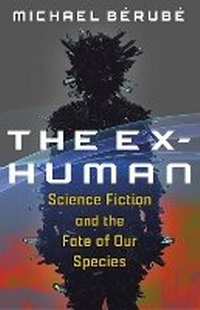
The Ex-Human
Science Fiction and the Fate of Our Species
Published on 28. May 2024
Book
Hardback
312 pages
978-0-231-21504-6 (ISBN)
Description
Facing threats like climate change and nuclear warfare, science fiction authors have conjured apocalyptic scenarios of human extinction. Can such gloomy fates help us make sense of our contemporary crises? How important is the survival of our species if we wind up battling for an Earth that has become an unhabitable hellscape? What other possible futures do narratives of the end of humanity allow us to imagine?
Michael Berube explores the surprising insights of classic and contemporary works of SF that depict civilizational collapse and contemplate the fate of Homo sapiens. In a lively, conversational style, he considers novels by writers including Ursula K. Le Guin, Margaret Atwood, Liu Cixin, Philip K. Dick, and Octavia Butler, as well as films that feature hostile artificial intelligence, such as 2001: A Space Odyssey, Blade Runner, and the Terminator and Matrix franchises. Berube argues that these works portray a future in which we have become able to see ourselves from the vantage point of something other than the human. Though framed by the possibility of human extinction, they are driven by a vision of the "ex-human"-a desire to imagine that another species is possible. For all science fiction readers worried about the fate of humanity, The Ex-Human is an entertaining yet sobering account of how key novels and films envision the world without us.
Michael Berube explores the surprising insights of classic and contemporary works of SF that depict civilizational collapse and contemplate the fate of Homo sapiens. In a lively, conversational style, he considers novels by writers including Ursula K. Le Guin, Margaret Atwood, Liu Cixin, Philip K. Dick, and Octavia Butler, as well as films that feature hostile artificial intelligence, such as 2001: A Space Odyssey, Blade Runner, and the Terminator and Matrix franchises. Berube argues that these works portray a future in which we have become able to see ourselves from the vantage point of something other than the human. Though framed by the possibility of human extinction, they are driven by a vision of the "ex-human"-a desire to imagine that another species is possible. For all science fiction readers worried about the fate of humanity, The Ex-Human is an entertaining yet sobering account of how key novels and films envision the world without us.
Reviews / Votes
Named a Locus recommended reading in non-fiction for 2025. * Locus * A thought-provoking examination of sci-fi novels and films that invite audiences to contemplate humanity's 'sorry fate from the vantage point of something other than human.' . . . Berube brings welcome humor to the proceedings . . . Sci-fi fanatics will appreciate Berube's offbeat takes. * Publishers Weekly * A vivacious and unrelenting confrontation with the consolations and desolations of contemporary science fiction from one of literary culture's most insightful and wide-ranging polymaths, Michael Berube's The Ex-Human is by turns brilliant, hilarious, despairing, and refusing despair. An absolute must-read. -- Gerry Canavan, author of <i>Octavia E. Butler</i> Are human beings worth saving? Viewing that question through the lens of science fiction, The Ex-Human is one of those rare and wonderful books that will engage aficionados and general readers together. Berube writes with conviction, clarity, and warmth-this is literary and cinematic analysis of the highest order, presented in a personal voice that always keeps you in the story. -- Leonard Cassuto, author of <i>Academic Writing as if Readers Matter</i> In The Ex-Human, Michael Berube compellingly engages on both the personal and academic level with the question of our dystopian contemporary, and what the reading of science fiction can bring to this debate. -- Roger Luckhurst, author of <i>Gothic: An Illustrated History</i> [Berube's] analyses are intensive yet fluid, variegated with a range of cultural, political, and personal references. Spirited and speculative, The Ex-Human showcases science fiction for its formidable and prescient nature. -- Meg Nola * Foreword Reviews * Michael Berube is one of our best social and cultural critics . . . Berube's discussions of all these texts are subtle and insightful. . . . Above all, though, the book is concerned with how science fiction allows us to entertain non-human perspectives upon human life and existence, and specifically to imagine the end of humanity - or rather (and better) its transformation in radical ways that exceed our capacity for imaginative projection and continued empathy. -- Steven Shaviro * The Pinocchio Theory * Recommended. * Choice Reviews * It is a worthy read for anyone seeking to put into words their dissatisfaction with what the human is, and possibilities for what it might (cease to) be. * Supernatural Studies * A refreshing and engaging analysis of continuing speculations on the future of humanity. * American Literary History * For scholars engaged in the theoretical and literary analysis of science fiction, this book provides a valuable analytical lens through which to examine how sf narratives both reflect and shape society's responses to existential challenges. * Science Fiction Studies *More details
Language
English
Place of publication
New York
United States
Target group
Professional and scholarly
Product notice
Trade binding
Dimensions
Height: 216 mm
Width: 140 mm
ISBN-13
978-0-231-21504-6 (9780231215046)
Copyright in bibliographic data and cover images is held by Nielsen Book Services Limited or by the publishers or by their respective licensors: all rights reserved.
Schweitzer Classification
Other editions
Additional editions
E-Book
08/2024
1st Edition
Columbia University Press
€29.49
Available for download
Person
Michael Berube is an Edwin Erle Sparks Professor of Literature at Pennsylvania State University and a former president of the Modern Language Association. He is the author of twelve books, including Life as We Know It: A Father, a Family, and an Exceptional Child and What's Liberal About the Liberal Arts? Classroom Politics and "Bias" in Higher Education.
Content
Preface
Acknowledgments
List of Abbreviations
Introduction: Learning to Die
1. The Augmentation of the Complexity and Intensity of the Field of Intelligent Life: The Potential Ex- Human of The Left Hand of Darkness
2. Desperate Measures: Justifiable Despair in The Three- Body Problem and Oryx and Crake
3. Inherit the Wasteland: Or, How I Learned to Stop Worrying and Cede the Planet to the Smart Machines
4. Better Children: Octavia Butler and Genetic Destiny
Epilogue: Just Kill Me Now
Notes
Index
Acknowledgments
List of Abbreviations
Introduction: Learning to Die
1. The Augmentation of the Complexity and Intensity of the Field of Intelligent Life: The Potential Ex- Human of The Left Hand of Darkness
2. Desperate Measures: Justifiable Despair in The Three- Body Problem and Oryx and Crake
3. Inherit the Wasteland: Or, How I Learned to Stop Worrying and Cede the Planet to the Smart Machines
4. Better Children: Octavia Butler and Genetic Destiny
Epilogue: Just Kill Me Now
Notes
Index