

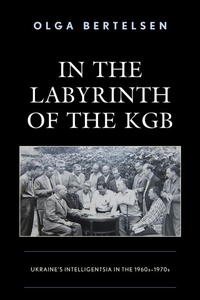
In the Labyrinth of the KGB
Ukraine's Intelligentsia in the 1960s-1970s
Published on 22. August 2023
Book
Paperback/Softback
370 pages
978-1-7936-0894-9 (ISBN)
Description
2024 Winner, Kjetil Hatlebrekke Memorial Book Prize, King's College Centre for the Study of Intelligence
This book focuses on the generation of the sixties and seventies in Kharkiv, Soviet Ukraine, a milieu of writers who lived through the Thaw and the processes of de-Stalinization and re-Stalinization. Special attention is paid to KGB operations against what came to be known as the dissident milieu, and the interaction of Ukrainians, Jews, and Russians in the movement, their persona friendships, formal and informal interactions, and the ways they dealt with repression and arrests. This study demonstrates that the KGB unintentionally facilitated the transnational and intercultural links among the Kharkiv multi-ethnic community of writers and their mutual enrichment. Post-Khrushchev Kharkiv is analyzed as a political space and a place of state violence aimed at combating Ukrainian nationalism and Zionism, two major targets in the 1960s-1970s. Despite their various cultural and social backgrounds, the Kharkiv literati might be identified as a distinct bohemian group possessing shared aesthetic and political values that emerged as the result of de-Stalinization under Khrushchev. Archival documents, diaries, and memoirs suggest that the 1960s-1970s was a period of intense KGB operations, "active measures" designed to disrupt a community of intellectuals and to fragment friendships, bonds, and support among Ukrainians, Russians, and Jews along ethnic lines domestically and abroad.
This book focuses on the generation of the sixties and seventies in Kharkiv, Soviet Ukraine, a milieu of writers who lived through the Thaw and the processes of de-Stalinization and re-Stalinization. Special attention is paid to KGB operations against what came to be known as the dissident milieu, and the interaction of Ukrainians, Jews, and Russians in the movement, their persona friendships, formal and informal interactions, and the ways they dealt with repression and arrests. This study demonstrates that the KGB unintentionally facilitated the transnational and intercultural links among the Kharkiv multi-ethnic community of writers and their mutual enrichment. Post-Khrushchev Kharkiv is analyzed as a political space and a place of state violence aimed at combating Ukrainian nationalism and Zionism, two major targets in the 1960s-1970s. Despite their various cultural and social backgrounds, the Kharkiv literati might be identified as a distinct bohemian group possessing shared aesthetic and political values that emerged as the result of de-Stalinization under Khrushchev. Archival documents, diaries, and memoirs suggest that the 1960s-1970s was a period of intense KGB operations, "active measures" designed to disrupt a community of intellectuals and to fragment friendships, bonds, and support among Ukrainians, Russians, and Jews along ethnic lines domestically and abroad.
Reviews / Votes
In The Labyrinth of the KGB offers a new and original insight into the experiences of non-Russian intellectuals in the USSR and the cultural history of Ukraine. A key issue with western historiography and political analysis today is a tendency to view the history of the USSR and former Soviet countries through the prism of Russian intellectual elites. This is reinforced by exclusive use of Moscow-based archives to determine what happened across the USSR. However, Bertelsen critiques this approach sharply, and her use of literary sources from Kharkiv demonstrates a different reality and alternatives for our understanding. As Russia's war in Ukraine continues, there is a growing realization among many in the West that Central and Eastern Europe need to be taken more seriously. A book like Bertelsen's In the Labyrinth of the KGB should contribute to the development of a new appreciation for what Ukraine-and other former Soviet republics-experienced as part of the USSR. It has immense relevance to what is happening in Ukraine today. * Middle East Monitor * A meticulous analysis of archival sources and personal interviews, this is the first study of the generation of Kharkiv dissidents during the 1960s and 1970s. Blending biography and history, Olga Bertelsen offers a rich vein of unexplored information and tells the story with flair, an insider's knowledge of personalities, and a keen understanding of how the KGB worked. The book is a must-read for students of Soviet political and cultural history and for readers who wish to understand the current situation in Russian-Ukrainian relations. -- Myroslav Shkandrij, University of Manitoba In this beautifully written and superbly researched work of history, Bertelsen brings to life the transcultural and transethnic world of the Kharkiv intelligentsia in the 1960s and the 1970s. Authoritative, erudite, and poignant, this is also an illuminating study of KGB repression and the life and fate of writers in those difficult times. -- Lynne Viola, University of Toronto This path-breaking book sheds new light on Kharkiv writers' tortuous paths negotiated in their daily confrontations with the KGB. This extensive ethnographic and archival research creates an unforgettable, fine-grained portrait of Ukrainian, Russian, and Jewish intellectuals struggling against state violence. -- Alexander J. Motyl, Rutgers University-Newark This book is a highly nuanced and psychologically insightful history of the Ukrainian, Russian, and Jewish writers in Kharkiv and their resistance to Soviet efforts to reintroduce the repressive measures of the Stalinist past. This is a major contribution to our understanding of the 'thaw generation.' -- George O. Liber, University of Alabama at Birmingham This book is central to understanding the reasons for the fall of Soviet ideology and party control over the intelligentsia, many of whom managed to cross the ethnic and ideological boundaries imposed by the regime to divide them. In doing so, they destroyed not only those boundaries, but also the foundations of the regime itself. -- Serhii Plokhy, Harvard University Engagingly written, this is a cultural history of post-Stalin Kharkiv, and the city's intelligentsia, who coped with the tortuous provocations and repressions of the KGB. -- Norman M. Naimark, Stanford University In the Labyrinth of the KGB provides a valuable and deeply human sketch of Soviet Kharkiv in the 1960s and 1970s. In view of current events, the book is an obvious recommendation to anyone interested in the history of Soviet Ukraine, the fortunes of the post-Stalin intelligentsia or the domestic operations of the KGB. The book's compelling thesis does remind scholars studying the Soviet past of the necessity of looking beyond Moscow and the RSFSR. Bertelsen reveals that there is much more work to be done in order to adequately explain the consequences and contradictions of Soviet life, policy and terror after Stalin. * Europe-Asia Studies *More details
Language
English
Place of publication
United States
Publishing group
Bloomsbury Publishing Plc
Target group
Professional and scholarly
Illustrations
16 b/w photos;
Dimensions
Height: 229 mm
Width: 152 mm
Thickness: 21 mm
Weight
536 gr
ISBN-13
978-1-7936-0894-9 (9781793608949)
Copyright in bibliographic data and cover images is held by Nielsen Book Services Limited or by the publishers or by their respective licensors: all rights reserved.
Schweitzer Classification
Other editions
Additional editions
E-Book
02/2022
1st Edition
Bloomsbury eBooks US
€36.99
Available for download
Person
Olga Bertelsen is associate professor of global security and intelligence at Tiffin University.
Content
Acknowledgments
Introduction
Chapter One: "The Revolution of Poets" and Re-Stalinization
Chapter Two: Petro Shelest, the Literati, and the "Jewish Question"
Chapter Three: The Writers, the Dissent, and the Human Rights Movement in the West
Chapter Four: The Labyrinths of Silence and Psychiatric Abuse
Chapter Five: The Writers and the Chekists' Discourse about the Holodomor
Chapter Six: The Years of Timelessness
Conclusion
Bibliography
About the Author
Introduction
Chapter One: "The Revolution of Poets" and Re-Stalinization
Chapter Two: Petro Shelest, the Literati, and the "Jewish Question"
Chapter Three: The Writers, the Dissent, and the Human Rights Movement in the West
Chapter Four: The Labyrinths of Silence and Psychiatric Abuse
Chapter Five: The Writers and the Chekists' Discourse about the Holodomor
Chapter Six: The Years of Timelessness
Conclusion
Bibliography
About the Author