

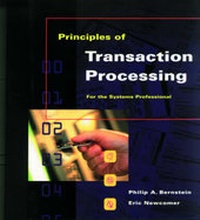
Principles of Transaction Processing for the Systems Professional
Published on 25. January 1997
Book
Paperback/Softback
384 pages
978-1-55860-415-5 (ISBN)
Description
Principles of Transaction Processing is a clear, concise guide for anyoneinvolved in developing applications, evaluating products, designing systems,or engineering products. This book provides an understanding of the internals oftransaction processing systems, describing how they work and how best to use them.It includes the architecture of transaction processing monitors, transactionalcommunications paradigms, and mechanisms for recovering from transaction andsystem failures.
Use of transaction processing systems in business, industry, andgovernment is increasing rapidly; the emergence of electronic commerce onthe Internet is creating new demands. As a result, many developers areencountering transaction processing applications for the first time and needa practical explanation of techniques. Software engineers who build andmarket operating systems, communications systems, programming tools, andother products used in transaction processing applications will also benefitfrom this thorough presentation of principles. Rich with examples, itdescribes commercial transaction processing systems, transactional aspectsof database servers, messaging systems, Internet servers, andobject-oriented systems, as well as each of their subsystems.
Use of transaction processing systems in business, industry, andgovernment is increasing rapidly; the emergence of electronic commerce onthe Internet is creating new demands. As a result, many developers areencountering transaction processing applications for the first time and needa practical explanation of techniques. Software engineers who build andmarket operating systems, communications systems, programming tools, andother products used in transaction processing applications will also benefitfrom this thorough presentation of principles. Rich with examples, itdescribes commercial transaction processing systems, transactional aspectsof database servers, messaging systems, Internet servers, andobject-oriented systems, as well as each of their subsystems.
Reviews / Votes
"The best introduction to transaction processing systems I have ever read." --K.Torp, ACM Computing Reviews, November 1997More details
Series
Language
English
Place of publication
San Francisco
United States
Publishing group
Elsevier Science & Technology
Target group
Professional and scholarly
Weight
660 gr
ISBN-13
978-1-55860-415-5 (9781558604155)
Copyright in bibliographic data and cover images is held by Nielsen Book Services Limited or by the publishers or by their respective licensors: all rights reserved.
Schweitzer Classification
Other editions
New editions
Book
07/2009
Elsevier
€65.50
Shipment within 15-20 days
Persons
is a Principal Researcher at Microsoft Corporation and author of over 150 technical articles on database and transaction systems. He was previously lead architect for Digital Equipment Corporation's transaction processing products group and was a professor at Harvard University. He is an ACM Fellow and member of the National Academy of Engineering. is an independent consultant working in the CTO Office at Progress Software. He was previously CTO of IONA Technologies and a TP Architect at Digital Equipment Corporation. He has contributed to multiple enterprise software products and standards.
Content
Chapter 1 Introduction
Chapter 2: Transaction Processing Monitors
Chapter 3: Transaction Processing Communications
Chapter 4: Queued Transaction Processing
Chapter 5: Transaction Processing Monitor Examples
Chapter 6: Locking
Chapter 7: High Availability
Chapter 8: Database System Recovery
Chapter 9: Two-Phase Commit
Chapter 10: Replication
Chapter 11: Conclusion
Chapter 2: Transaction Processing Monitors
Chapter 3: Transaction Processing Communications
Chapter 4: Queued Transaction Processing
Chapter 5: Transaction Processing Monitor Examples
Chapter 6: Locking
Chapter 7: High Availability
Chapter 8: Database System Recovery
Chapter 9: Two-Phase Commit
Chapter 10: Replication
Chapter 11: Conclusion