

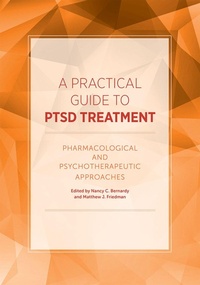
A Practical Guide to PTSD Treatment
Pharmacological and Psychotherapeutic Approaches
Will be published approx. on 13. October 2014
Book
Paperback/Softback
192 pages
978-1-4338-1832-5 (ISBN)
Description
This concise clinical guide shows how pharmacology can be integrated with traditional psychotherapy approaches to PTSD. Authors present common assessment tools and strategies, synthesize implications from research on all existing pharmacologic treatments for PTSD including antidepressants, anxiolytics, and antipsychotic medications, and present clear guidelines for related conditions such as insomnia and substance abuse.
Treatment of older adults and others with complicated presentations is also emphasized. Suitable for psychologists and social workers who may be unfamiliar with pharmacological approaches to PTSD, as well as psychiatrists and other medical personnel who may be less familiar with the best empirically-validated forms of psychotherapy.
Features:
amp bull Reviews pharmacologic treatments for PTSD including antidepressants, anxiolytics, and antipsychotic medications.
amp bull Presents comprehensive advice for clinical treatment, from assessment and diagnosis, to treatments for related symptoms and disorders such as insomnia and substance abuse.
Treatment of older adults and others with complicated presentations is also emphasized. Suitable for psychologists and social workers who may be unfamiliar with pharmacological approaches to PTSD, as well as psychiatrists and other medical personnel who may be less familiar with the best empirically-validated forms of psychotherapy.
Features:
amp bull Reviews pharmacologic treatments for PTSD including antidepressants, anxiolytics, and antipsychotic medications.
amp bull Presents comprehensive advice for clinical treatment, from assessment and diagnosis, to treatments for related symptoms and disorders such as insomnia and substance abuse.
More details
Language
English
Place of publication
Washington DC
United States
Target group
Professional and scholarly
Product notice
Paperback (trade)
Dimensions
Height: 235 mm
Width: 159 mm
Thickness: 20 mm
Weight
262 gr
ISBN-13
978-1-4338-1832-5 (9781433818325)
Copyright in bibliographic data and cover images is held by Nielsen Book Services Limited or by the publishers or by their respective licensors: all rights reserved.
Schweitzer Classification
Persons
Nancy C. Bernardy, PhD, is a biological and clinical research psychologist who has served for the past years as the director of the PTSD Mentoring Program for the Executive Division of the U.S. Department of Veterans Affairs' National Center for PTSD. She also serves as an associate director for clinical networking at the center. She is an assistant professor of psychiatry at the Geisel School of Medicine at Dartmouth.
Dr. Bernardy has 2 years of experience as a clinician and researcher, with approximately 35 publications. She is a member of APA and the International Society for Traumatic Stress Studies, and she serves on numerous national research, education, and policy committees for the Department of Veterans Affairs.
Matthew J. Friedman, MD, PhD, served for 25 years as executive director of the U.S. Department of Veterans Affairs' National Center for PTSD. He recently stepped down to become a senior advisor to the center. In addition, he is a professor of psychiatry and of pharmacology and toxicology at the Geisel School of Medicine at Dartmouth. He has more than 4 years of experience as a clinician and researcher, with approximately 3 publications, including 27 books.
Dr. Friedman is a Distinguished Lifetime Fellow of the American Psychiatric Association, past president of the International Society for Traumatic Stress Studies, chair of the American Psychiatric Association's DSM amp ndash 5 PTSD Work Group, and chair of the Scientific Advisory Board of the Anxiety Disorders Association of America. He has served on many national research, education, and policy committees. Past honors include the International Society for Traumatic Stress Studies Lifetime Achievement Award in 999 and Public Advocacy Award in 2 9.
Dr. Friedman was a finalist for the 2 Samuel J. Heyman Service to America Medal.
Dr. Bernardy has 2 years of experience as a clinician and researcher, with approximately 35 publications. She is a member of APA and the International Society for Traumatic Stress Studies, and she serves on numerous national research, education, and policy committees for the Department of Veterans Affairs.
Matthew J. Friedman, MD, PhD, served for 25 years as executive director of the U.S. Department of Veterans Affairs' National Center for PTSD. He recently stepped down to become a senior advisor to the center. In addition, he is a professor of psychiatry and of pharmacology and toxicology at the Geisel School of Medicine at Dartmouth. He has more than 4 years of experience as a clinician and researcher, with approximately 3 publications, including 27 books.
Dr. Friedman is a Distinguished Lifetime Fellow of the American Psychiatric Association, past president of the International Society for Traumatic Stress Studies, chair of the American Psychiatric Association's DSM amp ndash 5 PTSD Work Group, and chair of the Scientific Advisory Board of the Anxiety Disorders Association of America. He has served on many national research, education, and policy committees. Past honors include the International Society for Traumatic Stress Studies Lifetime Achievement Award in 999 and Public Advocacy Award in 2 9.
Dr. Friedman was a finalist for the 2 Samuel J. Heyman Service to America Medal.
Content
Contributors
Introduction
Nancy C. Bernardy and Matthew J. Friedman
I. Scientific Background and Assessment
The Human Stress Response
Matthew J. Friedman
The Emerging Scientific and Clinical Literature on Resilience and Psychological First Aid
Steven Southwick and Patricia Watson
Posttraumatic Stress Disorder: Patient Interview, Clinical Assessment, and Diagnosis
Brian P. Marx and Cassidy A. Gutner
II. Pharmacological and Psychotherapeutic Approaches
Antidepressant Strategies in the Management of PTSD
Nancy C. Bernardy and Matthew J. Friedman
The Use of Anxiolytics in the Management of PTSD
Nancy C. Bernardy, Tasha Souter, and Matthew J. Friedman
Atypical Antipsychotics and Anticonvulsants in the Treatment of PTSD: Treatment Options That Include Cognitive Behavioral Therapies
Matthew D. Jeffreys
Cognitive Behavioral Therapies for PTSD
Tara E. Galovski and Chelsea Gloth
III. Comorbid Disorders and Unique Presentations
PTSD and Insomnia
Jason C. DeViva and Bruce Capehart
Co-Occurring Substance Use Disorders and PTSD
Andrew J. Saxon and Tracy L. Simpson
Treating PTSD in Older Adults
Joan M. Cook, Ahsan Naseem, and Steven R. Thorp
Challenging Presentations in PTSD
Tonya Masino and Sonya Norman
Index
About the Editors
Introduction
Nancy C. Bernardy and Matthew J. Friedman
I. Scientific Background and Assessment
The Human Stress Response
Matthew J. Friedman
The Emerging Scientific and Clinical Literature on Resilience and Psychological First Aid
Steven Southwick and Patricia Watson
Posttraumatic Stress Disorder: Patient Interview, Clinical Assessment, and Diagnosis
Brian P. Marx and Cassidy A. Gutner
II. Pharmacological and Psychotherapeutic Approaches
Antidepressant Strategies in the Management of PTSD
Nancy C. Bernardy and Matthew J. Friedman
The Use of Anxiolytics in the Management of PTSD
Nancy C. Bernardy, Tasha Souter, and Matthew J. Friedman
Atypical Antipsychotics and Anticonvulsants in the Treatment of PTSD: Treatment Options That Include Cognitive Behavioral Therapies
Matthew D. Jeffreys
Cognitive Behavioral Therapies for PTSD
Tara E. Galovski and Chelsea Gloth
III. Comorbid Disorders and Unique Presentations
PTSD and Insomnia
Jason C. DeViva and Bruce Capehart
Co-Occurring Substance Use Disorders and PTSD
Andrew J. Saxon and Tracy L. Simpson
Treating PTSD in Older Adults
Joan M. Cook, Ahsan Naseem, and Steven R. Thorp
Challenging Presentations in PTSD
Tonya Masino and Sonya Norman
Index
About the Editors