


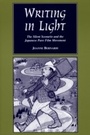
Writing in Light
The Silent Scenario and the Japanese Pure Film Movement
Published on 31. January 2001
Book
Paperback/Softback
343 pages
978-0-8143-2961-0 (ISBN)
Description
While most people associate Japanese film with modern directors like Akira Kurosawa, Japan's cinema has a rich tradition going back to the silent era. Japan's ""pure film movement"" of the 1910s is widely held to mark the birth of film theory as we know it and is a touchstone for historians of early cinema. Yet this work has been difficult to access because so few prints have been preserved. Joanne Bernardi offers a study of this important era, recovering a body of lost film and establishing its significance in the development of Japanese cinema. Building on a wealth of original-language sources she examines how the movement challenged the industry's dependence on pre-existing stage repertoires, preferences for lecturers over intertitles, and the use of female impersonators. Bernardi provides in-depth analysis of key scripts - ""The Glory of Life"", ""A Father's Tears"", ""Amateur Club"" and ""The Lust of the White Serpent"" - and includes translations in an appendix. These films offer case studies for understanding the craft of screenwriting during the silent era and shed light on such issues as genre, authorship and control, and gender representation. ""Writing in Light"" helps fill gaps in the history of Japanese silent cinema. By identifying points at which ""pure film"" discourse merges with changing international trends and attitudes toward film, it should offer an important resource for film, literary and cultural historians.
Reviews / Votes
It is surely one of the greatest tragedies in the history of world cinema that virtually no Japanese films from the pre-World War I period survive and that almost nothing from the 1920s exists in anything like its original form. Laboring under this unfillable gap. Joanne Bernardi has done as much as anyone can to bring to life this crucial and fascinating era of Japanese cinema. Relying on a wealth of primary and secondary original-language sources in a manner unprecedented in the published literature on early Japanese cinema in English, she has impressively exhausted the written record to re-create these tragically lost films and what they meant for the development of the Japanese cinema. With this impressively and thoroughly researched volume, Bernardi instantly joins the ranks of Joseph L. Anderson and Hiroshi Komatsu as the foremost scholars of the Japanese silent cinema.More details
Series
Language
English
Place of publication
Detroit, MI
United States
Target group
College/higher education
Professional and scholarly
Illustrations
100 illustrations
Dimensions
Height: 229 mm
Width: 152 mm
Thickness: 19 mm
Weight
519 gr
ISBN-13
978-0-8143-2961-0 (9780814329610)
Copyright in bibliographic data and cover images is held by Nielsen Book Services Limited or by the publishers or by their respective licensors: all rights reserved.
Schweitzer Classification
Other editions
Additional editions
E-Book
01/2001
1st Edition
Wayne State University Press
from
€57.89
Available for download
Person
Joanne Bernardi is an associate professor of Japanese and film at the University of Rochester. Her writing has appeared in Film and the First World War (Amsterdam University Press, 1995) and Currents in Japanese Culture: Translations and Transformations (Columbia University Press, 1997).