

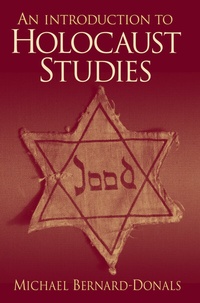
An Introduction to Holocaust Studies
1st Edition
Published on 13. September 2005
Book
Paperback/Softback
320 pages
978-0-13-183917-5 (ISBN)
Description
This single volume traces three approaches to the study of the Holocaust - through notions of history, theories of memory, and a focus on art and representation. It introduces students to the different ways we have come to understand the Holocaust, gives them an opportunity to ask questions about those conclusions, and examines how this event can be understood once all the survivors are gone. In addition, the book looks at the different disciplines - history, sociology, religious studies, and literary interpretation, among others - through which studies of the Holocaust take place.
More details
Other editions
Additional editions
Michael Bernard-Donals
An Introduction to Holocaust Studies
Book
07/2017
1st Edition
Routledge
€282.26
Shipment within 10-20 days
Michael Bernard-Donals
An Introduction to Holocaust Studies
E-Book
09/2016
Routledge
€92.49
Available for download
Michael Bernard-Donals
An Introduction to Holocaust Studies
E-Book
09/2016
Routledge
€92.49
Available for download
Person
Bernard-Donals, Michael
Content
PART I: THE HOLOCAUST. 1. The Holocaust. 2. Holocaust Studies. Discussion Questions. PART II: HISTORY. 3. The Holocaust in History. 4. Narratives and Events. 5. Case Studies: History, Narrative, and the Problems of Evidence. Discussion Questions. PART III: MEMORY. 6. Memory, Witness and Testimony . 7. The Language of the Witness: Diaries, Testimonies, and First-Person Narratives. 8. Case Studies: Testimony and the Problem of Authenticity. Discussion Questions. PART IV: REPRESENTATION. 9. The Problem of Representation. 10. Picturing Atrocity. 11. Making Memory: Case Studies in Holocaust Art and Architecture. Discussion Questions . PART V: TEACHING. 12. Conclusion: Some Thoughts About Teaching After Auschwitz. Discussion Questions. Bibliography. Index.