

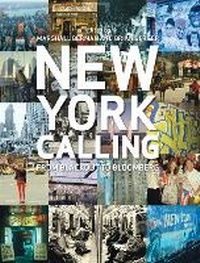
New York Calling
From Blackout to Bloomberg
Published on 1. September 2007
Book
Paperback/Softback
368 pages
978-1-86189-338-3 (ISBN)
Description
New York City in the 1970s was the setting for Taxi Driver, Annie Hall, and Saturday Night Fever, the nightmare playground for Son of Sam and The Warriors, the proving grounds for graffiti, punk, hip-hop, and all manner of other public spectacle. Musicians, artists and writers could subsist even in Manhattan, while immigrants from the world over were reinventing the city in their own image. Others, fed up with crime, filth and frustration, simply split.
Fast-forward three decades and today New York can appear a glamorous metropolis, with real estate prices soaring higher than its skyscrapers. But is this fresh-scrubbed, affluent city really an improvement on its grittier - and more affordable - predecessor? Taking us back to the streets where eccentricity and anomie were pervasive, New York Calling unlocks life in the unpolished Apple, where, it seemed, anything could happen. All five boroughs - the Bronx, Brooklyn, Manhattan, Queens, and Staten Island - comprising hundreds of neighbourhoods and the interlaced worlds of politics, crime, drugs, sex, and mischief, are explored with a love of the city unclouded by romance yet undimmed by cynicism.
Acclaimed historian Marshall Berman and journalist Brian Berger gather here a stellar group of writers and photographers who combine their energies to weave a rich tale of struggle, excitement and wonder. John Strausbaugh explains how Uptown has taken over Downtown, as Tom Robbins examines the mayors and would-be mayors who have presided over the transformation. Margaret Morton chronicles the homeless, while Robert Atkins offers a personal view of the city's gay culture and the devastating impact of aids. Anthony Haden-Guest and John Yau offer insiders' views of the New York art world, while Brandon Stosuy and Allen Lowe recount their discoveries of the local rock and jazz scenes. Armond White and Leonard Greene approach African-American culture and civil rights from perspectives often marginalized in so-called polite conversation.
Daily life in New York has its dramatic moments too. Luc Sante gives us glimpses of a city perpetually on the grift, Jean Thilmany and Philip Dray share secrets of Gotham's ethnic enclaves, Richard Meltzer walks, Jim Knipfel rides the subways, and Robert Sietsema criss-crosses the city, indefatigably tasting everything from giant Nigerian tree snails to Fujianese turtles. It's a long way from old Brooklyn to the new Times Square. But New York Calling reminds us of what has changed - and what's been lost - along the way.
Fast-forward three decades and today New York can appear a glamorous metropolis, with real estate prices soaring higher than its skyscrapers. But is this fresh-scrubbed, affluent city really an improvement on its grittier - and more affordable - predecessor? Taking us back to the streets where eccentricity and anomie were pervasive, New York Calling unlocks life in the unpolished Apple, where, it seemed, anything could happen. All five boroughs - the Bronx, Brooklyn, Manhattan, Queens, and Staten Island - comprising hundreds of neighbourhoods and the interlaced worlds of politics, crime, drugs, sex, and mischief, are explored with a love of the city unclouded by romance yet undimmed by cynicism.
Acclaimed historian Marshall Berman and journalist Brian Berger gather here a stellar group of writers and photographers who combine their energies to weave a rich tale of struggle, excitement and wonder. John Strausbaugh explains how Uptown has taken over Downtown, as Tom Robbins examines the mayors and would-be mayors who have presided over the transformation. Margaret Morton chronicles the homeless, while Robert Atkins offers a personal view of the city's gay culture and the devastating impact of aids. Anthony Haden-Guest and John Yau offer insiders' views of the New York art world, while Brandon Stosuy and Allen Lowe recount their discoveries of the local rock and jazz scenes. Armond White and Leonard Greene approach African-American culture and civil rights from perspectives often marginalized in so-called polite conversation.
Daily life in New York has its dramatic moments too. Luc Sante gives us glimpses of a city perpetually on the grift, Jean Thilmany and Philip Dray share secrets of Gotham's ethnic enclaves, Richard Meltzer walks, Jim Knipfel rides the subways, and Robert Sietsema criss-crosses the city, indefatigably tasting everything from giant Nigerian tree snails to Fujianese turtles. It's a long way from old Brooklyn to the new Times Square. But New York Calling reminds us of what has changed - and what's been lost - along the way.
Reviews / Votes
. . . often revealing and almost always poignant . . . punctuated with perceptive observations about life in a city with todays new norms. * Sam Roberts, <i>New York Times</i> * With Rudy running for President and Hilly Kristal dead, the timing couldnt be better for New York Calling: From Blackout to Bloomberg. This fascinating, enlightening and sometimes irritating collection of essays pokes through the rubble of the past three decades and asks: What is the Apple without its worms - without its grifters, goombahs, B-boys, bohos and bums? Beginning in 1977 - with the Bronx burning and Times Square a septic tank of despair - the book endeavors to trace the path to todays squeegee-free, Disney boomtown. * <i>Time Out</i>, New York * a mind-opening collection . . . Through the lens of New York politics, music, art and counterculture, we hear several, often fascinating takes on essentially the same story: how the squalor, struggles, crime, drugs, and free expression of the 1970s and 1980s gave way to a cleaner and safer city in the subsequent two decades, but one in which commercial development has often trumped, protecting existing residents and preserving a rich past . . . the essays, whether read discretely or as a complete work, offer a near unforgettable impression of an era. * Jason Warshof, <i>Financial Times</i> * Original essay collections are landmines of missed opportunity - nobodys perfect every time, and assigning editors are stuck with what theyre handed. So the success ratio is miraculous here as writers of vastly varying celebrity weigh in on the fate of teeming, polyglot New York City in a rich-get-richer world. For once all five boroughs are accounted for, and a heartening proportion of the contributors still find hope in a place where almost no one under forty can afford the rent. Readable, intelligent, and full of facts not even Marshall Berman knew. * Robert Christgau * Gothams a Rip Van Winkle city. Always has been. In 1856, Harpers Monthly claimed New York is never the same city for a dozen years together, and that after forty years a visitor would find nothing, absolutely nothing, of the New York he knew. But even Rip would be flabbergasted had he fallen asleep in the 1977 blackout and woken up today. New York Callings perceptive reports and evocative reminiscences vividly recreate the all but vanished city of the70s - dangerous, broke, aflame, in ruins, but also hip, vital, creative, rebellious - and trace the astonishing transformations wrought over the intervening decades. By turns tender and irate, whimsical and reflective, its a great guide to Gothams recent history. * Mike Wallace, co-author of the Pulitzer Prize-winning <i>Gotham: A History of New York City to 1898</i> and Founder, Gotham Center for New York City History * New York Calling gives us the New York that doesnt get into the guidebooks - or the history books. With tour guides like Luc Sante, Tom Robbins, and editors Berman and Berger, we can count on an eye-opening journey through a more rough and tumble city, full of problems but bursting with messy life. * Geoffrey OBrien, author of <i>Sonata for Jukebox</i> * Anyone who knew New York in the 1970s knows it was a different city from that of today. New York Calling is like a Rough Guide to a city receding into a dim past but now brought startlingly, evocatively to life by the amazing group of writers assembled by Marshall Berman and Brian Berger * Francis Morrone, author of <i>The Architectural Guidebook to New York City</i> * with 230 photographs sprinkled throughout, this multivoiced collection establishes itself as a unique document of the citys last three decades. * <i>Publishers Weekly</i> *More details
Language
English
Place of publication
London
United Kingdom
Illustrations
225 illustrations
Dimensions
Height: 250 mm
Width: 190 mm
ISBN-13
978-1-86189-338-3 (9781861893383)
Copyright in bibliographic data and cover images is held by Nielsen Book Services Limited or by the publishers or by their respective licensors: all rights reserved.
Schweitzer Classification
Persons
Marshall Berman (Anthology Editor)
Marshall Berman is Distinguished Professor of Political Science at City College of New York and CCNY Graduate Center, where he teaches political theory and urban studies. His books include On The Town: One Hundred Years of Spectacle in Times Square (2006) and All That Is Solid Melts into Air: The Experience of Modernity (1983). Born and raised in the Bronx, he lives in Manhattan with his family.
Brian Berger (Anthology Editor)
Brian Berger is a poet, journalist, and photographer who remembers the view of Playland from the terrace of his grandparents' apartment in Rockaway Beach, Queens. He has written about music for Forced Exposure, the Austin Chronicle and Geek Weekly, while his verse has appeared at jargonbooks.com and elsewhere. His own dark hollow is www.whowalkinbrooklyn.com
Marshall Berman is Distinguished Professor of Political Science at City College of New York and CCNY Graduate Center, where he teaches political theory and urban studies. His books include On The Town: One Hundred Years of Spectacle in Times Square (2006) and All That Is Solid Melts into Air: The Experience of Modernity (1983). Born and raised in the Bronx, he lives in Manhattan with his family.
Brian Berger (Anthology Editor)
Brian Berger is a poet, journalist, and photographer who remembers the view of Playland from the terrace of his grandparents' apartment in Rockaway Beach, Queens. He has written about music for Forced Exposure, the Austin Chronicle and Geek Weekly, while his verse has appeared at jargonbooks.com and elsewhere. His own dark hollow is www.whowalkinbrooklyn.com
Content
Introduction - Marshall Berman PUBLIC SPACES 1. Subterranean Vaudeville - Jim Knipfel 2. From Wise Guys to Woo-Girls' - John Strausbaugh 3. There's Hope For the Bronx - C. J. Sullivan 4. My Life in Graffiti - Joe Anastasio 5. Commerce - Luc Sante 6. Staten Island: The Forgotten Borough - Steve Maluk 7. Pictures from Brooklyn - Brian Berger 8. Everyone-and-Everywhere in Queens - Kevin Walsh 9. Documenting New York's Homeless - Margaret Morton CITY LIFE 1. The Other New York Awaits its Leader - Tom Robbins 2. NYPD in Brief - Leonard Levitt 3. The Practice of Everyday Life - Jean Thilmany 4. At Least it's Not New York - Richard Meltzer 5. New York State of Crime - Tim McLoughlin 6. What Happens There Matters - Leonard Greene 7. Speaking Truth to Power - Armond White 8. I Am a Renter - Philip Dray 9. Growing up on St Mark's Place - Edmund Berrigan THE THINGS WE DO 1. Going Downtown (on an Uptown Train) - Paul Kopasz 2. From Stonewall to Ground Zero - Robert Atkins 3. The Sexual City - Catherine Schmitz 4. An Incomplete History of New York Galleries - John Yau 5. My Life in New York Jazz - Allen Lowe 6. Death and Transfiguration in New York Rock 7. BIG ART Inc. - Anthony Haden-Guest 8. Coffee, Cocktails and Cigarettes - Daniel Young 9. Writing New York - Meakin Armstrong 10. From Blackout to Blintzes (and Beyond) - Robert Sietsema