

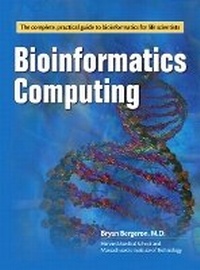
Bioinformatics Computing
Published on 3. December 2002
Book
Paperback/Softback
464 pages
978-0-13-100825-0 (ISBN)
Description
Bioinformatics Computing is a practical guide to computing in the growing field of Bioinformatics (the study of how information is represented and transmitted in biological systems, starting at the molecular level). This book brings life scientists at every level - from students to research directors - up to speed in computational techniques that apply directly to their work. The life science community needs a practical guide that illustrates the computer science advances that have been made in the past several decades in areas of computer visualization, large database designs, machine learning and other forms of advanced pattern matching, statistical methods, and distributed computing techniques. In addition to exploring general information technology issues, each chapter identifies technologies and approaches on the near horizon that will have a significant impact on bioinformatics, and introduces some of the global, societal issues that will likely define bioinformatics developments in the future.
More details
Person
BRYAN BERGERON is a faculty member at both Harvard Medical School and MIT, Editor-in-Chief of e.MD, editorial board member of Healthcare Informatics, and Fellow of the American College of Medical Informatics. He has authored more than 300 publications on topics ranging from AI to computers in medicine.
Content
Preface.
Acknowledgments.
1. The Central Dogma.
The Killer Application. Parallel Universes. Watson's Definition. Top-Down Versus Bottom-Up. Information Flow. Convergence. Endnote.
2. Databases.
Definitions. Data Management. Data Life Cycle. Database Technology. Interfaces. Implementation. Endnote.
3. Networks.
Geographical Scope. Communications Models. Transmissions Technology. Protocols. Bandwidth. Topology. Hardware. Contents. Security. Ownership. Implementation. Management. On the Horizon. Endnote.
4. Search Engines.
The Search Process. Search Engine Technology. Searching and Information Theory. Computational Methods. Search Engines and Knowledge Management. On the Horizon. Endnote.
5. Data Visualization.
Sequence Visualization. Structure Visualization. User Interface. Animation Versus Simulation. General-Purpose Technologies. One the Horizon. Endnote.
6. Statistics.
Statistical Concepts. Microarrays. Imperfect Data. Basics. Quantifying Randomness. Data Analysis. Tool Selection. Statistics of Alignment. Clustering and Classification. On the Horizon. Endnote.
7. Data Mining.
Methods. Technology Overview. Infrastructure. Pattern Recognition and Discovery. Machine Learning. Text Mining. Tools. On the Horizon. Endnote.
8. Pattern Matching.
Fundamentals. Dot Matrix Analysis. Substitution Matrices. Dynamic Programming. Word Methods. Multiple Sequence Alignment. Tools. On the Horizon. Endnote.
9. Modeling and Simulation.
Drug Discovery. Fundamentals. Protein Structure. Systems Biology. Tools. On the Horizon. Endnote.
10. Collaboration.
Collaboration and Communications. Standards. Issues. On the Horizon. Endnote.
Bibliography.
Index.
Acknowledgments.
1. The Central Dogma.
The Killer Application. Parallel Universes. Watson's Definition. Top-Down Versus Bottom-Up. Information Flow. Convergence. Endnote.
2. Databases.
Definitions. Data Management. Data Life Cycle. Database Technology. Interfaces. Implementation. Endnote.
3. Networks.
Geographical Scope. Communications Models. Transmissions Technology. Protocols. Bandwidth. Topology. Hardware. Contents. Security. Ownership. Implementation. Management. On the Horizon. Endnote.
4. Search Engines.
The Search Process. Search Engine Technology. Searching and Information Theory. Computational Methods. Search Engines and Knowledge Management. On the Horizon. Endnote.
5. Data Visualization.
Sequence Visualization. Structure Visualization. User Interface. Animation Versus Simulation. General-Purpose Technologies. One the Horizon. Endnote.
6. Statistics.
Statistical Concepts. Microarrays. Imperfect Data. Basics. Quantifying Randomness. Data Analysis. Tool Selection. Statistics of Alignment. Clustering and Classification. On the Horizon. Endnote.
7. Data Mining.
Methods. Technology Overview. Infrastructure. Pattern Recognition and Discovery. Machine Learning. Text Mining. Tools. On the Horizon. Endnote.
8. Pattern Matching.
Fundamentals. Dot Matrix Analysis. Substitution Matrices. Dynamic Programming. Word Methods. Multiple Sequence Alignment. Tools. On the Horizon. Endnote.
9. Modeling and Simulation.
Drug Discovery. Fundamentals. Protein Structure. Systems Biology. Tools. On the Horizon. Endnote.
10. Collaboration.
Collaboration and Communications. Standards. Issues. On the Horizon. Endnote.
Bibliography.
Index.