

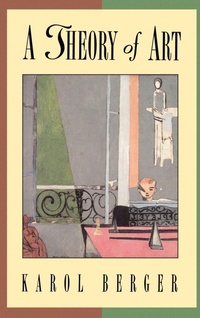
A Theory of Art
Published on 16. December 1999
Book
Hardback
304 pages
978-0-19-512860-4 (ISBN)
Description
This philosophical theory of art, addressed to anyone with a serious interest in the arts, has three main objectives: to shift the focus of aesthetics from the question "What is art?" to the question "What is art for?"; to describe the social and historical situation of art today; and to combine aesthetics with poetics and hermeneutics. A distinctive feature of the book is its argument that music exemplifies the current condition of art in a particularly revealing fashion.
Reviews / Votes
Berger writes well, is suggestive and in places, particularly in relation to music and the nature of poetic forms, genuinely illuminating. As a book for generally interested non-specialists it is genuinely engaging and worth reading * MIND * What is distinctive is the combination of aesthetics with poetics and hermeneutics and conceiving of music as the key to understanding the situation in the contemporary arts * MIND *More details
Language
English
Place of publication
New York
United States
Target group
Professional and scholarly
Dimensions
Height: 235 mm
Width: 157 mm
Thickness: 22 mm
Weight
647 gr
ISBN-13
978-0-19-512860-4 (9780195128604)
Copyright in bibliographic data and cover images is held by Nielsen Book Services Limited or by the publishers or by their respective licensors: all rights reserved.
Schweitzer Classification
Other editions
Additional editions
Karol Berger
A Theory of Art
Book
12/2002
Oxford University Press Inc
€110.80
Shipment within 15-20 days
Person
Karol Berger Is Osgood Hooker Professor in Fine Arts at Stanford University. He is the author of numerous studies in the history of music aesthetics and theory, vocal pholyphony from 1400 to 1600, and instrumental music from 1780 to 1850. His Musica Ficta (1987) won the Otto Kinkeldey Award of the American Musicological Society.
Content
Prologue. The Function and value of art
Part I.Aesthetics: the end of artworks
1.: Aesthetics I. The nature of art
2.: Aesthetics II. The uses of art
3.: Aesthetics III. The genealogy of modern European art music
Part II.Poetics and hermeneutics: the contents and interpretation of artworks
4.: Poetics I. Diegesis and mimesis: the poetic modes and the matter of artistic presentation
5.: Poetics II. Narrative and lyric: the poetic forms and the object of artistic presentation
6.: Hermenetics. Interpretation and its validity
Epilogue. The power of taste
Notes
Part I.Aesthetics: the end of artworks
1.: Aesthetics I. The nature of art
2.: Aesthetics II. The uses of art
3.: Aesthetics III. The genealogy of modern European art music
Part II.Poetics and hermeneutics: the contents and interpretation of artworks
4.: Poetics I. Diegesis and mimesis: the poetic modes and the matter of artistic presentation
5.: Poetics II. Narrative and lyric: the poetic forms and the object of artistic presentation
6.: Hermenetics. Interpretation and its validity
Epilogue. The power of taste
Notes