

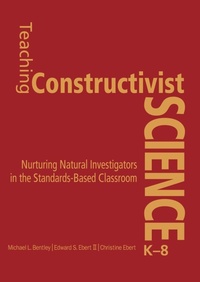
Teaching Constructivist Science, K-8
Nurturing Natural Investigators in the Standards-Based Classroom
1st Edition
Published on 25. April 2007
Book
Paperback/Softback
248 pages
978-1-4129-2575-4 (ISBN)
Description
Invite young minds to engage in meaningful, standards-based science!
Good teachers know that science is more than just a collection of facts in a textbook and that teaching science goes beyond the mere transmission of information. Actively engaging students in the learning process is critical to building their knowledge base, assessing progress, and meeting science standards. Teaching Constructivist Science, K-8 shows teachers how to transform students' natural curiosity into dynamic learning opportunities. By helping students construct new knowledge using the understandings they bring to the classroom, teachers can make the most of instruction and new learning experiences. With practical applications, teaching strategies, activities, and assessment tools, this reader-friendly book demonstrates how to teach student-ready, standards-based science.
Teachers will be able to use:
Classic and new activities to teach big ideas with basic materials
An interview approach for uncovering student misunderstandings that block new learning
A rich resource list for finding materials and organizations
Guidelines for building a science-friendly environment
Sample lessons and learning experiences aligned to national science standards
Discussion questions for teacher study groups in each chapter
For both experienced and novice teachers, this accessible resource provides the perfect method to teach science in sound ways that make sense to students.
Good teachers know that science is more than just a collection of facts in a textbook and that teaching science goes beyond the mere transmission of information. Actively engaging students in the learning process is critical to building their knowledge base, assessing progress, and meeting science standards. Teaching Constructivist Science, K-8 shows teachers how to transform students' natural curiosity into dynamic learning opportunities. By helping students construct new knowledge using the understandings they bring to the classroom, teachers can make the most of instruction and new learning experiences. With practical applications, teaching strategies, activities, and assessment tools, this reader-friendly book demonstrates how to teach student-ready, standards-based science.
Teachers will be able to use:
Classic and new activities to teach big ideas with basic materials
An interview approach for uncovering student misunderstandings that block new learning
A rich resource list for finding materials and organizations
Guidelines for building a science-friendly environment
Sample lessons and learning experiences aligned to national science standards
Discussion questions for teacher study groups in each chapter
For both experienced and novice teachers, this accessible resource provides the perfect method to teach science in sound ways that make sense to students.
Reviews / Votes
"Provides not just more, but why and how to! A much-needed book with wonderful strategies for setting up an inquiry-based classroom, choosing significant topics for investigation, differentiating within an inquiry-based classroom, and assessing learning." -- Bena Kallick, Education Consultant "One of the best I have read! A well-written and beneficial professional development resource for inservice elementary teachers wishing to expand their knowledge or refresh their memory." -- Christine Anne Royce, Assistant Professor of Education "So easy to follow, including the lists, figures, tables, and activities. The coverage of science methods includes everything I consider a priority to incorporate into a methods class, including the many real-life strategies and examples." -- Jerry Clemens, Science Educator, Lake Zurich Middle School North, Hawthorn Woods, IL "Used for systemwide inservice, this book could serve as a framework for lesson development, critique, analysis, and modification. For those just starting out, there are copious useful materials included." -- NSTA RecommendsMore details
Edition
First Edition
Language
English
Place of publication
Thousand Oaks
United States
Publishing group
SAGE Publications Inc
Target group
Professional and scholarly
Dimensions
Height: 297 mm
Width: 210 mm
Thickness: 14 mm
Weight
659 gr
ISBN-13
978-1-4129-2575-4 (9781412925754)
Copyright in bibliographic data and cover images is held by Nielsen Book Services Limited or by the publishers or by their respective licensors: all rights reserved.
Schweitzer Classification
Other editions
Additional editions
Michael L. Bentley | Edward S. Ebert | Christine K. Ebert
Teaching Constructivist Science, K-8
Nurturing Natural Investigators in the Standards-Based Classroom
Book
04/2007
1st Edition
Corwin Press Inc
€58.37
Shipment within 10-20 days
Persons
Michael Bentley is an Associate Professor of Science Education at the University of Tennessee, Knoxville, where he teaches courses in environmental education and methods of teaching K-8 science. He has written science books for young readers as well as curriculum materials and numerous professional articles and chapters in books. He has also been involved with the creation of several innovative schools and has been an officer on two school boards. Bentley's interests include teacher education, the public understanding of science, curriculum studies and international education, and the history, philosophy, and sociology of science as applied to science education. Edward S. Ebert, II is Professor Emeritus of Education at Coker College in Hartsville, South Carolina and an award winning educator. With a degree in Psychological Foundations of Education, he has taught courses in educational psychology, elementary science methods, child development, classroom management, assessment, and creative problem solving. He as written a dozen books, including elementary science methods (Teaching Constructivist Science, K-8/Corwin Press), creative thinking and science teaching, introduction to education, classroom pragmatics: management and assessment (The Educator's Field Guide/Corwin Press), and an examination of public education in the American culture. Ebert has given numerous presentations nationally and internationally, and has taught science education and educational psychology for a semester at Shanghai International Studies University, Shanghai, P.R. China. He now resides in Wellfleet, MA, where he continues to publish educational materials and serves on a regional school board. Christine Ebert is Associate Provost, Dean of the Graduate School, and Professor of Science Education at the University of South Carolina. Her work in science education focuses on conceptual change and development in students' understanding of science principles. In addition she has taught courses in thinking and reasoning, and is extensively involved with collaboration between elementary schools and the university. Ebert serves regularly as a program evaluator for national federally funded science initiatives. She has co-authored three other books related to science education and conceptual development. Ebert has presented her work on science education and creative thinking at conferences across the country and around the world.
Content
List of Figures
List of Tables
List of Activities
About the Authors
Preface
Acknowledgments
Part I. Foundations for Teaching Science
1. The World of the Scientist and the Nature of Science
2. The Content of K-8 Science
3. Characteristics of the Science Learner: Development in Childhood and Adolescence
Part II. Teaching Children Science: Approaches and Strategies
4. Developing the Classroom Curriculum
5. Engaging Students in Inquiry: Skills and Investigative Techniques
6. Designing Science Lessons for All: Differentiating Instruction
7. Making Real-World Connections
Part III. Planning, Management, Assessment, and Resources
8. Nuts and Bolts: Organizing and Managing the Classroom for Inquiry
9. Assessment and Evaluation
10. A Compendium of Resources
A Professional Development Bibliography
References
Index
List of Tables
List of Activities
About the Authors
Preface
Acknowledgments
Part I. Foundations for Teaching Science
1. The World of the Scientist and the Nature of Science
2. The Content of K-8 Science
3. Characteristics of the Science Learner: Development in Childhood and Adolescence
Part II. Teaching Children Science: Approaches and Strategies
4. Developing the Classroom Curriculum
5. Engaging Students in Inquiry: Skills and Investigative Techniques
6. Designing Science Lessons for All: Differentiating Instruction
7. Making Real-World Connections
Part III. Planning, Management, Assessment, and Resources
8. Nuts and Bolts: Organizing and Managing the Classroom for Inquiry
9. Assessment and Evaluation
10. A Compendium of Resources
A Professional Development Bibliography
References
Index