

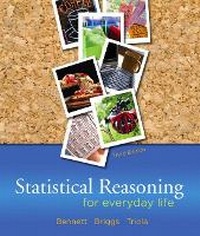
Statistical Reasoning for Everyday Life
3rd Edition
Published on 28. December 2011
Book
Paperback/Softback
512 pages
978-0-205-64642-5 (ISBN)
Description
Statistical Reasoning for Everyday Life, Third Edition, teaches students how to be better consumers of information by showing the role of statistics in many aspects of everyday life. This text uses real examples and case studies to build an understanding of the core ideas of statistics that can be applied to a variety of subject areas, such as the social sciences. The authors include data from real sources to help students become better critical thinkers and decision makers.
More details
Edition
3rd edition
Language
English
Place of publication
United States
Publishing group
Pearson Education (US)
Target group
College/higher education
Dimensions
Height: 254 mm
Width: 216 mm
ISBN-13
978-0-205-64642-5 (9780205646425)
Copyright in bibliographic data and cover images is held by Nielsen Book Services Limited or by the publishers or by their respective licensors: all rights reserved.
Schweitzer Classification
Other editions
Previous edition
Jeffrey O. Bennett | William L. Briggs | Mario F. Triola
Statistical Reasoning for Everyday Life
Book
01/2003
2nd Edition
Pearson
€57.03
Article exhausted; check for reprint
Content
Preface
Supplements
To the Student: How to Succeed in Your Statistics Course
Applications Index
1. Speaking of Statistics
1.1 What Is/Are Statistics?
1.2 Sampling
1.3 Types of Statistical Studies
1.4 Should You Believe a Statistical Study?
Focus on Sociology: Does Daycare Breed Bullies?
Focus on Public Health: Is Your Lifestyle Healthy?
2. Measurement in Statistics
2.1 Data Types and Levels of Measurement
2.2 Dealing with Errors
2.3 Uses of Percentages in Statistics
2.4 Index Numbers
Focus on Politics: Who Benefits from a Tax Cut?
Focus on Economics: Is our Standard of Living Improving?
3. Visual Displays of Data
3.1 Frequency Tables
3.2 Picturing Distributions of Data
3.3 Graphics in the Media
3.4 A Few Cautions About Graphics
Using Technology
Focus on History: Can War Be Described with a Graph?
Focus on Environment: How Can We Visualize Global Warming?
4. Describing Data
4.1 What Is Average?
4.2 Shapes of Distributions
4.3 Measures of Variation
4.4 Statistical Paradoxes
Using Technology
Focus on The Stock Market: What's Average About the Dow?
Focus on Economics: Are the Rich Getting Richer?
5. A Normal World
5.1 What Is Normal?
5.2 Properties of the Normal Distribution
5.3 The Central Limit Theorem
Using Technology
Focus on Education: What Can We Learn from SAT Trends?
Focus on Psychology: Are We Smarter than Our Parents?
6. Probability in Statistics
6.1 The Role of Probability in Statistics: Statistical Significance 226
6.2 Basics of Probability
6.3 Probabilities with Large Numbers
6.4 Ideas of Risk and Life Expectancy
6.5 Combining Probabilities (Supplementary Section)
Focus on Social Science: Are Lotteries Fair?
Focus on Law: Is DNA Fingerprinting Reliable?
7. Correlation and Causality
7.1 Seeking Correlation
7.2 Interpreting Correlations
7.3 Best-Fit Lines and Prediction
7.4 The Search for Causality
Using Technology
Focus on Education: What Helps Children Learn to Read?
Focus on Environment: What Causes Global Warming?
8. From Samples to Populations
8.1 Sampling Distributions
8.2 Estimating Population Means
8.3 Estimating Population Proportions
Using Technology
Focus on History: Where Did Statistics Begin?
Focus on Literature: How Many Words Did Shakespeare Know?
9. Hypothesis Testing
9.1 Fundamentals of Hypothesis Testing
9.2 Hypothesis Tests for Population Means
9.3 Hypothesis Testing: Population Proportions
Using Technology
Focus on Health & Education: Will Your Education Help You Live Longer?
Focus on Agriculture: Are Genetically Modified Foods Safe?
10. t Tests, Two-Way Tables, and ANOVA
10.1 Distribution for Inferences about a Mean
10.2 t Hypothesis Testing with Two-Way Tables
10.3 Analysis of Variance (One-Way ANOVA)
Using Technology
Focus on Criminology: Can You Tell a Fraud When You See One?
Focus on Education: What Can a Fourth-Grader Do with Statistics?
Epilogue: A Perspective on Statistics
Appendix A: z-Score Tables
Appendix B: Table of Random Numbers
Suggested Readings
Credits
Glossary
Answers
Index
Supplements
To the Student: How to Succeed in Your Statistics Course
Applications Index
1. Speaking of Statistics
1.1 What Is/Are Statistics?
1.2 Sampling
1.3 Types of Statistical Studies
1.4 Should You Believe a Statistical Study?
Focus on Sociology: Does Daycare Breed Bullies?
Focus on Public Health: Is Your Lifestyle Healthy?
2. Measurement in Statistics
2.1 Data Types and Levels of Measurement
2.2 Dealing with Errors
2.3 Uses of Percentages in Statistics
2.4 Index Numbers
Focus on Politics: Who Benefits from a Tax Cut?
Focus on Economics: Is our Standard of Living Improving?
3. Visual Displays of Data
3.1 Frequency Tables
3.2 Picturing Distributions of Data
3.3 Graphics in the Media
3.4 A Few Cautions About Graphics
Using Technology
Focus on History: Can War Be Described with a Graph?
Focus on Environment: How Can We Visualize Global Warming?
4. Describing Data
4.1 What Is Average?
4.2 Shapes of Distributions
4.3 Measures of Variation
4.4 Statistical Paradoxes
Using Technology
Focus on The Stock Market: What's Average About the Dow?
Focus on Economics: Are the Rich Getting Richer?
5. A Normal World
5.1 What Is Normal?
5.2 Properties of the Normal Distribution
5.3 The Central Limit Theorem
Using Technology
Focus on Education: What Can We Learn from SAT Trends?
Focus on Psychology: Are We Smarter than Our Parents?
6. Probability in Statistics
6.1 The Role of Probability in Statistics: Statistical Significance 226
6.2 Basics of Probability
6.3 Probabilities with Large Numbers
6.4 Ideas of Risk and Life Expectancy
6.5 Combining Probabilities (Supplementary Section)
Focus on Social Science: Are Lotteries Fair?
Focus on Law: Is DNA Fingerprinting Reliable?
7. Correlation and Causality
7.1 Seeking Correlation
7.2 Interpreting Correlations
7.3 Best-Fit Lines and Prediction
7.4 The Search for Causality
Using Technology
Focus on Education: What Helps Children Learn to Read?
Focus on Environment: What Causes Global Warming?
8. From Samples to Populations
8.1 Sampling Distributions
8.2 Estimating Population Means
8.3 Estimating Population Proportions
Using Technology
Focus on History: Where Did Statistics Begin?
Focus on Literature: How Many Words Did Shakespeare Know?
9. Hypothesis Testing
9.1 Fundamentals of Hypothesis Testing
9.2 Hypothesis Tests for Population Means
9.3 Hypothesis Testing: Population Proportions
Using Technology
Focus on Health & Education: Will Your Education Help You Live Longer?
Focus on Agriculture: Are Genetically Modified Foods Safe?
10. t Tests, Two-Way Tables, and ANOVA
10.1 Distribution for Inferences about a Mean
10.2 t Hypothesis Testing with Two-Way Tables
10.3 Analysis of Variance (One-Way ANOVA)
Using Technology
Focus on Criminology: Can You Tell a Fraud When You See One?
Focus on Education: What Can a Fourth-Grader Do with Statistics?
Epilogue: A Perspective on Statistics
Appendix A: z-Score Tables
Appendix B: Table of Random Numbers
Suggested Readings
Credits
Glossary
Answers
Index