

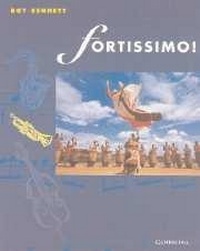
Fortissimo! Student's book
Published on 25. July 1996
Book
Paperback/Softback
256 pages
978-0-521-56923-1 (ISBN)
Description
Fortissimo! is a key stage 4 music course to fit the initiatives of the national curriculum with performing, composing, listening and appraising being an integral part. The material in the Fortissimo! Student's Book covers a wide variety of music from the 13th century to the 1990s and offers the chance to study musical styles and instruments from a variety of cultures. At regular intervals throughout the book, there are double-page colour spreads displaying fascinating visual stimulus material to spark off original ideas for composing and improvising.
More details
Edition
Student edition
Language
English
Place of publication
Cambridge
United Kingdom
Target group
Primary & secondary/elementary & high school
Interest Age: From 14 to 16 years
Edition type
Student edition
Product notice
Paperback (trade)
Dimensions
Height: 269 mm
Width: 215 mm
Thickness: 20 mm
Weight
613 gr
ISBN-13
978-0-521-56923-1 (9780521569231)
Copyright in bibliographic data and cover images is held by Nielsen Book Services Limited or by the publishers or by their respective licensors: all rights reserved.
Schweitzer Classification
Other editions
Previous edition

Roy Bennett
Fortissimo Student's Book GCSE Course
Book
Cambridge University Press
Unfortunately, price unknown
Article exhausted; check for reprint
Content
Contents: World Map. 1. Rhythm; 2. Shaping melodies; 3. Timbre; 4. Tempo and dynamics - expressive effects; 5. Major, Minor, and pentatonic; 6. Music with a drone; 7. Chords and chord patterns; 8. Graphic notation; 9. Ternary form; 10 .Using ostinatos; 11. Some musical devices; 12. Mood and character; 13. Texture; 14. Rondo form; 15. Programme music; 16. Timbre - new sound, new colours; 17. Words and music; 18. Making comparisons; 19. Rhythm; 20. Chords and clusters; 21. Music as background to words; 22. Tension and release; 23. More musical devices; 24. Variations; 25. Chromatic, whole-tone and modal; 26. Timbre - exploring the voice; 27. Making use of physical space; 28. Tonal and atonal; 29. Chance and choice - aleatory music; 30. Mixed media, and the theatre element.