

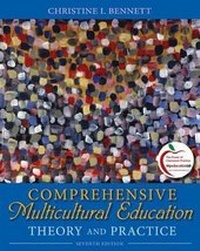
Comprehensive Multicultural Education
Theory and Practice
7th Edition
Published on 19. February 2010
Book
Paperback/Softback
504 pages
978-0-13-704261-6 (ISBN)
Description
Written for new teachers, this guide to multicultural education presents interdisciplinary content through primary source material and vignettes of actual teachers and students.
Providing an in-depth focus in key areas as well as a broad overview, Christine Bennett aims to help prepare teachers who are informed and caring advocates for students from all cultural, racial, socioeconomic, linguistic, and national backgrounds.
Providing an in-depth focus in key areas as well as a broad overview, Christine Bennett aims to help prepare teachers who are informed and caring advocates for students from all cultural, racial, socioeconomic, linguistic, and national backgrounds.
More details
Edition
7th edition
Language
English
Place of publication
United States
Publishing group
Pearson Education (US)
Target group
Professional and scholarly
Dimensions
Height: 10 mm
Width: 10 mm
Thickness: 10 mm
Weight
680 gr
ISBN-13
978-0-13-704261-6 (9780137042616)
Copyright in bibliographic data is held by Nielsen Book Services Limited or its licensors: all rights reserved.
Schweitzer Classification
Other editions
New editions
Book
02/2014
8th Edition
Pearson
Unfortunately, price unknown
Article is exhausted; no reprint
Previous edition
Book
05/2006
6th Edition
Pearson
€90.55
Article exhausted; check for reprint
Person
Christine Iverson Bennett is Professor Emerita in the Department of Curriculum and Instruction at Indiana University. She earned her B.A. in sociology at Northwestern University, her M.A. in social studies education at Stanford University, and her Ph.D. in social science education with specializations in ethnic studies at the University of Texas in Austin. Prior to her doctoral studies she taught high school social studies in San Jose and Los Angeles. During her thirty-one years at Indiana University, Professor Bennett developed and taught graduate and undergraduate courses in multicultural education; and initiated and directed The Teacher as Decision Maker Program, The Research Institute on Teacher Education, and Project TEAM, a program to recruit and support students from underrepresented minorities. She also served as director of Indiana University's Exchange Program with Hangzhou University and conducted seminars for faculty at Al-Ain University in the United Arab Emirates and for visiting international scholars at Indiana University. Her research publications focus on the impact of multicultural social studies, classroom climates in desegregated schools, racial inequities in school discipline, racial issues in higher education, and multicultural teacher education. She can be reached at bennettc@indiana.edu.
Content
Part I. The Case for Multicultural Education
Chapter 1. Multicultural Schools: What, Why, and How
What Is Multicultural Education?
The Core Values in Multicultural Education
Why Is Multicultural Education Essential?
Conditions for Multicultural Schools
The Critics of Multicultural Education
Conclusions
Selected Sources for Further Study
Chapter 2. Culture, Race and the Contexts for Multicultural Teaching
What Is Culture?
What is Race and How Does It Differ from Culture?
What Do We Mean by Ethnic Groups?
What Works Best in 21st Century America: Cultural Assimilation, Cultural Pluralism, or Something Else?
Guidelines for Understanding Cultural Differences in the Classroom: Aspects of Ethnicity
Conclusions
Selected Sources for Further Study
Chapter 3. Race Relations and the Nature of Prejudice
How Prevalent Are Prejudice and Racism Today
What is Prejudice?
What is Racism?
Theories of Ethnic Identity: How Can Teachers Benefit?
The Nature of Stereotypes and Multicultural Teaching
Africa: An Illustration of Unintentional Racism and the Need for Curriculum Reform
Conclusions
Selected Sources for Further Study
Part II. Roots of ethnic Diversity in the United States: The Conflicting Themes of Assimilation and Pluralism
Chapter 4. Immigration and the American Dream: European American and Jewish American Perspectives
Immigration
What Is the American Dream?
Classic and Contemporary Immigration Eras: How Are They Alike and How Are they Different?
European American Perspectives
Jewish American Perspectives
Who Has Assimilated?
Conclusions
Selected Sources for Further Study
Chapter 5. Colonialism, Involuntary Immigration and The American Dream: American Indian and African Americans Perspectives
American Indians
African Americans
Selected Sources for Further Study
Chapter 6. Colonialism, Immigration, and the American Dream: Latino Perspectives
Latinos in the United States: Who are they?
Caribbean Latinos: Puerto Ricans, Cubans, and Dominicans
Mexican Americans: How can their history help us understand immigration issues today?
Migrant Farm Workers
Latinos in the Heartland: Are they integrating into U.S. society?
Selected Sources for Further Study
Chapter 7. Contemporary Immigration and the American Dream: Asian, Muslim, and Arab American Perspectives
Who Are the Asian Americans?
Muslims in the United States (with Salman H. Al-Ani)
Arab Americans (with Salman H. Al-Ani)
Conclusions
Selected Sources for Further Study
Part III. Individual Differences and societal inequities That Affect Teaching and Learning
Chapter 8. Learning Styles and Culturally Competent Teaching
What is Learning Style?
Why be concerned about learning styles?
Three Strategies for Discovering Learning Styles
Relationships between Culture and Learning Style
Learning Styles and Teaching Styles
The Promise of Culturally Competent Teaching
Conclusions
Selected Sources for Further Study
Chapter 9. Reaching All Learners: Perspectives on Gender, Class, and Special Needs
Addressing the Achievement Gap
How Does Gender Make a Difference?
How Does Class Make a Difference?
Special Education: The Simultaneity of Race, Class and Gender
Cooperative Learning: Reaching All Learners in Inclusive Schools and Classrooms
Conclusions
Selected Sources for Further Study
Chapter 10. Teaching in Linguistically Diverse Classrooms, by James S. Damico
English Language Learners in U.S. Schools
Bilingual Education
Programs to Meet the Needs of English Language Learners
What We Know about Literacy and Language Learning
Principles and Practices for Working with English Language Learners
Global Englishes and Language Preservation
Conclusions
Selected Sources for Further Study
Part IV. Strengthening Multicultural Perspectives in Curriculum and Instruction
Chapter 11. Multicultural Curriculum Development: A Decision-Making Model and Lesson Plans
Multicultural Teaching
Rethinking the Curriculum
Developing a Course Rationale
The Importance of Fair-Minded Critical Thinking
The Curriculum Model: Goals, Assumptions, and Content
Lesson Plans That Develop Multiple Historical Perspectives
Lesson Plans That Develop Cultural Consciousness
Lesson Plans That Develop Intercultural Competence
Lessons Plans That Combat Racism, Sexism, Prejudice, and Discrimination
Lesson Plans That Develop State of the Planet Awareness
Lesson Plans That Develop Social Action Skills
Conclusions
Selected Sources for Further Study
Chapter Endnotes
Index
Chapter 1. Multicultural Schools: What, Why, and How
What Is Multicultural Education?
The Core Values in Multicultural Education
Why Is Multicultural Education Essential?
Conditions for Multicultural Schools
The Critics of Multicultural Education
Conclusions
Selected Sources for Further Study
Chapter 2. Culture, Race and the Contexts for Multicultural Teaching
What Is Culture?
What is Race and How Does It Differ from Culture?
What Do We Mean by Ethnic Groups?
What Works Best in 21st Century America: Cultural Assimilation, Cultural Pluralism, or Something Else?
Guidelines for Understanding Cultural Differences in the Classroom: Aspects of Ethnicity
Conclusions
Selected Sources for Further Study
Chapter 3. Race Relations and the Nature of Prejudice
How Prevalent Are Prejudice and Racism Today
What is Prejudice?
What is Racism?
Theories of Ethnic Identity: How Can Teachers Benefit?
The Nature of Stereotypes and Multicultural Teaching
Africa: An Illustration of Unintentional Racism and the Need for Curriculum Reform
Conclusions
Selected Sources for Further Study
Part II. Roots of ethnic Diversity in the United States: The Conflicting Themes of Assimilation and Pluralism
Chapter 4. Immigration and the American Dream: European American and Jewish American Perspectives
Immigration
What Is the American Dream?
Classic and Contemporary Immigration Eras: How Are They Alike and How Are they Different?
European American Perspectives
Jewish American Perspectives
Who Has Assimilated?
Conclusions
Selected Sources for Further Study
Chapter 5. Colonialism, Involuntary Immigration and The American Dream: American Indian and African Americans Perspectives
American Indians
African Americans
Selected Sources for Further Study
Chapter 6. Colonialism, Immigration, and the American Dream: Latino Perspectives
Latinos in the United States: Who are they?
Caribbean Latinos: Puerto Ricans, Cubans, and Dominicans
Mexican Americans: How can their history help us understand immigration issues today?
Migrant Farm Workers
Latinos in the Heartland: Are they integrating into U.S. society?
Selected Sources for Further Study
Chapter 7. Contemporary Immigration and the American Dream: Asian, Muslim, and Arab American Perspectives
Who Are the Asian Americans?
Muslims in the United States (with Salman H. Al-Ani)
Arab Americans (with Salman H. Al-Ani)
Conclusions
Selected Sources for Further Study
Part III. Individual Differences and societal inequities That Affect Teaching and Learning
Chapter 8. Learning Styles and Culturally Competent Teaching
What is Learning Style?
Why be concerned about learning styles?
Three Strategies for Discovering Learning Styles
Relationships between Culture and Learning Style
Learning Styles and Teaching Styles
The Promise of Culturally Competent Teaching
Conclusions
Selected Sources for Further Study
Chapter 9. Reaching All Learners: Perspectives on Gender, Class, and Special Needs
Addressing the Achievement Gap
How Does Gender Make a Difference?
How Does Class Make a Difference?
Special Education: The Simultaneity of Race, Class and Gender
Cooperative Learning: Reaching All Learners in Inclusive Schools and Classrooms
Conclusions
Selected Sources for Further Study
Chapter 10. Teaching in Linguistically Diverse Classrooms, by James S. Damico
English Language Learners in U.S. Schools
Bilingual Education
Programs to Meet the Needs of English Language Learners
What We Know about Literacy and Language Learning
Principles and Practices for Working with English Language Learners
Global Englishes and Language Preservation
Conclusions
Selected Sources for Further Study
Part IV. Strengthening Multicultural Perspectives in Curriculum and Instruction
Chapter 11. Multicultural Curriculum Development: A Decision-Making Model and Lesson Plans
Multicultural Teaching
Rethinking the Curriculum
Developing a Course Rationale
The Importance of Fair-Minded Critical Thinking
The Curriculum Model: Goals, Assumptions, and Content
Lesson Plans That Develop Multiple Historical Perspectives
Lesson Plans That Develop Cultural Consciousness
Lesson Plans That Develop Intercultural Competence
Lessons Plans That Combat Racism, Sexism, Prejudice, and Discrimination
Lesson Plans That Develop State of the Planet Awareness
Lesson Plans That Develop Social Action Skills
Conclusions
Selected Sources for Further Study
Chapter Endnotes
Index