

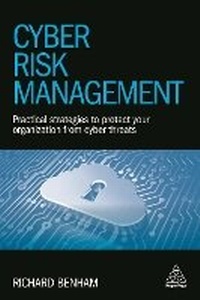
Cyber Risk Management
Practical Strategies to Protect Your Organization from Cyber Threats
1st Edition
Published on 3. April 2018
Book
Paperback/Softback
288 pages
978-0-7494-8259-6 (ISBN)
Description
It is estimated that cyber crime costs trillions of dollars globally every year as businesses become increasingly reliant on technology. 87 per cent of FTSE 100 companies have identified cyber as a principal risk (Deloitte 2017), and it is clear that failure to focus on cyber risk can potentially lead to huge financial losses and disruption of operations, as well as reputational damage. Cyber Risk Management offers vital guidance on evaluating threats and effectively implementing and communicating a cyber security strategy. Crucially, human factors in cyber security are also considered, from employee vetting and managing insider threats, to theories of behaviour and staff training to guard against manipulation.
Structured in two parts, the first section looks at technical developments in how businesses use technology, including cloud computing, blockchain, cryptography, artificial intelligence and the Internet of Things. Case studies of real world cyber crimes, such as the attacks on Tesco Bank and Yahoo, help to explore the origin of threats. The second section provides guidance on how to successfully manage an organization's cyber security, covering risk assessments, financial impact analyses, crisis communications plans, international standards and legal responsibilities. Cyber Risk Management is the indispensable guide for those responsible for assessing cyber risks and creating information security strategies.
Structured in two parts, the first section looks at technical developments in how businesses use technology, including cloud computing, blockchain, cryptography, artificial intelligence and the Internet of Things. Case studies of real world cyber crimes, such as the attacks on Tesco Bank and Yahoo, help to explore the origin of threats. The second section provides guidance on how to successfully manage an organization's cyber security, covering risk assessments, financial impact analyses, crisis communications plans, international standards and legal responsibilities. Cyber Risk Management is the indispensable guide for those responsible for assessing cyber risks and creating information security strategies.
More details
Language
English
Place of publication
London
United Kingdom
Target group
College/higher education
Professional and scholarly
Product notice
Paperback (trade)
Dimensions
Height: 234 mm
Width: 156 mm
ISBN-13
978-0-7494-8259-6 (9780749482596)
Copyright in bibliographic data and cover images is held by Nielsen Book Services Limited or by the publishers or by their respective licensors: all rights reserved.
Schweitzer Classification
Person
Professor Richard Benham is a global cyber security adviser and Professor in Residence at the National Cyber Skills Centre. He founded the National MBA in Cyber Security at Coventry University, UK, and continues to lecture at the University of Gloucestershire, UK, Staffordshire University, UK and Coventry Business School, UK. Professor Benham acts as an adviser to several large organizations including government, and is a regular international speaker on the subject of cyber security.
Content
Chapter - 00: Introduction;
Section - ONE: Developments in Cyber Security;
Chapter - 01: Use of Information in Personal, Business and Government;
Chapter - 02: Development of Threats to Information;
Chapter - 03: Reliance upon Technology and Interconnectedness;
Chapter - 04: Trusting Technology to Process Information;
Chapter - 05: How to Trust People in Information Processing Technology;
Chapter - 07: Artificial Intelligence;
Section - TWO: Managing Cyber Risk;
Chapter - 08: Cyber Security Strategy;
Chapter - 09: Marketing Cyber Security;
Chapter - 10: Managing the Organisation Cyber Posture;
Chapter - 11: Financial Aspects of Cyber Security;
Chapter - 12: Cyber Behaviour and Managing Insider Threat;
Chapter - 13: Corporate Reputation and Crisis Communications;
Chapter - 14: Digital Security Risk and Audit Management;
Chapter - 15: Network Defence Management;
Chapter - 16: International Cyber and Digital Law
Section - ONE: Developments in Cyber Security;
Chapter - 01: Use of Information in Personal, Business and Government;
Chapter - 02: Development of Threats to Information;
Chapter - 03: Reliance upon Technology and Interconnectedness;
Chapter - 04: Trusting Technology to Process Information;
Chapter - 05: How to Trust People in Information Processing Technology;
Chapter - 07: Artificial Intelligence;
Section - TWO: Managing Cyber Risk;
Chapter - 08: Cyber Security Strategy;
Chapter - 09: Marketing Cyber Security;
Chapter - 10: Managing the Organisation Cyber Posture;
Chapter - 11: Financial Aspects of Cyber Security;
Chapter - 12: Cyber Behaviour and Managing Insider Threat;
Chapter - 13: Corporate Reputation and Crisis Communications;
Chapter - 14: Digital Security Risk and Audit Management;
Chapter - 15: Network Defence Management;
Chapter - 16: International Cyber and Digital Law