

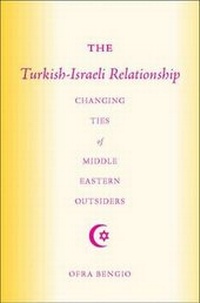
The Turkish-Israeli Relationship
Changing Ties of Middle Eastern Outsiders
Published on 14. May 2004
Book
Hardback
256 pages
978-1-4039-6589-9 (ISBN)
Description
Turkey and Israel are two of the most important countries in the Middle East, but also are outsiders to the region for political and cultural reasons. Here Bengio examines the historic, geo strategic and political cultural roots of the Turkish Israeli relationship, from the 1950s until today. Linking the relationship's evolution to the complexities of Turkey's historical ties with the Arab world, and changing domestic, regional and global conditions, the book traces the ebb and flow of the curious ties between the two countries. Bengio calls for a significant revision in the received wisdom about inter Arab and Arab Israeli conflicts and rivalries, placing Turkey in a more central role. The book approaches Middle Eastern affairs from inside the region, based on Turkish, Israeli and Arab sources, providing a much needed corrective to American and British centered accounts.
More details
Language
English
Place of publication
Gordonsville
United States
Publishing group
Palgrave USA
Dimensions
Height: 252 mm
Width: 192 mm
Weight
511 gr
ISBN-13
978-1-4039-6589-9 (9781403965899)
Copyright in bibliographic data and cover images is held by Nielsen Book Services Limited or by the publishers or by their respective licensors: all rights reserved.
Schweitzer Classification
Other editions
Additional editions
Book
01/2010
Palgrave MacMillan
€53.49
Shipment within 15-20 days
E-Book
05/2004
Palgrave MacMillan
€53.49
Available for download
Person
OFRA BENGIO is Senior Research Fellow at the Moshe Dayan Center for Middle Eastern and African Studies, and Senior Lecturer in Middle East History, at Tel Aviv University, Israel.
Content
Preface Introduction After the 1991 Gulf War Earthquake Days of Future Past: The Peripheral Alliance The 1990s Alignment: Motives and Players The Making of the Alignment Implications and Reactions Conclusion: A New Regional Order