

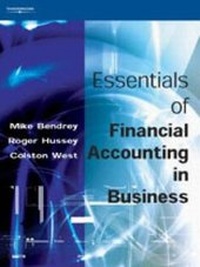
Essentials of Financial Accounting in Business
Published on 23. October 2003
Book
Paperback/Softback
456 pages
978-1-84480-089-6 (ISBN)
Description
In this authoritative introduction to the subject, the authors explain and illustrate the ways in which financial accounting works in all its phases - from the use of source documents through to the formulation and presentation of accounts. In the process they explain basic concepts, with extended treatment of such fundamental issues as double-entry book-keeping and cash control.
More details
Edition
New edition
Language
English
Place of publication
London
United Kingdom
Target group
College/higher education
Professional and scholarly
Edition type
New edition
Dimensions
Height: 25 mm
Width: 188 mm
Thickness: 243 mm
Weight
890 gr
ISBN-13
978-1-84480-089-6 (9781844800896)
Copyright in bibliographic data and cover images is held by Nielsen Book Services Limited or by the publishers or by their respective licensors: all rights reserved.
Schweitzer Classification
Persons
Content
PART I: THE BUSINESS WORLD.
1. The Providers of Information.
2. Potential Users of Financial Information.
3. The Role of the Accountant.
4. Accounting Concepts and Conventions.
PART II: ACCOUNTING FOR ECONOMIC TRANSACTIONS.
5. Identifying Transactions.
6. Recording Transactions.
7. Controlling Cash.
8. Balancing the Books.
PART III: INDIVIDUALS IN BUSINESS.
9. Cash-Flow Statements.
10. Profit-and-Loss Account.
11. Balance Sheet.
12. Presentation and Principles.
13. Dealing with Fixed Assets.
14. Accounting for Non-Payment.
15. Relationship Between Financial Statements.
16. Incomplete Records.
PART IV: PARTNERS IN BUSINESS.
17. Partnerships: General Principles.
18. Profit-and-Loss Account.
19. Balance Sheet.
20. Partnership Changes.
PART V: LIMITED COMPANIES.
21. Limited Companies: General Principles.
22. National and International Regulations.
23. Financial Statements of a Limited Company.
24. Statements of Financial Performance.
25. Statements of Financial Position.
PART VI: THE ANALYSIS OF FINANCIAL STATEMENTS.
26. Ration Analysis.
27. Investment Ratios.
28. Interpretation of Financial Statements.
PART VII: OTHER TYPES OF ORGANISATION.
29. Clubs and Societies.
30. Manufacturing Organisations.
Answers.
Index.
1. The Providers of Information.
2. Potential Users of Financial Information.
3. The Role of the Accountant.
4. Accounting Concepts and Conventions.
PART II: ACCOUNTING FOR ECONOMIC TRANSACTIONS.
5. Identifying Transactions.
6. Recording Transactions.
7. Controlling Cash.
8. Balancing the Books.
PART III: INDIVIDUALS IN BUSINESS.
9. Cash-Flow Statements.
10. Profit-and-Loss Account.
11. Balance Sheet.
12. Presentation and Principles.
13. Dealing with Fixed Assets.
14. Accounting for Non-Payment.
15. Relationship Between Financial Statements.
16. Incomplete Records.
PART IV: PARTNERS IN BUSINESS.
17. Partnerships: General Principles.
18. Profit-and-Loss Account.
19. Balance Sheet.
20. Partnership Changes.
PART V: LIMITED COMPANIES.
21. Limited Companies: General Principles.
22. National and International Regulations.
23. Financial Statements of a Limited Company.
24. Statements of Financial Performance.
25. Statements of Financial Position.
PART VI: THE ANALYSIS OF FINANCIAL STATEMENTS.
26. Ration Analysis.
27. Investment Ratios.
28. Interpretation of Financial Statements.
PART VII: OTHER TYPES OF ORGANISATION.
29. Clubs and Societies.
30. Manufacturing Organisations.
Answers.
Index.