


Problematising Intelligence Studies
Towards A New Research Agenda
1st Edition
Published on 15. June 2022
Book
Hardback
266 pages
978-1-032-07120-6 (ISBN)
Description
This book offers a new research agenda for intelligence studies in contemporary times.
In contrast to Intelligence Studies (IS), whose aim has largely been to improve the performance of national security services and assist in policy making, this book takes the investigation of the new professionals and everyday practices of intelligence as the immediate point of departure. Starting from the observation that intelligence today is increasingly about counter-terrorism, crime control, surveillance, and other security-related issues, this book adopts a transdisciplinary approach for studying the shifting logics of intelligence, how it has come to involve an expanding number of empirical sites, such as the police, local community, prison and the Internet, as well as a corresponding multiplicity of new actors in these domains. Shifting the focus away from traditional spies and Anglo-American intelligence services, this book addresses the transformations of contemporary intelligence through empirically detailed and theoretically innovative analyses, making a key contribution to existing scholarship.
This book will be of much interest to students of intelligence studies, critical security studies, foreign policy, and International Relations.
In contrast to Intelligence Studies (IS), whose aim has largely been to improve the performance of national security services and assist in policy making, this book takes the investigation of the new professionals and everyday practices of intelligence as the immediate point of departure. Starting from the observation that intelligence today is increasingly about counter-terrorism, crime control, surveillance, and other security-related issues, this book adopts a transdisciplinary approach for studying the shifting logics of intelligence, how it has come to involve an expanding number of empirical sites, such as the police, local community, prison and the Internet, as well as a corresponding multiplicity of new actors in these domains. Shifting the focus away from traditional spies and Anglo-American intelligence services, this book addresses the transformations of contemporary intelligence through empirically detailed and theoretically innovative analyses, making a key contribution to existing scholarship.
This book will be of much interest to students of intelligence studies, critical security studies, foreign policy, and International Relations.
More details
Series
Language
English
Place of publication
London
United Kingdom
Publishing group
Taylor & Francis Ltd
Target group
College/higher education
Professional and scholarly
Postgraduate, Professional, and Undergraduate Advanced
Dimensions
Height: 240 mm
Width: 161 mm
Thickness: 20 mm
Weight
584 gr
ISBN-13
978-1-032-07120-6 (9781032071206)
Copyright in bibliographic data and cover images is held by Nielsen Book Services Limited or by the publishers or by their respective licensors: all rights reserved.
Schweitzer Classification
Other editions
Additional editions
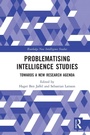
Hager Ben Jaffel | Sebastian Larsson
Problematising Intelligence Studies
Towards A New Research Agenda
Book
01/2024
1st Edition
Routledge
€65.60
Shipment within 10-20 days
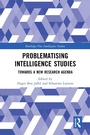
Hager Ben Jaffel | Sebastian Larsson
Problematising Intelligence Studies
Towards A New Research Agenda
E-Book
06/2022
1st Edition
Routledge
€59.49
Available for download
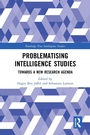
Hager Ben Jaffel | Sebastian Larsson
Problematising Intelligence Studies
Towards A New Research Agenda
E-Book
06/2022
1st Edition
Routledge
€59.49
Available for download
Persons
Hager Ben Jaffel is a Research Associate at the National Center for Scientific Research (CNRS), Paris, France.
Sebastian Larsson is an Associate Senior Lecturer in War Studies at the Swedish Defence University, Sweden.
Sebastian Larsson is an Associate Senior Lecturer in War Studies at the Swedish Defence University, Sweden.
Content
PART 1: Reconstructing the Object of Intelligence 1. Introduction: What's the Problem with Intelligence Studies? Outlining a New Research Agenda on Contemporary Intelligence 2. Towards a Reflexive Study of Intelligence Accountability 3. Tracing Pre-Emptive Intelligence-Led Policing (ILP): Immigration, Classification Struggles, and the Expansion of Intelligence Logics in British Policing PART 2: The Practical Transformations of Contemporary Intelligence 4. Citizen-Led Intelligence Gathering under UK's Prevent Duty 5. Prison Intelligence in France: An Empirical Investigation of the Emergence of Counter-Radicalisation Professionals 6. Manufacturing Intelligence: Police and Intelligence Services in Germany 7. Transversal Practices of Everyday Intelligence Work in New Zealand: Transnationalism, Commercialism, Diplomacy 8. The Techno-Legal Boundaries of Intelligence: NSA and FRA's Collaborations in Transatlantic Mass Surveillance PART 3: Conceptual Reconsiderations of Intelligence 9. Regulating the Internet in Times of Mass Surveillance: A Universal Global Space with Universal Human Rights? 10. After Cambridge Analytica: Rethinking Surveillance in the Age of (Com)Modification 11. Violence Performed in Secret by State Agents: For an Alternative Problematisation of Intelligence Studies PART 4: Conclusion 12. Conclusion: Towards New Intelligence Studies