


Understanding African Philosophy
A Cross-cultural Approach to Classical and Contemporary Issues
1st Edition
Published on 3. April 2002
Book
Hardback
240 pages
978-0-415-93936-2 (ISBN)
Description
Understanding African Philosophy serves as a critical guide to some of the most important issues in modern African philosophy. Richard Bell introduces readers to the complexity of Africa, the legacy of colonialism, the challenges of post independence Africa, and other recent developments in African Philosophy. Chapters discuss the value of African oral and written texts for philosophy, concepts of negritude, African socialism, and race, as well as current discussions in international development ethics connected to poverty and human suffering. Two chapters are focused on moral issues related to community, justice, and civic responsibility. Bell's sensitivity to and engagement with the complications of cross-cultural understandings help non-African readers connect with African culture and thought.
Reviews / Votes
"...this philosophy has substance, is collegial, is modest and above all is wise...Splendid! A book to think with!" -- Malcolm Ruel, recently retired from Cambridge University"Understanding African Philosophy is a fluid, scholarly work with postmodern appeal to young researchers in African philosophy." -- Muyiwa Falaiye and Oscar Odiboh
"For Bell, 'cross-cultural understanding' is itself an interdisciplinary project that draws on different disciplines in order to position the reader 'to see' and 'to understand' the other's world. Bell deserves credit for his appreciation of this requirement and for bringing it to our attention." -- Segun Gbadegesin, Howard University/ Signs
More details
Series
Language
English
Place of publication
London
United Kingdom
Publishing group
Taylor & Francis Ltd
Target group
College/higher education
Dimensions
Height: 235 mm
Width: 157 mm
Thickness: 17 mm
Weight
499 gr
ISBN-13
978-0-415-93936-2 (9780415939362)
Copyright in bibliographic data and cover images is held by Nielsen Book Services Limited or by the publishers or by their respective licensors: all rights reserved.
Schweitzer Classification
Other editions
Additional editions
Richard H. Bell
Understanding African Philosophy
A Cross-cultural Approach to Classical and Contemporary Issues
E-Book
04/2004
Routledge
€55.49
Available for download
Richard H. Bell
Understanding African Philosophy
A Cross-cultural Approach to Classical and Contemporary Issues
E-Book
04/2004
Routledge
€55.49
Available for download
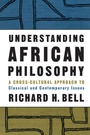
Richard H. Bell
Understanding African Philosophy
A Cross-cultural Approach to Classical and Contemporary Issues
Book
04/2002
1st Edition
Routledge
€63.00
Shipment within 15-20 days
Person
Richard H. Bell is Professor of Philosophy at the College of Wooster. He is the author of several books including Simone Weil: The Way of Justice as Compassion (1998), co-author of Seeds of the Spirit: Wisdom of the TwentiethCentury (1995) and editor of Simone Weil's Philosophy ofCulture (1993).
Content
Preface Acknowledgements 1. Understanding Another Culture Understanding Others and Ourselves A Procedure from an Aesthetic Point of View Found in Translation 2. Foundations of Modern African Philosophy Ethnophilosophy and the Negritude Movement Critical, Scientific Philosophy Sage Philosophy 3. Liberation and Postcolonial African Philosophy African Humanism and Socialism Postcolonial African Thought The Question of Race 4. African Moral Philosophy I: Community and Justice Persons, Individualism and Communalism Suffering and Injustice Poverty and Human Development 5. African Moral Philosophy II: Truth and Reconciliation Linking Communalism, Ubuntu and Restorative Justice Understanding the Grammar of Justice after Apartheid Not All Storytelling Heals: Criticisms of the TRC Process Justice and Political Transformation 6. Narrative in African Philosophy: Orality, and Icons The Philosophical Significance of Oral Narratives Rational Dialogue, Democracy and the Village Palaver Finding Pictures and Fictitious Narratives Surprising Iconic Forms and the Aesthetic Consciousness Revisited 7. Some Concluding Remarks Notes Bibliography Index