

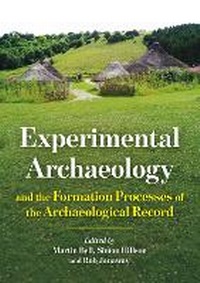
Experimental Archaeology and the Formation Processes of the Archaeological Record
Will be published approx. on 30. November 2026
Book
Paperback/Softback
240 pages
979-8-88857-268-9 (ISBN)
Description
This book explores how experimental structures, such as earthworks and buildings, help us to understand how the archaeological record forms. Topics include: weathering, changes to buried soils, sediment micromorphological analysis, the role of soil animals, the decay and preservation of a range of buried materials and structures, seed viability and survival, molluscs and pollen. It includes the work of 32 scientists, specialists in a wide range of sources of evidence, and demonstrates the benefits of a multi-disciplinary approach.
The introduction reviews the history of experimental archaeology in the context of evolving theoretical developments in archaeology from 1960 to now. Part Two looks at a long-term experiment: a carefully constructed linear earthwork created under the auspices of the British Association for the Advancement of Science in 1963 with an intended duration of 128 years. This report presents the results from the 33-year excavation (1996) of the Wareham Experimental Earthwork in Dorset. Buried materials include textiles, leather, hide, rope, wood and glass. Samples of textile and rope are associated with copper coins and steel discs to examine their effects on preservation. Changes to these materials after burial are relevant, not just to archaeologists but to those with interests in forensic and materials science.
Part Three concerns excavations of octagonal and related earthwork experiments originally established by the late Peter Reynolds. The excavations (2006-2015) considered weathering of the earthworks, soil and biological evidence from the buried land surfaces. Finally, Part Four looks at the experimental roundhouses of Butser Ancient Farm and St Fagans Open Air Museum, both also constructed by Dr Reynolds.
The case studies demonstrate that relatively short-term experiments on decadal timescales help us to understand how the archaeological record forms. Many changes to both earthworks and buried materials occur rapidly following burial. This research provides the opportunity to consider the strengths and limitations of experiment in archaeology and to highlight the potential mutual benefits of more active collaboration between experimental heritage sites, with their important educational role, and the scientific research community.
The introduction reviews the history of experimental archaeology in the context of evolving theoretical developments in archaeology from 1960 to now. Part Two looks at a long-term experiment: a carefully constructed linear earthwork created under the auspices of the British Association for the Advancement of Science in 1963 with an intended duration of 128 years. This report presents the results from the 33-year excavation (1996) of the Wareham Experimental Earthwork in Dorset. Buried materials include textiles, leather, hide, rope, wood and glass. Samples of textile and rope are associated with copper coins and steel discs to examine their effects on preservation. Changes to these materials after burial are relevant, not just to archaeologists but to those with interests in forensic and materials science.
Part Three concerns excavations of octagonal and related earthwork experiments originally established by the late Peter Reynolds. The excavations (2006-2015) considered weathering of the earthworks, soil and biological evidence from the buried land surfaces. Finally, Part Four looks at the experimental roundhouses of Butser Ancient Farm and St Fagans Open Air Museum, both also constructed by Dr Reynolds.
The case studies demonstrate that relatively short-term experiments on decadal timescales help us to understand how the archaeological record forms. Many changes to both earthworks and buried materials occur rapidly following burial. This research provides the opportunity to consider the strengths and limitations of experiment in archaeology and to highlight the potential mutual benefits of more active collaboration between experimental heritage sites, with their important educational role, and the scientific research community.
More details
Language
English
Place of publication
United States
Target group
Professional and scholarly
Product notice
Paperback (trade)
Unsewn / adhesive bound
Illustrations
128 b/w and colour
Dimensions
Height: 240 mm
Width: 170 mm
ISBN-13
979-8-88857-268-9 (9798888572689)
Copyright in bibliographic data and cover images is held by Nielsen Book Services Limited or by the publishers or by their respective licensors: all rights reserved.
Schweitzer Classification
Persons
Martin Bell is Emeritus Professor of Archaeological Science at Reading University where he taught Geoarchaeology and Experimental Archaeology. He is a fellow of the Society of Antiquaries and the British Academy. Simon Hillson is Emeritus Professor of Bioarchaeology at University College London. He has published on bioarchaeology and zooarchaeology and is continuing bioarchaeological fieldwork in Greece. Rob Janaway is Associate Professor in Forensic and Archaeological Sciences at the University of Bradford. He first worked on Wareham material as part of his undergraduate dissertation in 1979, and was responsible for the 32-year material recovery at both Overton and Wareham.
Content
1. The experimental archaeology of formation processes, by Martin Bell
1.1 Introduction
1.2 The position of the archaeologist and key terms
1.3 Historical development of experimental archaeology
1.4 Philosophies of experiment and trends in theory and practice
1.5 Critique
1.6 Conclusions
1.7 Background to the book
2. Introduction to the Experimental Earthwork Project and Wareham Earthwork in its context, by Martin Bell
2.1 The Experimental Earthwork Project
2.2 Octagon Earthworks
2.3 Overton Experimental Earthwork
2.4 Wareham Experimental Earthwork and its setting
2.5 Topographic setting
2.6 The Nature Reserve
2.7 Geology
2.8 Heathland origins
2.9 Archaeology on the Morden Bog Reserve
2.10 Archaeology in the surrounding area
2.11 Summary of previous research on the Wareham Earthwork
3. The Wareham Experimental Earthwork after 33 years, by Martin Bell, Simon Hillson and John Crowther
3.1 Introduction
3.2 Aims and objectives of the 33-year investigation
3.3 The ditch
3.4 Analysis of ditch sediments, by John Crowther
3.5 Ditch changes through time
3.6 Zoo-geomorphic processes acting on the bank and ditch
3.7 Bank sediments
3.8 Old Land Surface
3.9 Plastic tubing
3.10 Pottery discs
3.11 Conclusions
3.12 Acknowledgements
4. The Wareham buried soil and interaction of soil organisms with buried materials
4.1 Changes to the buried soil, by Richard Macphail
4.2 Interaction of soil organisms with buried materials, by T. Lawson, D.W. Hopkins, J.A. Chudek and R.C. Janaway
5. Wareham botanical studies
5.1 Background
5.2 Vegetation analysis, by Patricia E.J. Wiltshire
5.3 Seed flora studies, by Wendy Carruthers and Vanessa Straker
5.4 Seed viability studies, by Ken Thompson and S.R. Band
5.5 Pollen analysis, by Keith Crabtree
5.6 Botanical conclusions, by Wendy Carruthers and Vanessa Straker
6. Wareham buried materials: the degradation of textiles, rope, leather and goatskin, and associated metals, by Rob Janaway, A. Surtees, l. Carter, G. Edwards, I. Hovmand and J.G. Mc Donnell
7. Histology and biochemistry of bone specimens from Overton and Wareham, by Simon Hillson, Christine Nielsen-Marsh, J. Bailey, S. Bond and R.I. Macphail
7.1 Introduction and materials
7.2 Conditions of burial
7.3 Methods
7.3 Description of the specimens
7.4 Histological description of specimens
7.5 Physical properties and inorganic chemistry
7.6 DNA chemistry
7.7 Discussion and conclusions
8. Wareham Wood decomposition: micromorphological and ultrastructural aspects, by R.A. Blanchette and John E. Haight
8.1 Introduction, samples and methods
8.2 Results
8.3 Discussion
9. Glass, other buried materials and the project archive
9.1 Glass, by J. Henderson
9.2 Introduction
9.3 Analytical techniques used
9.4 Conclusions
10. Octagonal and other earthworks
10.1 Introduction to octagonal earthworks, by Martin Bell
10.2 Wroughton Octagonal Earthwork, by Martin Bell
10.3 Wroughton 2006 excavation: 21-year-old earthwork, by Emma Gilbert and Martin Bell
10.4 Wroughton 2015 excavation: 30-year-old earthwork, by Martin Bell
10.5 Mollusc analysis of the 30-year-old Wroughton earthwork, by Thomas Walker
10.6 Butser, Bascombe Octagonal Earthwork after 16 years, by Amy Poole and Martin Bell
10.7 Fishbourne Octagonal Earthwork after 22 years, by Martin Bell and Amy Poole
10.8 Fishbourne soil and sediment analysis, by Amy Poole
10.9 Fishbourne: pollen analysis, by Alex Brown
10.10 Fishbourne: conclusions
10.11 St Fagans, Cardiff Circular Earthwork after 17 years: introduction, by Amy Poole
10.12 St Fagans Soil and sediment analysis, by Amy Poole
10.13 Octagonal and related earthworks conclusions, by Martin Bell
11. Excavation of experimental roundhouses
11.1 Introduction to experimental roundhouses, by Martin Bell
11.2 Butser Longbridge Deverill roundhouse after 14 years, by Martin Bell
11.3 Longbridge Deverill roundhouse: sediment micromorphological analysis, by Rowena Banerjea
11.4 Longbridge Deverill roundhouse: pollen analysis, by Alex Brown
11.5 Moel y Gaer roundhouse at St Fagans after 17 years, by Martin Bell
11.6 Geochemistry of the Moel y Gaer roundhouse, by Katherine Brown
11.7 Micromorphology of the Moel y Gaer roundhouse, by Rowena Banerjea
11.8 Roundhouses conclusions, by Martin Bell
12. Conclusions, by Martin Belll
1.1 Introduction
1.2 The position of the archaeologist and key terms
1.3 Historical development of experimental archaeology
1.4 Philosophies of experiment and trends in theory and practice
1.5 Critique
1.6 Conclusions
1.7 Background to the book
2. Introduction to the Experimental Earthwork Project and Wareham Earthwork in its context, by Martin Bell
2.1 The Experimental Earthwork Project
2.2 Octagon Earthworks
2.3 Overton Experimental Earthwork
2.4 Wareham Experimental Earthwork and its setting
2.5 Topographic setting
2.6 The Nature Reserve
2.7 Geology
2.8 Heathland origins
2.9 Archaeology on the Morden Bog Reserve
2.10 Archaeology in the surrounding area
2.11 Summary of previous research on the Wareham Earthwork
3. The Wareham Experimental Earthwork after 33 years, by Martin Bell, Simon Hillson and John Crowther
3.1 Introduction
3.2 Aims and objectives of the 33-year investigation
3.3 The ditch
3.4 Analysis of ditch sediments, by John Crowther
3.5 Ditch changes through time
3.6 Zoo-geomorphic processes acting on the bank and ditch
3.7 Bank sediments
3.8 Old Land Surface
3.9 Plastic tubing
3.10 Pottery discs
3.11 Conclusions
3.12 Acknowledgements
4. The Wareham buried soil and interaction of soil organisms with buried materials
4.1 Changes to the buried soil, by Richard Macphail
4.2 Interaction of soil organisms with buried materials, by T. Lawson, D.W. Hopkins, J.A. Chudek and R.C. Janaway
5. Wareham botanical studies
5.1 Background
5.2 Vegetation analysis, by Patricia E.J. Wiltshire
5.3 Seed flora studies, by Wendy Carruthers and Vanessa Straker
5.4 Seed viability studies, by Ken Thompson and S.R. Band
5.5 Pollen analysis, by Keith Crabtree
5.6 Botanical conclusions, by Wendy Carruthers and Vanessa Straker
6. Wareham buried materials: the degradation of textiles, rope, leather and goatskin, and associated metals, by Rob Janaway, A. Surtees, l. Carter, G. Edwards, I. Hovmand and J.G. Mc Donnell
7. Histology and biochemistry of bone specimens from Overton and Wareham, by Simon Hillson, Christine Nielsen-Marsh, J. Bailey, S. Bond and R.I. Macphail
7.1 Introduction and materials
7.2 Conditions of burial
7.3 Methods
7.3 Description of the specimens
7.4 Histological description of specimens
7.5 Physical properties and inorganic chemistry
7.6 DNA chemistry
7.7 Discussion and conclusions
8. Wareham Wood decomposition: micromorphological and ultrastructural aspects, by R.A. Blanchette and John E. Haight
8.1 Introduction, samples and methods
8.2 Results
8.3 Discussion
9. Glass, other buried materials and the project archive
9.1 Glass, by J. Henderson
9.2 Introduction
9.3 Analytical techniques used
9.4 Conclusions
10. Octagonal and other earthworks
10.1 Introduction to octagonal earthworks, by Martin Bell
10.2 Wroughton Octagonal Earthwork, by Martin Bell
10.3 Wroughton 2006 excavation: 21-year-old earthwork, by Emma Gilbert and Martin Bell
10.4 Wroughton 2015 excavation: 30-year-old earthwork, by Martin Bell
10.5 Mollusc analysis of the 30-year-old Wroughton earthwork, by Thomas Walker
10.6 Butser, Bascombe Octagonal Earthwork after 16 years, by Amy Poole and Martin Bell
10.7 Fishbourne Octagonal Earthwork after 22 years, by Martin Bell and Amy Poole
10.8 Fishbourne soil and sediment analysis, by Amy Poole
10.9 Fishbourne: pollen analysis, by Alex Brown
10.10 Fishbourne: conclusions
10.11 St Fagans, Cardiff Circular Earthwork after 17 years: introduction, by Amy Poole
10.12 St Fagans Soil and sediment analysis, by Amy Poole
10.13 Octagonal and related earthworks conclusions, by Martin Bell
11. Excavation of experimental roundhouses
11.1 Introduction to experimental roundhouses, by Martin Bell
11.2 Butser Longbridge Deverill roundhouse after 14 years, by Martin Bell
11.3 Longbridge Deverill roundhouse: sediment micromorphological analysis, by Rowena Banerjea
11.4 Longbridge Deverill roundhouse: pollen analysis, by Alex Brown
11.5 Moel y Gaer roundhouse at St Fagans after 17 years, by Martin Bell
11.6 Geochemistry of the Moel y Gaer roundhouse, by Katherine Brown
11.7 Micromorphology of the Moel y Gaer roundhouse, by Rowena Banerjea
11.8 Roundhouses conclusions, by Martin Bell
12. Conclusions, by Martin Belll