

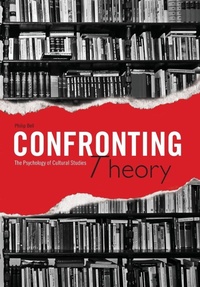
Confronting Theory
The Psychology of Cultural Studies
Published on 15. May 2010
Book
Paperback/Softback
147 pages
978-1-84150-317-2 (ISBN)
Description
Confronting Theory presents a methodological (philosophical) and educational evaluation and critique of what has come to be known as Theory ('with a capital-T') in cross-disciplinary humanities education. Rather than merely dismissing Theory writing as risibly pretentious and abstract, Confronting Theory examines its principal concepts from the perspective of academic psychology and shows that, although 'Theory that only dogs can hear' may sound like revolutionary psychological analysis it is frequently incoherent and/or has few, if any, empirical implications that students can evaluate.
More details
Language
English
Place of publication
United Kingdom
Publishing group
Intellect
Target group
Professional and scholarly
Dimensions
Height: 244 mm
Width: 170 mm
Thickness: 8 mm
Weight
276 gr
ISBN-13
978-1-84150-317-2 (9781841503172)
Copyright in bibliographic data and cover images is held by Nielsen Book Services Limited or by the publishers or by their respective licensors: all rights reserved.
Schweitzer Classification
Other editions
Additional editions
E-Book
05/2014
1st Edition
Intellect Books
€28.49
Available for download
Person
Philip Bell has published several books on television and media culture and more than sixty research monographs, journal articles and book chapters on the representation of social issues in the media, globalization and genres of film and television.
Content
Chapter One:
Cultural Studies and Capital-T Theory
The Problem of 'Theory'
Cultural Studies and/as Psychology
Texts and Science
Theory's Challenge
Chapter Two:
What is Theory About?
Immaterial Foundations
After the 'Sokal Hoax'
Theory is Not Metaphor
Chapter Three:
Different Things
Language Problems
Reductionism and 'Essentialism'
Relations and Things
Becoming Theoretical
Real Differences: 'Race' and Identity
Making Sense of Difference
Chapter Four:
Theory, People and 'Subjects'
Psychology and the Emergence of Cultural Studies
The 'Return to the Signifier'
Semiotic Subjects, or Persons?
Decentring Psychology
Equivocating: Anti-'Essentialism'
Subjects Need Biology
Chapter Five:
'Post-Human' Theory and Cultural Studies
The Printing Press, Digital Media and Humanism
Enlightenment Humanism
Escaping the Human?
Problems of Coherence
Chapter Six:
Affecting Ontologies
Affect as an Entity
The Trinity: Feeling, Emotion, Affect
Becoming Ontological - The Student's Problem
Affect extraordinaire: Horse Sense?
Chapter Seven:
Real experience, Un-real Science
Moving Science: The Body in Theory
Vital Phenomenology
Neo- or Non-Psychology?
Realism as an Ethical Attitude
Chapter Eight:
Theory and Education
Realism as a Default Position
When Students 'do Theory'
Teaching Theory
Bluffing
'Post-Humanities' and Education
No Laughing Matter
Cultural Studies and Capital-T Theory
The Problem of 'Theory'
Cultural Studies and/as Psychology
Texts and Science
Theory's Challenge
Chapter Two:
What is Theory About?
Immaterial Foundations
After the 'Sokal Hoax'
Theory is Not Metaphor
Chapter Three:
Different Things
Language Problems
Reductionism and 'Essentialism'
Relations and Things
Becoming Theoretical
Real Differences: 'Race' and Identity
Making Sense of Difference
Chapter Four:
Theory, People and 'Subjects'
Psychology and the Emergence of Cultural Studies
The 'Return to the Signifier'
Semiotic Subjects, or Persons?
Decentring Psychology
Equivocating: Anti-'Essentialism'
Subjects Need Biology
Chapter Five:
'Post-Human' Theory and Cultural Studies
The Printing Press, Digital Media and Humanism
Enlightenment Humanism
Escaping the Human?
Problems of Coherence
Chapter Six:
Affecting Ontologies
Affect as an Entity
The Trinity: Feeling, Emotion, Affect
Becoming Ontological - The Student's Problem
Affect extraordinaire: Horse Sense?
Chapter Seven:
Real experience, Un-real Science
Moving Science: The Body in Theory
Vital Phenomenology
Neo- or Non-Psychology?
Realism as an Ethical Attitude
Chapter Eight:
Theory and Education
Realism as a Default Position
When Students 'do Theory'
Teaching Theory
Bluffing
'Post-Humanities' and Education
No Laughing Matter