

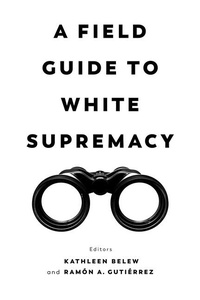
A Field Guide to White Supremacy
1st Edition
Published on 26. October 2021
Book
Paperback/Softback
424 pages
978-0-520-38252-7 (ISBN)
Description
Drawing explicit lines, across time and a broad spectrum of violent acts, to provide the definitive field guide for understanding and opposing white supremacy in America
Hate, racial violence, exclusion, and racist laws receive breathless media coverage, but such attention focuses on distinct events that gain our attention for twenty-four hours. The events are presented as episodic one-offs, unfortunate but uncanny exceptions perpetrated by lone wolves, extremists, or individuals suffering from mental illness-and then the news cycle moves on. If we turn to scholars and historians for background and answers, we often find their knowledge siloed in distinct academic subfields, rarely connecting current events with legal histories, nativist insurgencies, or centuries of misogynist, anti-Black, anti-Latino, anti-Asian, and xenophobic violence. But recent hateful actions are deeply connected to the past-joined not only by common perpetrators, but by the vast complex of systems, histories, ideologies, and personal beliefs that comprise white supremacy in the United States.
Gathering together a cohort of researchers and writers, A Field Guide to White Supremacy provides much-needed connections between violence present and past. This book illuminates the career of white supremacist and patriarchal violence in the United States, ranging across time and impacted groups in order to provide a working volume for those who wish to recognize, understand, name, and oppose that violence. The Field Guide is meant as an urgent resource for journalists, activists, policymakers, and citizens, illuminating common threads in white supremacist actions at every scale, from hate crimes and mass attacks to policy and law. Covering immigration, antisemitism, gendered violence, lynching, and organized domestic terrorism, the authors reveal white supremacy as a motivating force in manifold parts of American life. The book also offers a sampling of some of the most recent scholarship in this area in order to spark broader conversations between journalists and their readers, teachers and their students, and activists and their communities.
A Field Guide to White Supremacy will be an indispensable resource in paving the way for politics of alliance in resistance and renewal.
Hate, racial violence, exclusion, and racist laws receive breathless media coverage, but such attention focuses on distinct events that gain our attention for twenty-four hours. The events are presented as episodic one-offs, unfortunate but uncanny exceptions perpetrated by lone wolves, extremists, or individuals suffering from mental illness-and then the news cycle moves on. If we turn to scholars and historians for background and answers, we often find their knowledge siloed in distinct academic subfields, rarely connecting current events with legal histories, nativist insurgencies, or centuries of misogynist, anti-Black, anti-Latino, anti-Asian, and xenophobic violence. But recent hateful actions are deeply connected to the past-joined not only by common perpetrators, but by the vast complex of systems, histories, ideologies, and personal beliefs that comprise white supremacy in the United States.
Gathering together a cohort of researchers and writers, A Field Guide to White Supremacy provides much-needed connections between violence present and past. This book illuminates the career of white supremacist and patriarchal violence in the United States, ranging across time and impacted groups in order to provide a working volume for those who wish to recognize, understand, name, and oppose that violence. The Field Guide is meant as an urgent resource for journalists, activists, policymakers, and citizens, illuminating common threads in white supremacist actions at every scale, from hate crimes and mass attacks to policy and law. Covering immigration, antisemitism, gendered violence, lynching, and organized domestic terrorism, the authors reveal white supremacy as a motivating force in manifold parts of American life. The book also offers a sampling of some of the most recent scholarship in this area in order to spark broader conversations between journalists and their readers, teachers and their students, and activists and their communities.
A Field Guide to White Supremacy will be an indispensable resource in paving the way for politics of alliance in resistance and renewal.
Reviews / Votes
"Belew and Gutierrez have compiled a superstar group of writers, commentators, and scholars who make sense of these vicious times of sophisticated hate. Collectively, they make the case that white supremacy-not 'democracy' or 'freedom,' as some like to think-is the most dominant idea (or ideology) in the history of the United States." * The Progressive * "An important and timely collection in a moment of political and social polarization." * California Review of Books * "This edited volume gives a clear and nuanced view of the different manifestations of white supremacy in the US. While modestly referred to as a manual by the editors, the volume shows the endurance of white supremacy in the past and the present, its embedment in its democratic institutions in the US, and ongoing manifestations." * Ethnic & Racial Studies * "A Field Guide to White Supremacy tracks the complex career of white supremacy, settler colonialism, heteropatriarchy, anti-Semitism, and nativism in the United States. . . . This is an indispensable volume for historians of race, racism, gender and sexuality, and immigration who are interested in the myriad ways that white supremacy has been produced and reproduced in the United States since its founding." * California History * "Lucid, written for a broad audience. . . . a lightning strike against any complacency within or without the academy that racism is merely Trumpism, or that both are somehow 'over'." * Against the Current *More details
Edition
First Edition
Language
English
Place of publication
Berkerley
United States
Target group
Professional and scholarly
Product notice
Paperback (trade)
Illustrations
6 b-w photos
Dimensions
Height: 228 mm
Width: 146 mm
Thickness: 27 mm
Weight
556 gr
ISBN-13
978-0-520-38252-7 (9780520382527)
Copyright in bibliographic data and cover images is held by Nielsen Book Services Limited or by the publishers or by their respective licensors: all rights reserved.
Schweitzer Classification
Other editions
Additional editions
Kathleen Belew | Ramon A. Gutierrez
A Field Guide to White Supremacy
E-Book
10/2021
1st Edition
Naval Institute Press
€24.49
Available for download
Persons
Kathleen Belew is a historian of the present and leading expert on the white power movement, vigilante violence, and political extremism. Her first book, Bring the War Home, has been discussed on Fresh Air, Newshour, Frontline, and in the New York Times.
Ramon A. Gutierrez has written extensively on the history of race, gender, and sexuality in Latin American and among Latina/os in the US, offering courses on these topics at the University of Chicago.
Ramon A. Gutierrez has written extensively on the history of race, gender, and sexuality in Latin American and among Latina/os in the US, offering courses on these topics at the University of Chicago.
Content
Thoughts on the Associated Press Stylebook, by Kathleen Belew et al.
Introduction, by Kathleen Belew and Ramon A. Gutierrez
Section I Building, Protecting, and Profiting from Whiteness
1. Nation v. Municipality: Indigenous Land Recovery, Settler Resentment, and Taxation on the Oneida Reservation
Doug Kiel
2. A Culture of Racism
Keeanga-Yamahtta Taylor
3. Policing the Boundaries of the White Republic: From Slave Codes to Mass Deportations
Juan F. Perea
4. The Arc of American Islamophobia: From Early History through the Present
Khaled A. Beydoun
Section II Iterations of White Supremacy
5. The Longest War: Rape Culture and Domestic Violence
Rebecca Solnit
6. The Pain We Still Need to Feel: The New Lynching Memorial Confronts the Racial Terrorism That Corrupted America-and Still Does
Jamelle Bouie
7. Anti-Asian Violence and U.S. Imperialism
Simeon Man
8. Homophobia and American Nationalism: Mass Murder at the Pulse Nightclub
Roderick Ferguson
9. Wounds of White Supremacy: Understanding the Epidemic of Violence against Black and Brown Trans Women/Femmes
Croix Saffin
10. On Antisemitism
Judith Butler
Section III Anti-Immigrant Nation
11. Fear of White Replacement: Latina Fertility, White Demographic Decline, and Immigration Reform
Leo R. Chavez
12. Unmaking the Nation of Immigrants: How John Tanton's Network of Organizations Transformed Policy and Politics
Carly Goodman
13. The Expulsion of Immigrants: America's Deportation Machine
Adam Goodman
14. The Detention and Deportation Regime as a Conduit of Death: Memorializing and Mourning Migrant Loss
Jessica Ordaz
Section IV White Supremacy from Fringe to Mainstream
15. A Recent History of White Supremacy
Ramo?n A. Gutie?rrez
16. From Pat Buchanan to Donald Trump: The Nativist Turn in Right-Wing Populism
Joseph E. Lowndes
17. The Alt-Right in Charlottesville: How an Online Movement Became a Real-World Presence
Nicole Hemmer
18. The Whiteness of Blue Lives: Race in American Policing
Joseph Darda
19. There Are No Lone Wolves: The White Power Movement at War
Kathleen Belew
Conclusion, by Kathleen Belew and Ramon A. Gutierrez
Notes
Acknowledgments
Contributors
Index
Introduction, by Kathleen Belew and Ramon A. Gutierrez
Section I Building, Protecting, and Profiting from Whiteness
1. Nation v. Municipality: Indigenous Land Recovery, Settler Resentment, and Taxation on the Oneida Reservation
Doug Kiel
2. A Culture of Racism
Keeanga-Yamahtta Taylor
3. Policing the Boundaries of the White Republic: From Slave Codes to Mass Deportations
Juan F. Perea
4. The Arc of American Islamophobia: From Early History through the Present
Khaled A. Beydoun
Section II Iterations of White Supremacy
5. The Longest War: Rape Culture and Domestic Violence
Rebecca Solnit
6. The Pain We Still Need to Feel: The New Lynching Memorial Confronts the Racial Terrorism That Corrupted America-and Still Does
Jamelle Bouie
7. Anti-Asian Violence and U.S. Imperialism
Simeon Man
8. Homophobia and American Nationalism: Mass Murder at the Pulse Nightclub
Roderick Ferguson
9. Wounds of White Supremacy: Understanding the Epidemic of Violence against Black and Brown Trans Women/Femmes
Croix Saffin
10. On Antisemitism
Judith Butler
Section III Anti-Immigrant Nation
11. Fear of White Replacement: Latina Fertility, White Demographic Decline, and Immigration Reform
Leo R. Chavez
12. Unmaking the Nation of Immigrants: How John Tanton's Network of Organizations Transformed Policy and Politics
Carly Goodman
13. The Expulsion of Immigrants: America's Deportation Machine
Adam Goodman
14. The Detention and Deportation Regime as a Conduit of Death: Memorializing and Mourning Migrant Loss
Jessica Ordaz
Section IV White Supremacy from Fringe to Mainstream
15. A Recent History of White Supremacy
Ramo?n A. Gutie?rrez
16. From Pat Buchanan to Donald Trump: The Nativist Turn in Right-Wing Populism
Joseph E. Lowndes
17. The Alt-Right in Charlottesville: How an Online Movement Became a Real-World Presence
Nicole Hemmer
18. The Whiteness of Blue Lives: Race in American Policing
Joseph Darda
19. There Are No Lone Wolves: The White Power Movement at War
Kathleen Belew
Conclusion, by Kathleen Belew and Ramon A. Gutierrez
Notes
Acknowledgments
Contributors
Index