

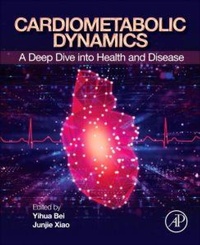
Cardiometabolic Dynamics
A Deep Dive into Health and Disease
Will be published approx. on 1. May 2026
Book
Paperback/Softback
250 pages
978-0-443-34186-1 (ISBN)
Description
Cardiometabolic Dynamics: A Deep Dive into Health and Disease explores the intricate relationship between metabolic health and cardiovascular diseases, illuminating how cellular and molecular mechanisms contribute to metabolic dysregulation. The book delves into the ways metabolic pathologies act as precursors to cardiovascular conditions, including hypertension, atherosclerosis, cardiomyopathy, and heart failure. With a focus on healthy cardiometabolic dynamics, it underscores the crucial role they play in sustaining cardiovascular wellness, offering a comprehensive perspective on the intersection of metabolism and heart health.
The book further examines the influence of lifestyle factors, such as diet and exercise on cardiovascular metabolism and highlights emerging technologies like omics, genetic engineering, and wearable devices to advance research, diagnosis, and treatment.
The book further examines the influence of lifestyle factors, such as diet and exercise on cardiovascular metabolism and highlights emerging technologies like omics, genetic engineering, and wearable devices to advance research, diagnosis, and treatment.
More details
Language
English
Place of publication
San Diego
United States
Publishing group
Elsevier Science Publishing Co Inc
Target group
Professional and scholarly
College/higher education
Product notice
Paperback (trade)
Unsewn / adhesive bound
Dimensions
Height: 276 mm
Width: 216 mm
ISBN-13
978-0-443-34186-1 (9780443341861)
Copyright in bibliographic data and cover images is held by Nielsen Book Services Limited or by the publishers or by their respective licensors: all rights reserved.
Schweitzer Classification
Persons
Dr. Yihua Bei is an Eastern Scholar Distinguished Professor and a Shanghai Young Science and Technology Star. She is the secretary-general of the Shanghai Physiological Society and serves on multiple committees within medical and scientific societies. Dr. Bei is an Associate Editor of Journal of Cardiovascular Translational Research and an editorial board member of the Journal of Molecular and Cellular Cardiology PLUS. Her research, published in Molecular Therapy, Advanced Science, Circulation Research et al. focuses on the survival and proliferation of cardiomyocytes and myocardial protection strategies. Her recent work has been accepted in Circulation which unravels an exercise-responsive transcription factor that promotes cardiomyocyte survival and glucose metabolism during ischemic myocardial injury. She was invited to lead a Special Issue "Metabolic Reprogramming in Cardiovascular Diseases? published in Journal of Cardiovascular Translational Research.
Dr. Xiao is the Executive Dean of the School of Life Science, Shanghai University, China. In addition, he is the director of the Key Laboratory of Biomedical Materials and Technology for Organ Regeneration of the Ministry of Education, the director of the Shanghai Organ Regeneration Engineering Technology Research Center, and the head of the Cardiovascular Research Institute of Shanghai University. He is an Associate Editor of Journal of Molecular and Cellular Cardiology and Journal of Cardiovascular Translational Research, and is on the editorial boards of several other notable journals. He has authored or co-authored in journals such as Cell Metabolism, Circulation, Circulation Research, and Nature Communications, etc. His research focuses on heart failure intervention and risk prediction, with a particular emphasis on exercise-induced cardiac regeneration and the identification of novel therapeutic targets. He is also interested in epigenetic and metabolic regulations of cardiac function upon exercise and under pathological conditions.
Dr. Xiao is the Executive Dean of the School of Life Science, Shanghai University, China. In addition, he is the director of the Key Laboratory of Biomedical Materials and Technology for Organ Regeneration of the Ministry of Education, the director of the Shanghai Organ Regeneration Engineering Technology Research Center, and the head of the Cardiovascular Research Institute of Shanghai University. He is an Associate Editor of Journal of Molecular and Cellular Cardiology and Journal of Cardiovascular Translational Research, and is on the editorial boards of several other notable journals. He has authored or co-authored in journals such as Cell Metabolism, Circulation, Circulation Research, and Nature Communications, etc. His research focuses on heart failure intervention and risk prediction, with a particular emphasis on exercise-induced cardiac regeneration and the identification of novel therapeutic targets. He is also interested in epigenetic and metabolic regulations of cardiac function upon exercise and under pathological conditions.
Content
Section I: Foundational Concepts: Cardiovascular Physiology and Metabolic Pathways
1. Glucose Control
2. Lipid Metabolism
3. Amino Acid Metabolism and Protein Homeostasis
4. Energy Metabolism (Mitochondrial Dysfunction)
Section II: Metabolic Regulation and Cardiovascular Diseases
5. Metabolic Regulation and Ischemic Heart Disease
6. Metabolic Regulation and Hypertrophic Cardiomyopathy
7. Metabolic Regulation and Diabetic Cardiomyopathy
8. Metabolic Regulation and Heart Failure
9. Metabolic Regulation and Genetic Cardiovascular Diseases
10. Metabolic Regulation and Cardiac Regeneration
Section III: Research Methodologies and Innovations
11. Traditional and Novel Experimental Models in Metabolic and Cardiovascular Research
12. Emerging Technologies in Metabolic and Cardiovascular Research
13. Metabolic Regulation of the Microbiome and Cardiac Function
14. Interplays of Metabolism and Epigenetics in Cardiovascular Diseases
Section IV: Therapeutic Approaches and Clinical Implications
15. Pharmacological Interventions of Metabolic Therapies
16. Diet and Nutrition Modifications for Cardiovascular Health
17. Exercise and Cardiovascular Metabolism Conclusion
1. Glucose Control
2. Lipid Metabolism
3. Amino Acid Metabolism and Protein Homeostasis
4. Energy Metabolism (Mitochondrial Dysfunction)
Section II: Metabolic Regulation and Cardiovascular Diseases
5. Metabolic Regulation and Ischemic Heart Disease
6. Metabolic Regulation and Hypertrophic Cardiomyopathy
7. Metabolic Regulation and Diabetic Cardiomyopathy
8. Metabolic Regulation and Heart Failure
9. Metabolic Regulation and Genetic Cardiovascular Diseases
10. Metabolic Regulation and Cardiac Regeneration
Section III: Research Methodologies and Innovations
11. Traditional and Novel Experimental Models in Metabolic and Cardiovascular Research
12. Emerging Technologies in Metabolic and Cardiovascular Research
13. Metabolic Regulation of the Microbiome and Cardiac Function
14. Interplays of Metabolism and Epigenetics in Cardiovascular Diseases
Section IV: Therapeutic Approaches and Clinical Implications
15. Pharmacological Interventions of Metabolic Therapies
16. Diet and Nutrition Modifications for Cardiovascular Health
17. Exercise and Cardiovascular Metabolism Conclusion