

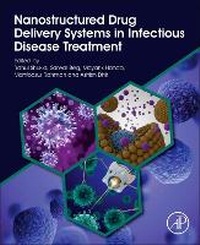
Nanostructured Drug Delivery Systems in Infectious Disease Treatment
Published on 29. July 2024
Book
Paperback/Softback
482 pages
978-0-443-13337-4 (ISBN)
Description
Nanostructured Drug Delivery Systems in Infectious Disease Treatment explores a broad range of promising approaches for the treatment of infectious diseases using the latest advancements in nanomedical technologies. The book opens with an introduction about infectious diseases and global burdens. There is also specific discussion and assessment of the global impact of viruses with an emphasis on COVID-19, Zika, and Ebola. Subsequent chapters provide detailed information about various novel nanotherapeutic strategies used for delivering drugs for the treatment of various types of viral, bacterial, and fungal disorders. This will be a valuable resource for graduates, researchers, industry professionals, and anyone working to tackle the challenges of delivering drugs in a more targeted and efficient manner for the treatment of infectious diseases.
More details
Language
English
Place of publication
San Diego
United States
Publishing group
Elsevier Science Publishing Co Inc
Target group
Professional and scholarly
College/higher education
Product notice
Paperback (trade)
Dimensions
Height: 235 mm
Width: 191 mm
Thickness: 25 mm
Weight
826 gr
ISBN-13
978-0-443-13337-4 (9780443133374)
Copyright in bibliographic data and cover images is held by Nielsen Book Services Limited or by the publishers or by their respective licensors: all rights reserved.
Schweitzer Classification
Other editions
Additional editions
Sarwar Beg | Rahul Shukla | Mayank Handa M. Pharm
Nanostructured Drug Delivery Systems in Infectious Disease Treatment
E-Book
07/2024
Academic Press
€155.00
Available for download
Persons
Sarwar Beg, PhD is currently serving as AMS-DBT Newton International Fellow at University of Central Lancashire, UK, and working in the area of glioblastoma research using targeted nanomedicines. He is also serving as the Assistant Professor at Department of Pharmaceutics, School of Pharmaceutical Education and Research, Jamia Hamdard, New Delhi. He has over a decade of teaching and research experience in the field of pharmaceutics and biopharmaceutics, especially in the development of novel and nanostructured drug delivery systems using Quality-by-Design paradigms with core expertise in computational pharmaceutics, experimental designs and multivariate statistical techniques. He has authored over 200 publications, 60 book chapters, 15 books, 03 Indian patent applications and H-Index of 40 with over 5400 citations to his credit. Dr. Rahul Shukla is currently working as an Assistant Professor (Contract) at Department of Pharmaceutics, NIPER Raebareli, India, He has a PhD in Pharmaceutical Sciences from CSIR CDRI and J.N.U New Delhi, India, an M.Pharm from IIT BHU,Varanasi, India and B.Pharm from Jamia Hamdard, New Delhi. He has more than ten years of research and academic experience with more than 30 publications and 10 book chapters to his credit. He has filed 7 Indian Patent and 1 Copyright. Recently he has edited a book on the Role of Novel Drug Delivery Vehicles in Nanobiomedicine. His current research interests include?targeted drug delivery systems, particle?engineering, controlled delivery?for neurodegenerative diseases,?dendrimer mediated drug delivery, solubilization and bioavailability enhancements. Mr. Mayank Handa, has completed his B. Pharm and M. Pharm from U.I.P.S, Panjab University, Chandigarh India. Currently, pursuing as Ph.D. at National Institute of Pharmaceutical Education and Research-Raebareli, Lucknow UP. His past industrial experience includes working at Eisai India Limited, India and Themis Medicare Limited, India. He has more than 20 peer reviewed publications in journals international repute and 10 book chapter. He has filed 5 Indian patent and 1 Copyright. His research interests in polymeric nanoparticles and emulsion based drug delivery, targeted drug delivery systems, Intranasal and transdermal drug delivery. Mahfoozur Rahman is an Assistant Professor at the Department of Pharmaceutical Sciences, Faculty of Health Science, Sam Higginbottom University of Agriculture, Technology & Sciences (SHUATS), Allahabad, India. He has authored more than 130 publications in peer-reviewed journals, 30 book chapters, seven books, and four articles in international magazines with various publishers. He has a Google Scholar h-index of 27 and over 1700 citations to his credit. He also serves on the editorial boards and as guest editor for several journals. He has received travel grants from various international congresses, such as IAPRD, MDS, Nano Today, KSN and WCN, on the basis of his research work and contribution in the field. Dr. Ashish Dhir is an Associate Principal Scientist in Drug Discovery for Merck in New Jersey. He was previously a Senior Scientist in the Department of Neurology, School of Medicine, University of California, Davis in Sacramento. He received his doctorate in Pharmacology from Panjab University, Chandigarh, India. He has over 15 years of experience in preclinical research in the field of neurological and neuropsychiatric disorders. Dr. Dhir's research entails establishing and validating animal models of various disease conditions, as well as investigating novel drugs and targets for disease treatment. Dr. Dhir has over 90 peer-reviewed journal papers and serves as an ad hoc reviewer and on the Editorial Board of several prestigious journals.?He was recently named to the list of the world's top 2% pharmacology scientists (ranking 1053 out of 94611). Dr. Dhir has received numerous honors, including the Rafaelsen Young Investigator Award from the Collegium International Neuropsychopharmacologicum (CINP).
Editor
Assistant Professor, Department of Pharmaceutics, School of Pharmaceutical Education and Research, Jamia Hamdard University, New Delhi, India
Assistant Professor, Department of Pharmeceutics, National Institute of Pharmaceutical Education and Research, Raebareli, Uttar Pradesh, India
National Institute of Pharmaceutical Education and Research-Raebareli, Lucknow, India
Assistant Professor, Department of Pharmaceutical Sciences, Sam Higginbottom University of Agriculture, Technology and Sciences, Allahabad, India
Associate Principal Scientist- Drug Discovery, USA
Content
1. Introduction to infectious diseases and its global burden
2. Impact assessment of virus globally: Special emphasis on COVID-19, Zika and Ebola virus
3. Nano combinatorial therapies for infectious disorders
4. Stimuli responsive nanotechnological advancements in infectious disorders
5. Application of nanotechnology-based therapy against malaria
6. Therapeutic potential of nano assisted delivery in tuberculosis and its management
7. Exploration of advanced therapeutics for lymphatic and cutaneous leishmania
8. Nanotechnological driven chemotherapy for treatment of fungal infections
9. Nanoantibiotics driven approaches as advanced therapy for bacterial infections and chemotherapeutic resistance
10. Role of biotechnology as theranostic tool in infectious diseases
11. Nanovesicles as advanced tool against infectious diseases
12. Role of nanotechnology derived natural product as potential therapeutics against infectious diseases
13. Nanovaccines as futuristic tool to eradicate infectious diseases
14. Nanotechnology and resistance against biofilm
15. Nanotherapeutics in counteracting brain infection
16. Nanomedicine in infectious disorders: Challenges and regulatory concerns
2. Impact assessment of virus globally: Special emphasis on COVID-19, Zika and Ebola virus
3. Nano combinatorial therapies for infectious disorders
4. Stimuli responsive nanotechnological advancements in infectious disorders
5. Application of nanotechnology-based therapy against malaria
6. Therapeutic potential of nano assisted delivery in tuberculosis and its management
7. Exploration of advanced therapeutics for lymphatic and cutaneous leishmania
8. Nanotechnological driven chemotherapy for treatment of fungal infections
9. Nanoantibiotics driven approaches as advanced therapy for bacterial infections and chemotherapeutic resistance
10. Role of biotechnology as theranostic tool in infectious diseases
11. Nanovesicles as advanced tool against infectious diseases
12. Role of nanotechnology derived natural product as potential therapeutics against infectious diseases
13. Nanovaccines as futuristic tool to eradicate infectious diseases
14. Nanotechnology and resistance against biofilm
15. Nanotherapeutics in counteracting brain infection
16. Nanomedicine in infectious disorders: Challenges and regulatory concerns