

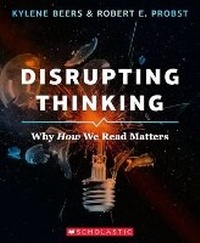
Disrupting Thinking: Why How We Read Matters
Published on 2. September 2021
Book
Paperback/Softback
176 pages
978-1-338-13290-8 (ISBN)
Description
With their hallmark humour, Beers and Probst present
a vision of what reading and what education across all the year groups
could be.
In particular, they share new strategies and ideas for helping
classroom teachers create engagement and relevance, encourage responsive
and responsible reading, deepen comprehension and develop
lifelong reading habits.
"An essential book for teachers looking to engage
children deeply in the books they read. Beers and
Probst show how to engage children in reading
at a textual, intellectual and emotional level so they...respond
to them personally and collectively and
ultimately come to see their reading as a tool for shaping the world
around them." Rachel Clarke, Independent
Reading Consultant
a vision of what reading and what education across all the year groups
could be.
In particular, they share new strategies and ideas for helping
classroom teachers create engagement and relevance, encourage responsive
and responsible reading, deepen comprehension and develop
lifelong reading habits.
"An essential book for teachers looking to engage
children deeply in the books they read. Beers and
Probst show how to engage children in reading
at a textual, intellectual and emotional level so they...respond
to them personally and collectively and
ultimately come to see their reading as a tool for shaping the world
around them." Rachel Clarke, Independent
Reading Consultant
More details
Series
Language
English
Place of publication
New York
United States
Target group
Professional and scholarly
Reading Age: From 03 to 11 years
Product notice
Paperback (trade)
Unsewn / adhesive bound
Dimensions
Height: 227 mm
Width: 189 mm
Thickness: 15 mm
Weight
357 gr
ISBN-13
978-1-338-13290-8 (9781338132908)
Copyright in bibliographic data and cover images is held by Nielsen Book Services Limited or by the publishers or by their respective licensors: all rights reserved.
Schweitzer Classification