

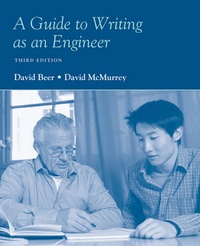
A Guide to Writing as an Engineer
3rd Edition
Published on 27. March 2009
Book
Paperback/Softback
288 pages
978-0-470-41701-0 (ISBN)
Description
This invaluable resource guides engineers through the technical writing issues that they must know in order to succeed in the field. The third edition includes numerous new examples integrated throughout the chapters that illustrate content, organization, and format of different types of documents. New material on the useful aspects of passive voice is added, such as when the actor is known/obvious and when emphasis needs to be on the recipient of the action. Discussions are included on plagiarism, ethics, and citing material properly. In order to accomplish this, the IEEE system of documenting sources is presented. Engineers will also benefit from the startup help for using PowerPoint or other software for their presentations as well as strategies for using such materials.
More details
Edition
3., Auflage
Language
English
Place of publication
Chichester
United Kingdom
Publishing group
John Wiley and Sons Ltd
Target group
Professional and scholarly
Edition type
Revised edition
Illustrations
Illustrations
Dimensions
Height: 23.8 cm
Width: 19.1 cm
Thickness: 10 mm
Weight
455 gr
ISBN-13
978-0-470-41701-0 (9780470417010)
Schweitzer Classification
Other editions
New editions
David F. Beer | David A. McMurrey
A Guide to Writing as an Engineer
Book
05/2013
4th Edition
Wiley
Unfortunately, price unknown
Article exhausted; check for reprint
Previous edition
David F. Beer | David McMurrey
A Guide to Writing as an Engineer
Book
04/2004
2nd Edition
Wiley
€57.90
Article exhausted; check for reprint
Persons
DAVID BEER is professor of Electrical Engineering at the University of Texas Austin.
DAVID McMURREY is a technical writer from industry, most recently with IBM. This combination of academic and industry perspective gives this book its broad perspective covering all aspects of writing, from academic research to effective corporate communication.
DAVID McMURREY is a technical writer from industry, most recently with IBM. This combination of academic and industry perspective gives this book its broad perspective covering all aspects of writing, from academic research to effective corporate communication.
Content
1. Engineers and Writing.
EngineersWrite a Lot.
EngineersWrite Many Kinds of Documents.
A Successful Engineering Career Requires Strong Writing Skills.
Engineers Can Learn to Write Well.
Noise and the Communication Process.
Controlling the Writing System.
Exercises.
Bibliography.
2. Eliminating Sporadic Noise in Engineering Writing.
Spelling and Spell Checkers.
Punctuation.
Sentence Sense.
Technical Usage.
Edit, Edit, Edit.
Exercises.
Bibliography.
3. Guidelines for Writing Noise-Free Engineering Documents.
Focus onWhyYou AreWriting.
Focus on Your Readers.
Satisfy Document Specifications.
Get to the Point.
Provide Accurate Information.
Present Your Material Logically.
Make Your Ideas Accessible.
Use Lists for Some Information.
Format Your Pages Carefully.
Express Yourself Clearly.
Use Efficient Wording.
Manage Your Time Efficiently.
Edit at Different Levels.
Share the Load: Write as a Team.
Exercises.
Bibliography.
4. Letters, Memoranda, Email, and Other Media for Engineers.
Which to Use?
Business Letters.
Business Memoranda.
Email.
New Internet Media.
Writing Styles for Business Correspondence.
Exercises.
Bibliography.
5. Writing Common Engineering Documents.
Some Preliminaries.
Inspection and Trip Reports.
Laboratory and Field Reports.
Specifications.
Proposals.
Progress Reports.
Instructions.
Recommendation Reports.
Exercises.
Bibliography.
6. Writing an Engineering Report.
Letter of Transmittal.
Cover and Label.
Page Numbering.
Abstract and Executive Summary.
Table of Contents.
List of Figures and Tables.
Introduction.
Body of the Report.
Conclusions.
Appendixes.
Documentation.
Generating Portable Document Files.
Using Wikis and Other Applications for Team Reports.
Exercises.
Bibliography.
7. Constructing Engineering Tables and Graphics.
Tables.
Charts and Graphs.
Illustrations.
Graphics and Tables: Guidelines.
Exercises.
Bibliography.
8. Accessing Engineering Information.
Basic Search Strategies.
Sources of Engineering Information.
Internet Engineering Information Resources.
Internet Search Tools.
Exercises.
Bibliography.
9. Engineering Your Speaking.
Preparing the Presentation.
Delivering the Presentation.
Team Presentations.
Checklist for an Oral Presentation.
Listening to a Presentation.
The Importance of Informal Communication.
Exercises.
Bibliography.
10. Writing to Get an Engineering Job.
How to Write an Engineering Resume.
How to Write an Application Letter.
How to Write a Follow-Up Letter.
Exercises.
Bibliography.
11. Ethics and Documentation in Engineering Writing.
Engineering Ethics.
The Ethics of Honest Research.
Exercises.
Bibliography.
Index.
EngineersWrite a Lot.
EngineersWrite Many Kinds of Documents.
A Successful Engineering Career Requires Strong Writing Skills.
Engineers Can Learn to Write Well.
Noise and the Communication Process.
Controlling the Writing System.
Exercises.
Bibliography.
2. Eliminating Sporadic Noise in Engineering Writing.
Spelling and Spell Checkers.
Punctuation.
Sentence Sense.
Technical Usage.
Edit, Edit, Edit.
Exercises.
Bibliography.
3. Guidelines for Writing Noise-Free Engineering Documents.
Focus onWhyYou AreWriting.
Focus on Your Readers.
Satisfy Document Specifications.
Get to the Point.
Provide Accurate Information.
Present Your Material Logically.
Make Your Ideas Accessible.
Use Lists for Some Information.
Format Your Pages Carefully.
Express Yourself Clearly.
Use Efficient Wording.
Manage Your Time Efficiently.
Edit at Different Levels.
Share the Load: Write as a Team.
Exercises.
Bibliography.
4. Letters, Memoranda, Email, and Other Media for Engineers.
Which to Use?
Business Letters.
Business Memoranda.
Email.
New Internet Media.
Writing Styles for Business Correspondence.
Exercises.
Bibliography.
5. Writing Common Engineering Documents.
Some Preliminaries.
Inspection and Trip Reports.
Laboratory and Field Reports.
Specifications.
Proposals.
Progress Reports.
Instructions.
Recommendation Reports.
Exercises.
Bibliography.
6. Writing an Engineering Report.
Letter of Transmittal.
Cover and Label.
Page Numbering.
Abstract and Executive Summary.
Table of Contents.
List of Figures and Tables.
Introduction.
Body of the Report.
Conclusions.
Appendixes.
Documentation.
Generating Portable Document Files.
Using Wikis and Other Applications for Team Reports.
Exercises.
Bibliography.
7. Constructing Engineering Tables and Graphics.
Tables.
Charts and Graphs.
Illustrations.
Graphics and Tables: Guidelines.
Exercises.
Bibliography.
8. Accessing Engineering Information.
Basic Search Strategies.
Sources of Engineering Information.
Internet Engineering Information Resources.
Internet Search Tools.
Exercises.
Bibliography.
9. Engineering Your Speaking.
Preparing the Presentation.
Delivering the Presentation.
Team Presentations.
Checklist for an Oral Presentation.
Listening to a Presentation.
The Importance of Informal Communication.
Exercises.
Bibliography.
10. Writing to Get an Engineering Job.
How to Write an Engineering Resume.
How to Write an Application Letter.
How to Write a Follow-Up Letter.
Exercises.
Bibliography.
11. Ethics and Documentation in Engineering Writing.
Engineering Ethics.
The Ethics of Honest Research.
Exercises.
Bibliography.
Index.