

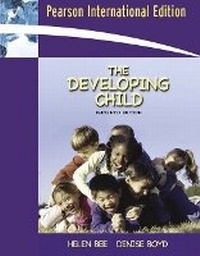
The Developing Child
International Edition
11th Edition
Published on 13. April 2006
Book
Paperback/Softback
608 pages
978-0-205-49409-5 (ISBN)
Description
The Developing Child, Eleventh Edition, is a best-selling topical child development book known for its personal, conversational writing style; balanced coverage of both theory and application; and strong emphasis on culture.
More details
Edition
11th edition
Language
English
Place of publication
United States
Publishing group
Pearson Education (US)
Target group
Professional and scholarly
Dimensions
Height: 281 mm
Width: 216 mm
Thickness: 23 mm
Weight
1266 gr
ISBN-13
978-0-205-49409-5 (9780205494095)
Copyright in bibliographic data and cover images is held by Nielsen Book Services Limited or by the publishers or by their respective licensors: all rights reserved.
Schweitzer Classification
Other editions
New editions
Helen Bee | Denise Boyd
The Developing Child
Plus MyDevelopment Lab Access Card: International Edition
Book
04/2009
12th Edition
Pearson
€78.23
Article exhausted; check for reprint
Previous edition
Book
04/2003
10th Edition
Pearson
€67.03
Article exhausted; check for reprint
Content
I. INTRODUCTION.
1. Basic Issues in the Study of Development.
Perspectives on Development.
Theories of Development.
Finding the Answers: Research Designs and Methods.
II. THE BEGINNINGS OF LIFE.
2. Prenatal Development.
Conception and Genetics.
Development from Conception to Birth.
Problems in Prenatal Development.
3. Birth and Early Infancy.
Birth.
Behavior in Early Infancy.
Health and Wellness in Early Infancy.
III. THE PHYSICAL CHILD.
4. Physical Development.
The Brain and Nervous System.
The Endocrine and Reproductive Systems.
Sexual Behavior in Adolescence.
Other Body Systems.
Health and Wellness.
5. Perceptual Development.
Thinking About Perceptual Development.
Sensory Skills.
Perceptual Skills.
The Object Concept.
Perception of Social Signals.
IV. THE THINKING CHILD.
6. Cognitive Development I: Structure and Process.
Piaget's Basic Ideas.
Infancy.
The Preschool Years.
The School-Aged Child.
Adolescence.
Development of Information-Processing Skills.
7. Cognitive Development II: Individual Differences in Cognitive Abilities.
Measuring Intellectual Power.
Explaining Individual Differences in IQ Scores.
Explaining Group Differences in IQ Scores.
Alternative Approaches to Intelligence.
8. The Development of Language.
Before the First Word: The Prelinguistic Phase.
Learning Words and Word Meanings.
Learning the Rules: The Development of Grammar and Pragmatics.
Explaining Language Development.
Individual and Group Differences in Language Development.
Learning to Read and Write.
V. THE SOCIAL CHILD.
9. Personality Development: Alternate Views.
Defining Personality.
Genetic and Biological Explanations.
Learning Explanations.
Psychoanalytic Explanations.
A Possible Synthesis.
10. Concepts of Self, Gender, and Sex Roles.
The Concept of Self.
Self-Esteem.
The Development of Gender and Sex-Role Concepts.
Cultures and Contexts: Sex Role Stereotypes Around the World.
11. The Development of Social Relationships.
Relationships with Parents.
Variations in the Quality of Attachments.
Relationships with Peers.
Behavior with Peers.
12. Thinking About Relationships: Social-Cognitive and Moral Development.
The Development of Social Cognition.
Moral Development.
VI. THE WHOLE CHILD.
13. The Ecology of Development: The Child Within the Family System.
Bronfenbrenner's Bioecological Approach
Dimensions of Family Interaction.
Patterns of Child Rearing.
Other Aspects of Family Dynamics.
Family Structure, Divorce, and Parental Employment.
14. Beyond the Family: The Impact of the Broader Culture.
Nonparental Care.
The Impact of Schools.
The Impact of the Entertainment Media.
Macrosystem Effects: The Impact of the Larger Culture.
15. Atypical Development.
Understanding Atypical Development.
Attention Problems and Externalizing Problems.
Internalizing Problems.
Atypical Intellectual and Social Development.
Schooling for Atypical Children.
Epilogue. Putting It All Together: The Developing Child.
Transitions, Consolidations, and Systems.
From Birth to 18 Months.
The Preschool Years.
The Elementary School Years.
Adolescence.
A Return to Some Basic Questions.
1. Basic Issues in the Study of Development.
Perspectives on Development.
Theories of Development.
Finding the Answers: Research Designs and Methods.
II. THE BEGINNINGS OF LIFE.
2. Prenatal Development.
Conception and Genetics.
Development from Conception to Birth.
Problems in Prenatal Development.
3. Birth and Early Infancy.
Birth.
Behavior in Early Infancy.
Health and Wellness in Early Infancy.
III. THE PHYSICAL CHILD.
4. Physical Development.
The Brain and Nervous System.
The Endocrine and Reproductive Systems.
Sexual Behavior in Adolescence.
Other Body Systems.
Health and Wellness.
5. Perceptual Development.
Thinking About Perceptual Development.
Sensory Skills.
Perceptual Skills.
The Object Concept.
Perception of Social Signals.
IV. THE THINKING CHILD.
6. Cognitive Development I: Structure and Process.
Piaget's Basic Ideas.
Infancy.
The Preschool Years.
The School-Aged Child.
Adolescence.
Development of Information-Processing Skills.
7. Cognitive Development II: Individual Differences in Cognitive Abilities.
Measuring Intellectual Power.
Explaining Individual Differences in IQ Scores.
Explaining Group Differences in IQ Scores.
Alternative Approaches to Intelligence.
8. The Development of Language.
Before the First Word: The Prelinguistic Phase.
Learning Words and Word Meanings.
Learning the Rules: The Development of Grammar and Pragmatics.
Explaining Language Development.
Individual and Group Differences in Language Development.
Learning to Read and Write.
V. THE SOCIAL CHILD.
9. Personality Development: Alternate Views.
Defining Personality.
Genetic and Biological Explanations.
Learning Explanations.
Psychoanalytic Explanations.
A Possible Synthesis.
10. Concepts of Self, Gender, and Sex Roles.
The Concept of Self.
Self-Esteem.
The Development of Gender and Sex-Role Concepts.
Cultures and Contexts: Sex Role Stereotypes Around the World.
11. The Development of Social Relationships.
Relationships with Parents.
Variations in the Quality of Attachments.
Relationships with Peers.
Behavior with Peers.
12. Thinking About Relationships: Social-Cognitive and Moral Development.
The Development of Social Cognition.
Moral Development.
VI. THE WHOLE CHILD.
13. The Ecology of Development: The Child Within the Family System.
Bronfenbrenner's Bioecological Approach
Dimensions of Family Interaction.
Patterns of Child Rearing.
Other Aspects of Family Dynamics.
Family Structure, Divorce, and Parental Employment.
14. Beyond the Family: The Impact of the Broader Culture.
Nonparental Care.
The Impact of Schools.
The Impact of the Entertainment Media.
Macrosystem Effects: The Impact of the Larger Culture.
15. Atypical Development.
Understanding Atypical Development.
Attention Problems and Externalizing Problems.
Internalizing Problems.
Atypical Intellectual and Social Development.
Schooling for Atypical Children.
Epilogue. Putting It All Together: The Developing Child.
Transitions, Consolidations, and Systems.
From Birth to 18 Months.
The Preschool Years.
The Elementary School Years.
Adolescence.
A Return to Some Basic Questions.