

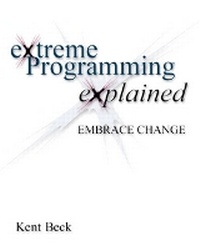
Extreme Programming Explained
Embrace Change
Published on 22. October 1999
Book
Paperback/Softback
224 pages
978-0-201-61641-5 (ISBN)
Description
The new concept of Extreme Programming (XP) is gaining more and more acceptance, partially because it is controversial, but primarily because it is particularly well-suited to help the small software development team succeed. This book serves as the introduction to XP that the market will need. XP is controversial, many software development sacred cows don't make the cut in XP; it forces practitioners to take a fresh look at how software is developed. The author recognizes that this "lightweight" methodology is not for everyone. However, anyone interested in discovering what this new concept can offer them will want to start with this book.
More details
Language
English
Place of publication
Boston
United States
Publishing group
Pearson Education (US)
Target group
College/higher education
Dimensions
Width: 235 mm
Thickness: 10 mm
Weight
350 gr
ISBN-13
978-0-201-61641-5 (9780201616415)
Copyright in bibliographic data and cover images is held by Nielsen Book Services Limited or by the publishers or by their respective licensors: all rights reserved.
Schweitzer Classification
Other editions
New editions
Book
12/2004
2nd Edition
Addison Wesley
€43.99
Shipment within 10-20 days
Person
Kent Beck consistently challenges software engineering dogma, promoting ideas like patterns, test-driven development, and Extreme Programming. Currently affiliated with Three Rivers Institute and Agitar Software, he is the author of many Addison-Wesley titles.
Content
Foreword by Erich Gamma.
Preface.
I. THE PROBLEM.
1. Risk: The Basic Problem.
Our Mission.
2. A Development Episode.
3. Economics of Software Development.
Options.
Example.
4. Four Variables.
Interactions Between the Variables.
Focus on Scope.
5. Cost of Change.
6. Learning to Drive.
7. Four Values.
Communication.
Simplicity.
Feedback.
Courage.
The Values in Practice.
8. Basic Principles.
9. Back to Basics.
Coding.
Testing.
Listening.
Designing.
Conclusion.
II. THE SOLUTION.
10. Quick Overview.
The Planning Game.
Small Releases.
Metaphor.
Simple Design.
Tesing.
Refactoring.
Pair Programming.
Collective Ownership.
Continuous Integration.
40-Hour Week.
On-Site Customer.
Coding Standards.
11. How Could This Work?
The Planning Game.
Short Releases.
Metaphor.
Simple Design.
Testing.
Refactoring.
Pair Programming.
Collective Integration.
Continuous Integration.
40-Hour Week.
On-Site Customer. @@AHEADS = Coding Standards.
Conclusion.
12. Management Strategy.
Metrics.
Coaching.
Tracking.
Intervention.
13. Facilities Strategy.
14. Splitting Business and Technical Responsibility.
Business.
Development.
What to Do?
Choice of Technology.
What If It Is Hard?
15. Planning Strategy.
The Planning Game.
Planning in a Week.
16. Development Strategy.
Continuous Integration.
Collective Ownership.
Pair Programming.
17. Design Strategy.
The Simplest Thing that Could Possibly Work.
How Does Designing Through Refactoring Work?
What Is Simplest?
How Could This Work?
Role of Pictures in Design.
System Architecture.
18. Testing Strategy.
Who Writes Tests?
Other Tests.
19. Adopting XP.
20. Retrofitting.
Testing.
Design.
Planning.
Management.
Development.
In Trouble?
21. Lifecycle of an Ideal XP Project.
Exploration.
Planning.
Iterations to First Release.
Productionizing.
Maintenance.
Death.
22. Roles for People.
Programmer.
Customer.
Tester.
Tracker.
Coach.
Consultant.
Big Boss.
23. 20-80 Rule.
24. What Makes XP Hard.
25. When to Try XP.
26. XP at Work.
Fixed Price.
Outsourcing.
Insourcing.
Time and Materials.
Completion Bonus.
Early Termination.
Frameworks.
Shrinkwrap Products.
27. Conclusion.
Expectation.
Annotated Bibliography.
Glossary.
Index.
0201616416T04062001
Preface.
I. THE PROBLEM.
1. Risk: The Basic Problem.
Our Mission.
2. A Development Episode.
3. Economics of Software Development.
Options.
Example.
4. Four Variables.
Interactions Between the Variables.
Focus on Scope.
5. Cost of Change.
6. Learning to Drive.
7. Four Values.
Communication.
Simplicity.
Feedback.
Courage.
The Values in Practice.
8. Basic Principles.
9. Back to Basics.
Coding.
Testing.
Listening.
Designing.
Conclusion.
II. THE SOLUTION.
10. Quick Overview.
The Planning Game.
Small Releases.
Metaphor.
Simple Design.
Tesing.
Refactoring.
Pair Programming.
Collective Ownership.
Continuous Integration.
40-Hour Week.
On-Site Customer.
Coding Standards.
11. How Could This Work?
The Planning Game.
Short Releases.
Metaphor.
Simple Design.
Testing.
Refactoring.
Pair Programming.
Collective Integration.
Continuous Integration.
40-Hour Week.
On-Site Customer. @@AHEADS = Coding Standards.
Conclusion.
12. Management Strategy.
Metrics.
Coaching.
Tracking.
Intervention.
13. Facilities Strategy.
14. Splitting Business and Technical Responsibility.
Business.
Development.
What to Do?
Choice of Technology.
What If It Is Hard?
15. Planning Strategy.
The Planning Game.
Planning in a Week.
16. Development Strategy.
Continuous Integration.
Collective Ownership.
Pair Programming.
17. Design Strategy.
The Simplest Thing that Could Possibly Work.
How Does Designing Through Refactoring Work?
What Is Simplest?
How Could This Work?
Role of Pictures in Design.
System Architecture.
18. Testing Strategy.
Who Writes Tests?
Other Tests.
19. Adopting XP.
20. Retrofitting.
Testing.
Design.
Planning.
Management.
Development.
In Trouble?
21. Lifecycle of an Ideal XP Project.
Exploration.
Planning.
Iterations to First Release.
Productionizing.
Maintenance.
Death.
22. Roles for People.
Programmer.
Customer.
Tester.
Tracker.
Coach.
Consultant.
Big Boss.
23. 20-80 Rule.
24. What Makes XP Hard.
25. When to Try XP.
26. XP at Work.
Fixed Price.
Outsourcing.
Insourcing.
Time and Materials.
Completion Bonus.
Early Termination.
Frameworks.
Shrinkwrap Products.
27. Conclusion.
Expectation.
Annotated Bibliography.
Glossary.
Index.
0201616416T04062001