


Visual Approaches to Teaching Writing
Multimodal Literacy 5 - 11
1st Edition
Published on 9. October 2007
Book
Hardback
216 pages
978-1-4129-3033-8 (ISBN)
Description
Includes CD-Rom
Why are visual approaches to literacy important? Children's experience of texts is no longer limited to words on printed pages - their reading and writing worlds are formed in multimodal ways, combining different modes of communication, including speech or sound, still or moving images, writing and gesture. This book is a practical guide for teachers in making sense of multimodal approaches to teaching writing.
The book covers topics such as:
- The design of multimodal texts and the relationships between texts and images
- How to build a supportive classroom environment for analysing visual and audiovisual texts, and how to teach about reading images
- How to plan a teaching sequence leading to specific writing outcomes
- Examples of teaching sequences for developing work on narrative, non-fiction and poetry
- Formative and summative assessment of multimodal texts, providing levels for judging pupil development, and suggestions for moving pupils forward
- How to write, review and carry out a whole school policy for teaching multimodal writing
The book is accompanied by a CD, which contains a range of examples of children's multimodal work, along with electronic versions of the activities and photocopiable sheets from the book, and material designed for use with interactive whiteboards.
It will be a valuable resource for primary teachers, literacy co-ordinators and students on initial teacher training courses.
Why are visual approaches to literacy important? Children's experience of texts is no longer limited to words on printed pages - their reading and writing worlds are formed in multimodal ways, combining different modes of communication, including speech or sound, still or moving images, writing and gesture. This book is a practical guide for teachers in making sense of multimodal approaches to teaching writing.
The book covers topics such as:
- The design of multimodal texts and the relationships between texts and images
- How to build a supportive classroom environment for analysing visual and audiovisual texts, and how to teach about reading images
- How to plan a teaching sequence leading to specific writing outcomes
- Examples of teaching sequences for developing work on narrative, non-fiction and poetry
- Formative and summative assessment of multimodal texts, providing levels for judging pupil development, and suggestions for moving pupils forward
- How to write, review and carry out a whole school policy for teaching multimodal writing
The book is accompanied by a CD, which contains a range of examples of children's multimodal work, along with electronic versions of the activities and photocopiable sheets from the book, and material designed for use with interactive whiteboards.
It will be a valuable resource for primary teachers, literacy co-ordinators and students on initial teacher training courses.
Reviews / Votes
'This is an excellent book which is grounded in exciting and innovative classroom practice. Bearne and Wolstencroft draw on their wealth of experience to offer clear and detailed guidance on using multimodal texts in the classroom, from planning through to assessment. Their book will enable teachers to provide opportunties for children to become competent readers and authors of both off-screen and on-screen multimodal texts. This ground- breaking book is an essential read for all teachers and students who want their literacy curriculum to be relevant and appropriate for the 21st century' - Jackie Marsh, University of Sheffield'This practical guide will help teachers develop an integrated approach to the teaching of writing' - Literacy Time PLUS
`Bearne and Wolstencroft offer the reader innovative ideas and forward thinking in this exciting publication and teaching resource. Grounded in the relevance of working with multi-modal texts in primary classrooms today, suggestions for practice are supported by inspiring examples and real accounts' - English Drama Media
`A must for teachers looking to put multi-modal teaching approaches into practice. It will inform and excite those who are looking for innovative ways to support pupils in developing their writing skills' - TES magazine
More details
Series
Language
English
Place of publication
Thousand Oaks
United States
Target group
Professional and scholarly
Dimensions
Height: 250 mm
Width: 175 mm
Thickness: 16 mm
Weight
560 gr
ISBN-13
978-1-4129-3033-8 (9781412930338)
Copyright in bibliographic data and cover images is held by Nielsen Book Services Limited or by the publishers or by their respective licensors: all rights reserved.
Schweitzer Classification
Other editions
Additional editions
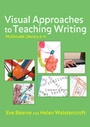
Book
09/2007
1st Edition
SAGE Publications Inc
€79.41
Shipment within 10-20 days
E-Book
09/2007
1st Edition
SAGE Publications Ltd
from
€74.99
Available for download
E-Book
09/2007
1st Edition
SAGE Publications Ltd
€74.99
Available for download
Persons
She is a Past President of the Association and has recently retired from the University of Cambridge Faculty of Education where her interests in research and publication were mostly concerned with multimodal texts.
Content
What Are Multimodal Texts?
The Classroom as an Environment for Visual and Audiovisual Texts
The Process of Composing Multimodal Texts
Narrative
Non Fiction
Poetry
Making Progress in Multimodal Writing
Whole School Policy for Multimodal Writing
The Classroom as an Environment for Visual and Audiovisual Texts
The Process of Composing Multimodal Texts
Narrative
Non Fiction
Poetry
Making Progress in Multimodal Writing
Whole School Policy for Multimodal Writing