

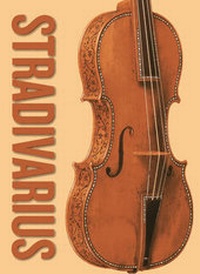
Stradivarius
Published on 15. August 2013
Book
Hardback
225 pages
978-1-85444-283-3 (ISBN)
Description
*Accompanies the first Stradivarius exhibition of its kind in the UK*Unique opportunity to view works from private collections*Includes many previously unpublished images, including new photography for all instruments and Cremona workshop tools, plus rare archive material including the Church of San Domenico where Stradivari was originally buried Antonio Stradivari is, perhaps, the only maker of violins who ranks alongside Van Gogh and Turner as an artist. A household name to many, he is associated with secret formulae and mystical processes ensuring the world's greatest soloists seek his instruments. He excites controversy, although none of his violins have raised so much heated debate as the Ashmolean'sMessiah, making headline news some ten years ago when doubt was cast on its age. Stradivari's birthplace is unknown, he may have been born in 1644, and even his apprenticeship to Nicola Amati is uncertain. He died rich and famous in Cremona in 1737. Since then his instruments have increased in fame and are now regarded as supreme examples of the violinmaker's craft. Despite the great fame of Stradivari's violins, there has never been a monographic exhibition of his work in the UK.
The exhibition at the Ashmolean will include 21 instruments, representative of Stradivari's range and output across the years, alongside exceedingly rare examples of stringed instruments other than those of the violin family. The prize items to be featured in the exhibition are already in the Ashmolean: The Potter, The Messiah and the guitar of 1688, all works of the greatest rarity. The exhibition and the accompanying catalogue will allow the public to see the work of one of the greatest violinmakers of all time. Stradivarius also presents the most recent research on Stradivarius' instruments. Contents: Introduction by James Ehnes Essay on Stradivarius by Charles Beare Essay on Stradivarius' work including dendrochronology of the instruments The luthier's perspective: How Stradivari violins are built and what makes them so good? By Peter Beare Catalogue entries Technical information
The exhibition at the Ashmolean will include 21 instruments, representative of Stradivari's range and output across the years, alongside exceedingly rare examples of stringed instruments other than those of the violin family. The prize items to be featured in the exhibition are already in the Ashmolean: The Potter, The Messiah and the guitar of 1688, all works of the greatest rarity. The exhibition and the accompanying catalogue will allow the public to see the work of one of the greatest violinmakers of all time. Stradivarius also presents the most recent research on Stradivarius' instruments. Contents: Introduction by James Ehnes Essay on Stradivarius by Charles Beare Essay on Stradivarius' work including dendrochronology of the instruments The luthier's perspective: How Stradivari violins are built and what makes them so good? By Peter Beare Catalogue entries Technical information
More details
Language
English
Place of publication
Oxford
United Kingdom
Illustrations
230 Colour
Dimensions
Height: 300 mm
Width: 228 mm
Thickness: 24 mm
Weight
1607 gr
ISBN-13
978-1-85444-283-3 (9781854442833)
Copyright in bibliographic data and cover images is held by Nielsen Book Services Limited or by the publishers or by their respective licensors: all rights reserved.
Schweitzer Classification
Persons
Charles and Peter Beare are directors at the succesful violin dealers Beares. Peter is a qualified luthier. Jon Whiteley is the Senior Assistant Keeper in the Department of Western Art, specialising in paintings drawings and musical instruments.
Content
Contents: Introduction by James Ehnes Essay on Stradivarius by Charles Beare Essay on Stradivarius' work including dendrochronology of the instruments The luthier's perspective: How Stradivari violins are built and what makes them so good? By Peter Beare Catalogue entries Technical information