

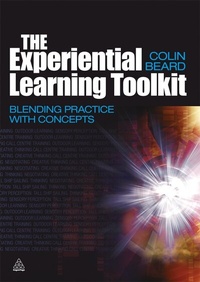
The Experiential Learning Toolkit
Blending Practice with Concepts
1st Edition
Published on 3. July 2010
Book
Paperback/Softback
288 pages
978-0-7494-5078-6 (ISBN)
Description
The Experiential Learning Toolkit
presents a diverse range of practical exercises based on the theory of experiential learning, which is concerned with learning through direct experience to create more effective, engaging and embedded learning. Author Colin Beard has compiled more than thirty internationally tried and tested learning 'experiences', which cover corporate training, individual and organizational development and education. Each experiential activity includes the essential practical information required to deliver the exercise. As well as design tips and further reading there are clear titles for each activity that highlight the underpinning core theoretical concepts.
The Experiential Learning Toolkit
includes a wide range of training needs and topics including: effective customer service training and telephone skills; outdoor learning, including service learning; negotiating and assertiveness skills; strategic and higher level thinking; effective presentation skills; developing innovative and creative minds. Trainers will find this an invaluable resource, with fresh approaches that will engage and inspire learners.
The Experiential Learning Toolkit
is a companion text to the internationally best-selling
Experiential Learning
by Colin Beard and John Wilson (also published by Kogan Page).
Reviews / Votes
"Beard...presents 30 learning "experiences" (i.e. activities) that educational and training practitioners can put to use to promote learning on a wide range of topics, including service learning, corporate social responsibility, customer service skills, company product knowledge retention, strategic thinking and negotiating, financial skills, time management, and the development of innovation and creativity."More details
Other editions
Additional editions
E-Book
07/2010
1st Edition
Kogan Page Ltd
from
€74.39
Available for download
Person
Author
Colin Beard is recognized as a leading writer, thinker and practitioner on experiential learning. Originally training as a zoologist, Colin has a PhD in experiential learning and has extensive experience of a range of experiential fields of practice, including corporate learning and development, public and voluntary sector experience, outdoor learning, adventure education, nature therapy, and higher education.
Colin has for many years worked with leading global companies advising and consulting on learning and development matters, particularly in the UK, Singapore, China and India. He is also a National teaching Fellow in the UK and a visiting professor at Derby University. He is a member of the editorial panel of a number of leading journals.
He is the co-author and author of a number of best-selling books including Experiential Learning and The Experiential Learning Toolkit, both published by Kogan Page.
ISNI:
ISNI:
Content
-
- Chapter - 0: Introduction;
- Section - ONE: The first dimension: belonging;
-
- Chapter - 1.1: Just four steps: customer service and customer complaints;
- Chapter - 1.2: Coffee and papers: positive mood and reading retreats for learning;
- Chapter - 1.3: Edventure: learning encounters with people and place;
- Chapter - 1.4: Different ways to know: spatial mapping of knowledge;
- Chapter - 1.5: Listening to silence: experiencing silence through sensory focus;
- Section - TWO: The second dimension: doing;
-
- Chapter - 2.1: Bike it!: teams, leadership and communication;
- Chapter - 2.2: Altering reality: negotiating skills development;
- Chapter - 2.3: Read all about them: an experience to develop writing skills;
- Chapter - 2.4: Antiques Roadshow: developing product expertise in employees;
- Chapter - 2.5: Hearing voices: voice work for reception and call-centre training;
- Section - THREE: The third dimension: sensing;
-
- Chapter - 3.1: Brand sense: the role of senses in brand development;
- Chapter - 3.2: Blindfold: communication and the senses;
- Chapter - 3.3: Shape and colour: using the senses to generate conversations about learning and personality;
- Chapter - 3.4: The rucksack and the fleece: effective presentations;
- Chapter - 3.5: Nuts and bolts: systematic thinking - classifying and organizing;
- Section - FOUR: The fourth dimension: feeling;
-
- Chapter - 4.1: Ace of spades: space for reflection;
- Chapter - 4.2: Accessing emotions: popular metaphors;
- Chapter - 4.3: Reframing, rewriting, rethinking: the emotions of fear and risk;
- Chapter - 4.4: Unfinished statements: sentences that access the feeling dimension;
- Chapter - 4.5: String lines: exploring journeys in life;
- Section - FIVE: The fifth dimension: knowing;
-
- Chapter - 5.1: The marketplace: developing creativity and innovation;
- Chapter - 5.2: How to get to.: developing higher thinking;
- Chapter - 5.3: The Singapore obelisk: multiple intelligence (logical/mathematical);
- Chapter - 5.4: Skills for researching and consulting: practitioner-researcher training;
- Chapter - 5.5: Walk the talk: learning to understand complexity;
- Section - SIX: The sixth dimension: being;
-
- Chapter - 6.1: Cards on the table: learning to change by playing cards;
- Chapter - 6.2: Comic strips and newspapers: reflection and change using storylines;
- Chapter - 6.3: Behavioural awareness: changing individual and group behavioural interactions;
- Chapter - 6.4: Service learning: social and environmental responsibility;
- Chapter - 6.5: Unmasking: the hidden and unknown self