

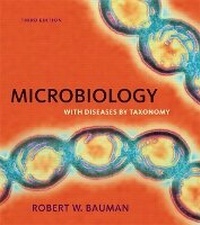
Microbiology with Diseases by Taxonomy Plus MasteringMicrobiology with eText -- Access Card Package
United States Edition
3rd Edition
Published on 19. February 2010
Book
Mixed media product
896 pages
978-0-321-66766-3 (ISBN)
Description
The Third Edition of Microbiology with Diseases by Taxonomy is the most cutting-edge microbiology book available, offering unparalleled currency, accuracy, and assessment. The state-of-the science approach begins with a compelling focus on emerging diseases and diseases you will encounter in clinical settings. Your comprehension is ensured with end-of-chapter practice that encompasses both visual and conceptual understanding. With this revision, both you and your instructors will benefit from the practice and assessment available with the new, unrivaled MasteringMicrobiology (TM) program.
Package Components:
MasteringMicrobiology with Pearson eText Student Access Code Card
Microbiology with Diseases by Taxonomy, Third Edition
Package Components:
MasteringMicrobiology with Pearson eText Student Access Code Card
Microbiology with Diseases by Taxonomy, Third Edition
More details
Edition
3rd edition
Language
English
Place of publication
San Francisco
United States
Publishing group
Pearson Education (US)
Target group
Professional and scholarly
Dimensions
Height: 249 mm
Width: 282 mm
Thickness: 34 mm
Weight
2372 gr
ISBN-13
978-0-321-66766-3 (9780321667663)
Copyright in bibliographic data is held by Nielsen Book Services Limited or its licensors: all rights reserved.
Schweitzer Classification
Other editions
New editions
Robert W. Ph.D. Bauman
Microbiology with Diseases by Taxonomy
Book
01/2013
4th Edition
Pearson
€169.87
Article exhausted; check for reprint
Previous edition
Robert W. Ph.D. Bauman
Microbiology with Diseases by Taxonomy with the Microbiology Place CD-ROM
United States Edition
Book
02/2006
2nd Edition
Pearson Education (US)
€125.00
Article exhausted; check for reprint
Person
Robert W. Bauman holds a Ph.D. in Biology from Stanford University, an M.A. in Botany from the University of Texas at Austin, and a B.A. in Biology from the University of Texas at Austin. He is a full professor of biology in the Department of Biological Sciences at Amarillo College in Amarillo, Texas, where he previously served as chairman of the department. He has been teaching microbiology and human anatomy and physiology since 1988. In 2004, the students of Amarillo College selected Dr. Bauman as the recipient of the John. F. Mead Faculty Excellence Award.
His research interests have included the morphology and ecology of freshwater algae, the cell biology of marine algae (particularly the deposition of cell walls and intercellular communication), and environmentally triggered chromogenesis in butterflies. His dissertation research at Stanford was on intercellular and cell growth in red algae at the Hopkins Marine Station.
Robert Bauman is the author of another microbiology textbook at Benjamin Cummings, Microbiology with Diseases by Body System, 2/e (copyright 2009). He is an active member of the American Society of Microbiology (ASM) and Texas Community College Teacher's Association (TCCTA).
His research interests have included the morphology and ecology of freshwater algae, the cell biology of marine algae (particularly the deposition of cell walls and intercellular communication), and environmentally triggered chromogenesis in butterflies. His dissertation research at Stanford was on intercellular and cell growth in red algae at the Hopkins Marine Station.
Robert Bauman is the author of another microbiology textbook at Benjamin Cummings, Microbiology with Diseases by Body System, 2/e (copyright 2009). He is an active member of the American Society of Microbiology (ASM) and Texas Community College Teacher's Association (TCCTA).
Content
1. A Brief History of Microbiology
2. The Chemistry of Microbiology
3. Cell Structure and Function
4. Microscopy, Staining, and Classification
5. Microbial Metabolism
6. Microbial Nutrition and Growth
7. Microbial Genetics
8. Recombinant DNA Technology
9. Controlling Microbial Growth in the Environment
10. Controlling Microbial Growth in the Body: Antimicrobial Drugs
11. Characterizing and Classifying Prokaryotes
12. Characterizing and Classifying Eukaryotes
13. Characterizing and Classifying Viruses, Viroids, and Prions
14. Infection, Infectious Disease, and Epidemiology
15. Innate Immunity
16. Adaptive Immunity
17. Immunization and Immune Testing
18. Immune Disorders
19. Pathogenic Gram-Positive Bacteria
20. Pathogenic Gram-Negative Cocci and Bacilli
21. Rickettsias, Chlamydias, Spirochetes, and Vibrios
22. Pathogenic Fungi
23. Parasitic Protozoa, Helminths, and Arthropod Vectors
24. Pathogenic DNA Viruses
25. Pathogenic RNA Viruses
26. Applied and Environmental Microbiology
2. The Chemistry of Microbiology
3. Cell Structure and Function
4. Microscopy, Staining, and Classification
5. Microbial Metabolism
6. Microbial Nutrition and Growth
7. Microbial Genetics
8. Recombinant DNA Technology
9. Controlling Microbial Growth in the Environment
10. Controlling Microbial Growth in the Body: Antimicrobial Drugs
11. Characterizing and Classifying Prokaryotes
12. Characterizing and Classifying Eukaryotes
13. Characterizing and Classifying Viruses, Viroids, and Prions
14. Infection, Infectious Disease, and Epidemiology
15. Innate Immunity
16. Adaptive Immunity
17. Immunization and Immune Testing
18. Immune Disorders
19. Pathogenic Gram-Positive Bacteria
20. Pathogenic Gram-Negative Cocci and Bacilli
21. Rickettsias, Chlamydias, Spirochetes, and Vibrios
22. Pathogenic Fungi
23. Parasitic Protozoa, Helminths, and Arthropod Vectors
24. Pathogenic DNA Viruses
25. Pathogenic RNA Viruses
26. Applied and Environmental Microbiology