

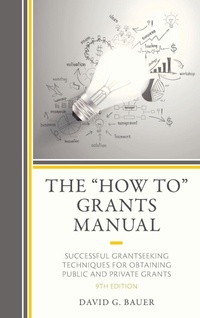
The "How To" Grants Manual
Successful Grantseeking Techniques for Obtaining Public and Private Grants
9th Edition
Published on 10. January 2021
Book
Hardback
398 pages
978-1-4758-5394-0 (ISBN)
Description
This book provides the user with a system for pre-determining the likelihood of grants success before investing time in proposal preparation. The exhibits, tables and figures keep new and veteran grantseekers focused on the process and on obtaining the critical information they need to decide whether to complete a proposal. The interactive exhibits that are downloadable provide the worksheets users needs to win grants
This book shows readers how and when to use the research they gather on prospective grantors to increase their chances of success. Instruction is provided on why and how to gather information on past grantees, scoring systems, and reviewers, and on how to make preproposal contact to dramatically increase success rates.
The deceptively simple techniques outlined in the exhibits, and the use of the project planner to present an orderly proposal in a timely manner, are worth the whole investment in the book.
Bauer does not start with how to write a grant, but rather how proposal development fits the grantseeker's career plan, and relates to the mission of his or her nonprofit, university, college, department or program. The emphasis on the book is not on money, but on creating a winning match between the grantor, the grantee, and his or her institution/organization.
The reader is provided with strategies and techniques to create strong teams, build productive consortia, and match grantseeking tasks to group member skills. This is particularly relevant now given grantors' growing interest in funding interdisciplinary and multiple site projects and research that uses grant monies more efficiently.
Those readers that teach or coach grantseeking will also find strategies in the book that are essential to creating success for others in the grants process.
As the hunt for grants gets more competitive and hectic, the need for a system that uses time effectively and provides organizational techniques and other strategies for increasing grants success rates, is critical. The step-by step process presented in the book plus the free downloadable worksheets make the purchase of this book a very cost-effective investment.
This book shows readers how and when to use the research they gather on prospective grantors to increase their chances of success. Instruction is provided on why and how to gather information on past grantees, scoring systems, and reviewers, and on how to make preproposal contact to dramatically increase success rates.
The deceptively simple techniques outlined in the exhibits, and the use of the project planner to present an orderly proposal in a timely manner, are worth the whole investment in the book.
Bauer does not start with how to write a grant, but rather how proposal development fits the grantseeker's career plan, and relates to the mission of his or her nonprofit, university, college, department or program. The emphasis on the book is not on money, but on creating a winning match between the grantor, the grantee, and his or her institution/organization.
The reader is provided with strategies and techniques to create strong teams, build productive consortia, and match grantseeking tasks to group member skills. This is particularly relevant now given grantors' growing interest in funding interdisciplinary and multiple site projects and research that uses grant monies more efficiently.
Those readers that teach or coach grantseeking will also find strategies in the book that are essential to creating success for others in the grants process.
As the hunt for grants gets more competitive and hectic, the need for a system that uses time effectively and provides organizational techniques and other strategies for increasing grants success rates, is critical. The step-by step process presented in the book plus the free downloadable worksheets make the purchase of this book a very cost-effective investment.
Reviews / Votes
David Bauer's The "How To" Grants Manual has quickly become my go-to guide. I refer to it often when submitting individual grant applications. But even more important for me are the sections on developing a personal grants plan and working with quality circles. Both of these practices are game changers! -- Holland Hopson, Assistant Professor of Arts Entrepreneurship, New College & Department of Art and Art History, The University of Alabama Our university uses The "How To" Grants Manual by David G. Bauer as a companion piece to a professional development program for our tenured and tenure-track faculty. This book reinforces all the best grant seeking practices and sets our researchers up with a solid foundation of skills to succeed in this challenging landscape. This book makes our jobs as research administrators easier! -- Lori Gabriel, CRA, executive director, Research & Sponsored Programs, Wake Forest University I first encountered David G. Bauer's The "How To Grants Manual in 1986 and have used it as my personal grant Bible since. I first attended one of David's seminars in 1995. Since that time, I have hired David to teach seminars at three institutions and have used The "How To" as the seminar text because of how it demystifies the grants process and provides the strategies and techniques necessary for successful grantseeking. I most recently used it with university-community teams at The University of Alabama to address community needs. The five cohorts David has taught and coached using The "How To" Grants Manual have funded community programs for approximately one hundred million dollars! For this reason, I am pleased to recommend the ninth edition. -- James E. McLean, PhD, executive director and research professor emeritus, Center for Community-Based Partnerships, The University of Alabama I have had the opportunity to participate in the David G. Bauer Winning Grants and Sustaining Communities Program on multiple occasions with various cohorts and each experience has been a highly rewarding and professional experience. As a component of that program, I have become remarkably familiar with The "How To" Grants Manual and it has become a primary reference in my professional library. Mr. Bauer's expertise and communication of content are exceptional and unsurpassed. As an educational consultant and former superintendent of schools, I can attest to the practicality, usefulness , and timeliness of the work. I enthusiastically endorse the ninth edition of The "How To" Grants Manual as an invaluable resource for those seeking grant funding. -- Faron L. Hollinger, EdD, president & CEO, The Akribos GroupsMore details
Edition
9th edition
Language
English
Place of publication
United States
Publishing group
Bloomsbury Publishing Plc
Target group
Professional and scholarly
Dimensions
Height: 235 mm
Width: 157 mm
Thickness: 26 mm
Weight
725 gr
ISBN-13
978-1-4758-5394-0 (9781475853940)
Copyright in bibliographic data and cover images is held by Nielsen Book Services Limited or by the publishers or by their respective licensors: all rights reserved.
Schweitzer Classification
Other editions
Additional editions
David G. Bauer
The "How To" Grants Manual
Successful Grantseeking Techniques for Obtaining Public and Private Grants
E-Book
01/2021
9th Edition
Rowman & Littlefield Publishers
€47.99
Available for download
David G. Bauer
The "How To" Grants Manual
Successful Grantseeking Techniques for Obtaining Public and Private Grants
E-Book
01/2021
9th Edition
Bloomsbury eBooks US
€47.99
Available for download
Person
David G. Bauer is president of David G. Bauer Associates, Inc, a consulting firm providing educationally based grantseeking and fundraising seminars and coaching. Bauer has taught more than forty-seven thousand individuals the keys to grantseeking and fundraising, and has authored ten books on winning grants, administering grant programs, and grants coaching. Bauer has served as a national trainer for non-profits, a foundation director, and a research director and has directed several successful grants coaching programs based on the proactive step-by-step system in The "How To" Grants Manual.
Content
Exhibits, Figures, and Tables
Introduction
Part 1: Getting Ready to Seek Grant Support for You and Your Organization
Grant Seeking Pitfalls and Potential HazardsYour Plan for Grants Success and How to Get ThereCreating a Success Based Proactive Grants SystemIntegrating Time Management into a Successful Grants CareerSearching the Literature to Document Your Project's Statement of Need: Creating and Urgent and Compelling CaseDeveloping and Evaluating Alternative SolutionsCreating Key Search Terms to Identify the Best Grantor(s): Redefining Your Project and Improving Your Research/Grants ProfileCapitalizing on Your CapabilitiesForming Grant-Winning Teams and Consortia: Recruiting Volunteers for Advisory GroupsDocumenting Organizational Support for Your Proposal: Preproposal ApprovalWhere the Money Is: Selecting the Right Marketplace for Your ProjectPart 2: Public/Government Funding Opportunities
Understanding the Government Grants MarketplaceResearching the Federal Government MarketplaceCompleting Your Research and Contacting Government Grantors, Past Grantees, and Past Reviewers to Increase Your Success RatePlanning the Successful Federal ProposalImproving Your Federal Proposal: The Grants Quality Circle/Mock ReviewSubmission: What to Do and What Not to DoFederal Grant RequirementsDealing with the Decision of Public Funding SourcesFollow-Up with Government Funding SourcesPart 3: Private/Foundation Funding Opportunities
Understanding the Foundation Grants MarketplaceResearching Potential Private Foundation Grantors: How to Find the Foundation That Is Best Suited to Fund Your ProjectContacting a Private Foundation Before SubmissionApplying for Private Foundation Funds: Letter of Inquiry and Letter ProposalQuality Circles, Proposal Submission, the Decision, and Follow-Up: Private Foundation Funding SourcesPart 4: Private/Corporate Funding Opportunities
Understanding the Corporate Grants MarketplaceResearching Corporate Grantors: How to Find the Corporate Funding Source Best Suited to Fund Your ProjectPreproposal Contact with Corporate GrantorsApplying for Corporate FundsCorporate Proposal Submission, the Decision, and Follow-UpPutting It All Together to Work for YouIndex
About the Author
Introduction
Part 1: Getting Ready to Seek Grant Support for You and Your Organization
Grant Seeking Pitfalls and Potential HazardsYour Plan for Grants Success and How to Get ThereCreating a Success Based Proactive Grants SystemIntegrating Time Management into a Successful Grants CareerSearching the Literature to Document Your Project's Statement of Need: Creating and Urgent and Compelling CaseDeveloping and Evaluating Alternative SolutionsCreating Key Search Terms to Identify the Best Grantor(s): Redefining Your Project and Improving Your Research/Grants ProfileCapitalizing on Your CapabilitiesForming Grant-Winning Teams and Consortia: Recruiting Volunteers for Advisory GroupsDocumenting Organizational Support for Your Proposal: Preproposal ApprovalWhere the Money Is: Selecting the Right Marketplace for Your ProjectPart 2: Public/Government Funding Opportunities
Understanding the Government Grants MarketplaceResearching the Federal Government MarketplaceCompleting Your Research and Contacting Government Grantors, Past Grantees, and Past Reviewers to Increase Your Success RatePlanning the Successful Federal ProposalImproving Your Federal Proposal: The Grants Quality Circle/Mock ReviewSubmission: What to Do and What Not to DoFederal Grant RequirementsDealing with the Decision of Public Funding SourcesFollow-Up with Government Funding SourcesPart 3: Private/Foundation Funding Opportunities
Understanding the Foundation Grants MarketplaceResearching Potential Private Foundation Grantors: How to Find the Foundation That Is Best Suited to Fund Your ProjectContacting a Private Foundation Before SubmissionApplying for Private Foundation Funds: Letter of Inquiry and Letter ProposalQuality Circles, Proposal Submission, the Decision, and Follow-Up: Private Foundation Funding SourcesPart 4: Private/Corporate Funding Opportunities
Understanding the Corporate Grants MarketplaceResearching Corporate Grantors: How to Find the Corporate Funding Source Best Suited to Fund Your ProjectPreproposal Contact with Corporate GrantorsApplying for Corporate FundsCorporate Proposal Submission, the Decision, and Follow-UpPutting It All Together to Work for YouIndex
About the Author