

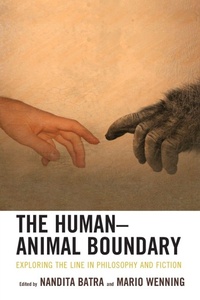
The Human-Animal Boundary
Exploring the Line in Philosophy and Fiction
Published on 22. September 2021
Book
Paperback/Softback
242 pages
978-1-4985-5784-9 (ISBN)
Description
Throughout the centuries philosophers and poets alike have defended an essential difference-rather than a porous transition-between the human and animal. Attempts to assign essential properties to humans (e.g., language, reason, or morality) often reflected ulterior aims to defend a privileged position for humans..
This book shifts the traditional anthropocentric focus of philosophy and literature by combining the questions "What is human?" and "What is animal?" What makes this collection unique is that it fills a lacuna in critical animal studies and the growing field of ecocriticism. It is the first collection that establishes a productive encounter between philosophical perspectives on the human-animal boundary and those that draw on fictional literature. The objective is to establish a dialogue between those disciplines with the goal of expanding the imaginative scope of human-animal relationships. The contributions thus do not only trace and deconstruct the boundaries dividing humans and nonhuman animals, they also present the reader with alternative perspectives on the porous continuum and surprising reversal of what appears as human and what as nonhuman.
This book shifts the traditional anthropocentric focus of philosophy and literature by combining the questions "What is human?" and "What is animal?" What makes this collection unique is that it fills a lacuna in critical animal studies and the growing field of ecocriticism. It is the first collection that establishes a productive encounter between philosophical perspectives on the human-animal boundary and those that draw on fictional literature. The objective is to establish a dialogue between those disciplines with the goal of expanding the imaginative scope of human-animal relationships. The contributions thus do not only trace and deconstruct the boundaries dividing humans and nonhuman animals, they also present the reader with alternative perspectives on the porous continuum and surprising reversal of what appears as human and what as nonhuman.
Reviews / Votes
Batra and Wenning edited and selected this excellent, diverse collection of scholarly essays that reevaluate or break human-nonhuman boundaries. The latest volume in Lexington's 'Ecocritical Theory and Practice' series, the book provides a welcome complement to the resulting discourse at two international conferences by the same name, held at the editors' home universities in Puerto Rico and Macau. The innovative essays demonstrate that boundaries have two sides. Humans and animals are different, mostly in self-appointed ways, but also markedly similar in terms of culture and innovation. For example, essays on Aesop's fables and the Ramayana epic argue that humans are not only similar to some other animals but are, in certain cases, even beholden to them. Narratives of difference, such as Cartesian subjectivism and Heideggerian phenomenology, are juxtaposed with counter narratives from ancient texts and modern biology to an enlightening effect. Summing Up: Recommended. * Choice Reviews * From Aesop's and Heidegger's animals to McKibben's and Bekoff's anthropocene, the dividing line between homo sapiens and the world's other species has been supported and abolished, attacked and embraced. As ecocriticism has developed into a discipline, scholars have seen this same human/animal distinction as central to our understanding of ecology and the rise of environmentalism. Batra and Wenning bring together essays that make clear why this debate is so central to our understanding of the role of animals in human life and the role of humans in the lives of animals. -- Ashton Nichols, Beach '65 Distinguished Professor in Sustainability Studies and Professor of English, Dickinson College, and author of Beyond Romantic Ecocriticism: Urbanatural Roosting and Romantic Natural Histories: Wordsworth, Darwin and OthersMore details
Series
Language
English
Place of publication
United States
Publishing group
Bloomsbury Publishing Plc
Target group
Professional and scholarly
Illustrations
2 b/w illustrations; 2 tables;
Dimensions
Height: 229 mm
Width: 152 mm
Thickness: 14 mm
Weight
399 gr
ISBN-13
978-1-4985-5784-9 (9781498557849)
Copyright in bibliographic data and cover images is held by Nielsen Book Services Limited or by the publishers or by their respective licensors: all rights reserved.
Schweitzer Classification
Other editions
Additional editions
The Human-Animal Boundary
Exploring the Line in Philosophy and Fiction
E-Book
11/2018
1st Edition
Lexington Books
€38.49
Available for download
Persons
Nandita Batra is currently Professor of English at the University of Puerto Rico-Mayagueez. She is the editor of Of Mice and Men: Animals and Human Culture and This Watery World: Humans and the Sea.
Mario Wenning is currently Associate Professor of Philosophy at the University of Macau. He is the editor of Comparative Perspectives on the Philosophy of Nature and Contemporary Perspectives on Critical Theory and Systems Theory.
Mario Wenning is currently Associate Professor of Philosophy at the University of Macau. He is the editor of Comparative Perspectives on the Philosophy of Nature and Contemporary Perspectives on Critical Theory and Systems Theory.
Content
Introduction
Nandita Batra and Mario Wenning
I. Contesting Exceptionalism
1. Bridging the Abyss: Re-interpreting Heidegger's Animals as a Basis for inter-species Understanding
Joshua A. Bergamin
2. Ramayana's Hanuman-Animal, Human or Divine
Sukanya B. Senapati
3. Aesop: Figuring the Human/Animal Boundary
John Hartigan
II. Representing the Human-Animal Boundary
4. 'Zones of Non-Knowledge': Facing The Open with R. M. Rilke, Martin Heidegger, and Giorgio Agamben
Sabine Lenore Mueller
5. The Avoidance of Moral Responsibility towards Animals: Coleridge's 'The Rime of the Ancient Mariner' and the Human Animal Boundary
Tomaz Grusovnik
6. The Cattle in the Long Cedar Springs Draw
Gary Comstock
7. Re-writing the Human-Animal Divide: Humanism and Octavia Butler's "Amborg"
Aparajita Nanda
8. Milton's Elephant
James P. Conlan
III. Re-Situating the Human/Animal Boundary
9. The Moral Duties of Dolphins
Sara Gavrell Ortiz
10. Great Apes and Lesser Humans: Goodall and the Geographic Entangled in Uhuru
Kristian Bjorkdahl
11. The Empress and the Beast: Finding a Philosophical Voice in Fiction
Alison Suen
12. A Bestiary for the Anthropocene: The End of Nature and the Future of Animal Life on Planet Earth
Eduardo Mendieta
Nandita Batra and Mario Wenning
I. Contesting Exceptionalism
1. Bridging the Abyss: Re-interpreting Heidegger's Animals as a Basis for inter-species Understanding
Joshua A. Bergamin
2. Ramayana's Hanuman-Animal, Human or Divine
Sukanya B. Senapati
3. Aesop: Figuring the Human/Animal Boundary
John Hartigan
II. Representing the Human-Animal Boundary
4. 'Zones of Non-Knowledge': Facing The Open with R. M. Rilke, Martin Heidegger, and Giorgio Agamben
Sabine Lenore Mueller
5. The Avoidance of Moral Responsibility towards Animals: Coleridge's 'The Rime of the Ancient Mariner' and the Human Animal Boundary
Tomaz Grusovnik
6. The Cattle in the Long Cedar Springs Draw
Gary Comstock
7. Re-writing the Human-Animal Divide: Humanism and Octavia Butler's "Amborg"
Aparajita Nanda
8. Milton's Elephant
James P. Conlan
III. Re-Situating the Human/Animal Boundary
9. The Moral Duties of Dolphins
Sara Gavrell Ortiz
10. Great Apes and Lesser Humans: Goodall and the Geographic Entangled in Uhuru
Kristian Bjorkdahl
11. The Empress and the Beast: Finding a Philosophical Voice in Fiction
Alison Suen
12. A Bestiary for the Anthropocene: The End of Nature and the Future of Animal Life on Planet Earth
Eduardo Mendieta