

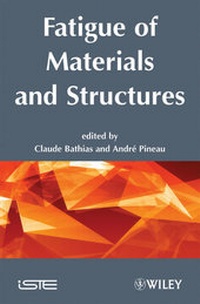
Fatigue of Materials and Structures
Fundamentals
Will be published approx. on 18. June 2010
Book
Hardback
524 pages
978-1-84821-051-6 (ISBN)
Description
Fatigue and fracture result in billions of dollars of damage each year. This book examines the various causes of fatigue including crack growth, defects, temperature, environmental, and corrosion.
More details
Edition
1. Auflage
Language
English
Place of publication
London
United Kingdom
Target group
Professional and scholarly
Product notice
Unsewn / adhesive bound
Paper over boards
Dimensions
Height: 243 mm
Width: 162 mm
Thickness: 35 mm
Weight
894 gr
ISBN-13
978-1-84821-051-6 (9781848210516)
Schweitzer Classification
Other editions
Additional editions
E-Book
03/2013
Wiley-ISTE
€262.99
Available for download
E-Book
03/2013
Wiley-ISTE
€262.99
Available for download
Persons
Claude Bathias is Emeritus Professor at the University Paris 10-La Defense. He started his career as a research engineer in the aerospace and military industry where he remained for 20 years before becoming director of the CNRS laboratory ERA 914 at the University of Compiegne. He has launched two international conferences about fatigue: International Conference on the Fatigue of Composite Materials (ICFC) and Very High Cycle Fatigue (VHCF).
Andre Pineau is Professor at Mines ParisTech and a member of the French Academy of Engineering. He has published about 300 papers in international journals and edited or co-edited 10 books. His main research fields are phase transformations, fatigue and fracture of metallic materials.
Andre Pineau is Professor at Mines ParisTech and a member of the French Academy of Engineering. He has published about 300 papers in international journals and edited or co-edited 10 books. His main research fields are phase transformations, fatigue and fracture of metallic materials.
Content
Foreword xiii
Chapter 1. Introduction to Fatigue: Fundamentals and Methodology 1
Andre PINEAU and Claude BATHIAS
1.1. Introduction to the fatigue of materials 1
1.2. Mechanisms of fatigue damage 10
1.3. Test systems 13
1.4. Structural design and fatigue 15
1.5. Fatigue of polymers, elastomers and composite materials 16
1.6. Conclusion 18
1.7. Bibliography 19
Chapter 2. Modeling of Fatigue Strength and Endurance Curve 23
Henri-Paul LIEURADE
2.1. Introduction 23
2.2. Nature and aspect of the scatter of fatigue test results 25
2.3. Determination of the endurance limit 27
2.4. Estimation methods of fatigue resistance and standard deviation with N cycles 27
2.5. Mathematical representations and plotting methods of the Woehler curve 47
2.6. Estimation of the cycle number N for a given level of stress amplitude 55
2.7. Influence of mechanical parameters on endurance 59
2.8. Relationship between endurance and mechanical characteristics (of steels) 62
2.9. Bibliography 66
Chapter 3. Fatigue Crack Initiation 69
Paul RABBE and Louis ANQUEZ
3.1. Introduction 69
3.2. Physical mechanisms of crack initiation 70
3.3. Methods of evaluating crack initiation 81
3.4. Practical method of structure calculation 97
3.5. Bibliography 109
Chapter 4. Low-cycle Fatigue 113
Andre PINEAU
4.1. Introduction 113
4.2. Phenomenological description of low-cycle fatigue 122
4.3. Adaptation mechanism and cracking during low-cycle fatigue 134
4.4. Conclusion 172
4.5. Acknowledgements 172
4.6. Bibliography 173
Chapter 5. Gigacycle Fatigue 179
Claude BATHIAS
5.1. Introducing the real-life fatigue life of machines 179
5.2. Testing process 181
5.3. Systems of piezoelectric fatigue machines 188
5.4. SN curves above 107 cycles 190
5.5. Initiation mechanism under gigacycle fatigue 209
5.6. Assessing fatigue strength 219
5.7. Conclusion 226
5.8. Bibliography 226
Chapter 6. Fatigue Crack Growth Laws 231
Jacques MASOUNAVE, Jean-Paul BAILON and John-Ivan DICKSON
6.1. Introduction 231
6.2. Models describing crack propagation 232
6.3. Critical evaluation of the models 249
6.4. Future plans 258
6.5. Conclusion 260
6.6. Bibliography 261
Chapter 7. Short Crack Propagation 269
Yves VERREMAN
7.1. Introduction 269
7.2. Theoretical considerations showing the limits of LEFM 271
7.3. Experimental observations 275
7.4. Role of closure in the behavior of short cracks 285
7.5. Modeling of the behavior of short cracks 291
7.6. Conclusion 302
7.7. Acknowledgements 303
7.8. Bibliography 303
Chapter 8. Plastic Deformation Mechanisms at the Crack Tip 311
Claude BATHIAS
8.1. Introduction 311
8.2. Fatigue plastic deformation at the crack tip 312
8.3. Microfractographic aspects of the fatigue crack 323
8.4. Model based on displacement on crack tip opening 328
8.5. Cyclic stress hardening at the crack tip 331
8.6. Model based on the effective stress intensity factor 334
8.7. Conclusion 342
8.8. Bibliography 343
Chapter 9. Local Approach to Fatigue Crack Growth 347
Sylvie POMMIER
9.1. Introduction 347
9.2. Plasticity at the crack tip 348
9.3. Cyclic plasticity at the crack tip 355
9.4. Local approach to fatigue crack growth 366
9.5. Conclusion 372
9.6. Bibliography 373
Chapter 10. Corrosion Fatigue 377
Regis PELLOUX and Jean-Marc GENKIN
10.1. Introduction 377
10.2. Crack initiation 378
10.3. Short cracks 384
10.4. Long crack propagation 385
10.5. Conclusions 397
10.6. Bibliography 397
Chapter 11. Effect of Environment 401
Jean PETIT and Christine SARRAZIN-BAUDOUX
11.1. Introduction 401
11.2. Effect of environment on lifetime under high-cycle fatigue conditions 403
11.3. Influence of the environment on fatigue crack propagation 411
11.4. Conclusion 443
11.5. Bibliography 444
Chapter 12. Fatigue under Variable Amplitude Loadings 457
Thierry PALIN-LUC
12.1. Introduction 457
12.2. Variable amplitude loadings 460
12.3. Fatigue tests under variable amplitude loadings 478
12.4. Factors influencing the test results under variable amplitude loading 486
12.5. Fatigue lifetime assessment under variable amplitude loading 493
12.6. Conclusion 497
12.7. Bibliography 498
List of Authors 503
Index 505
Chapter 1. Introduction to Fatigue: Fundamentals and Methodology 1
Andre PINEAU and Claude BATHIAS
1.1. Introduction to the fatigue of materials 1
1.2. Mechanisms of fatigue damage 10
1.3. Test systems 13
1.4. Structural design and fatigue 15
1.5. Fatigue of polymers, elastomers and composite materials 16
1.6. Conclusion 18
1.7. Bibliography 19
Chapter 2. Modeling of Fatigue Strength and Endurance Curve 23
Henri-Paul LIEURADE
2.1. Introduction 23
2.2. Nature and aspect of the scatter of fatigue test results 25
2.3. Determination of the endurance limit 27
2.4. Estimation methods of fatigue resistance and standard deviation with N cycles 27
2.5. Mathematical representations and plotting methods of the Woehler curve 47
2.6. Estimation of the cycle number N for a given level of stress amplitude 55
2.7. Influence of mechanical parameters on endurance 59
2.8. Relationship between endurance and mechanical characteristics (of steels) 62
2.9. Bibliography 66
Chapter 3. Fatigue Crack Initiation 69
Paul RABBE and Louis ANQUEZ
3.1. Introduction 69
3.2. Physical mechanisms of crack initiation 70
3.3. Methods of evaluating crack initiation 81
3.4. Practical method of structure calculation 97
3.5. Bibliography 109
Chapter 4. Low-cycle Fatigue 113
Andre PINEAU
4.1. Introduction 113
4.2. Phenomenological description of low-cycle fatigue 122
4.3. Adaptation mechanism and cracking during low-cycle fatigue 134
4.4. Conclusion 172
4.5. Acknowledgements 172
4.6. Bibliography 173
Chapter 5. Gigacycle Fatigue 179
Claude BATHIAS
5.1. Introducing the real-life fatigue life of machines 179
5.2. Testing process 181
5.3. Systems of piezoelectric fatigue machines 188
5.4. SN curves above 107 cycles 190
5.5. Initiation mechanism under gigacycle fatigue 209
5.6. Assessing fatigue strength 219
5.7. Conclusion 226
5.8. Bibliography 226
Chapter 6. Fatigue Crack Growth Laws 231
Jacques MASOUNAVE, Jean-Paul BAILON and John-Ivan DICKSON
6.1. Introduction 231
6.2. Models describing crack propagation 232
6.3. Critical evaluation of the models 249
6.4. Future plans 258
6.5. Conclusion 260
6.6. Bibliography 261
Chapter 7. Short Crack Propagation 269
Yves VERREMAN
7.1. Introduction 269
7.2. Theoretical considerations showing the limits of LEFM 271
7.3. Experimental observations 275
7.4. Role of closure in the behavior of short cracks 285
7.5. Modeling of the behavior of short cracks 291
7.6. Conclusion 302
7.7. Acknowledgements 303
7.8. Bibliography 303
Chapter 8. Plastic Deformation Mechanisms at the Crack Tip 311
Claude BATHIAS
8.1. Introduction 311
8.2. Fatigue plastic deformation at the crack tip 312
8.3. Microfractographic aspects of the fatigue crack 323
8.4. Model based on displacement on crack tip opening 328
8.5. Cyclic stress hardening at the crack tip 331
8.6. Model based on the effective stress intensity factor 334
8.7. Conclusion 342
8.8. Bibliography 343
Chapter 9. Local Approach to Fatigue Crack Growth 347
Sylvie POMMIER
9.1. Introduction 347
9.2. Plasticity at the crack tip 348
9.3. Cyclic plasticity at the crack tip 355
9.4. Local approach to fatigue crack growth 366
9.5. Conclusion 372
9.6. Bibliography 373
Chapter 10. Corrosion Fatigue 377
Regis PELLOUX and Jean-Marc GENKIN
10.1. Introduction 377
10.2. Crack initiation 378
10.3. Short cracks 384
10.4. Long crack propagation 385
10.5. Conclusions 397
10.6. Bibliography 397
Chapter 11. Effect of Environment 401
Jean PETIT and Christine SARRAZIN-BAUDOUX
11.1. Introduction 401
11.2. Effect of environment on lifetime under high-cycle fatigue conditions 403
11.3. Influence of the environment on fatigue crack propagation 411
11.4. Conclusion 443
11.5. Bibliography 444
Chapter 12. Fatigue under Variable Amplitude Loadings 457
Thierry PALIN-LUC
12.1. Introduction 457
12.2. Variable amplitude loadings 460
12.3. Fatigue tests under variable amplitude loadings 478
12.4. Factors influencing the test results under variable amplitude loading 486
12.5. Fatigue lifetime assessment under variable amplitude loading 493
12.6. Conclusion 497
12.7. Bibliography 498
List of Authors 503
Index 505