

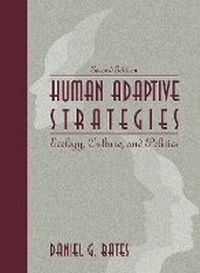
Human Adaptive Strategies
Ecology, Culture, and Politics
2nd Edition
Published on 1. March 2002
Book
Paperback/Softback
238 pages
978-0-205-32768-3 (ISBN)
Description
Based on Bates' Cultural Anthropology, this text provides a framework for analyzing cultures based on their economic systems.
Cultural ecology is the study of human behavior and culture within an environmental context. It examines how humans adapt to their environment and how the environment shapes culture. Based on a selection of materials from Bates' and Fratkin's Cultural Anthropology, Second Edition , Human Adaptive Strategies uses case studies to show how cultures evolved within the context of their environment and how their methods of surviving in their environment have affected other aspects of their culture. One reviewer says, "Concentrating, as the book does, on subsistence patterns and cultural ecology, it creates a conceptual structure conducive to the needs of the introductory student in anthropology."
Cultural ecology is the study of human behavior and culture within an environmental context. It examines how humans adapt to their environment and how the environment shapes culture. Based on a selection of materials from Bates' and Fratkin's Cultural Anthropology, Second Edition , Human Adaptive Strategies uses case studies to show how cultures evolved within the context of their environment and how their methods of surviving in their environment have affected other aspects of their culture. One reviewer says, "Concentrating, as the book does, on subsistence patterns and cultural ecology, it creates a conceptual structure conducive to the needs of the introductory student in anthropology."
More details
Edition
2nd edition
Language
English
Place of publication
United States
Publishing group
Pearson Education (US)
Target group
Professional and scholarly
Dimensions
Height: 275 mm
Width: 210 mm
Thickness: 15 mm
Weight
528 gr
ISBN-13
978-0-205-32768-3 (9780205327683)
Copyright in bibliographic data and cover images is held by Nielsen Book Services Limited or by the publishers or by their respective licensors: all rights reserved.
Schweitzer Classification
Other editions
New editions
Book
07/2004
3rd Edition
Pearson
€85.71
Article exhausted; check for reprint
Content
All chapters conclude with "Summary," "Key Terms," and "Suggested Readings."
1.The Study of Human Behavior.
The Nature of Scientific Inquiry
Cultural Relativism.
The Science of Anthropology.
Aspects of Culture.
Behavior, Language, and Learning.
2.Evolution, Ecology, and Politics.
The Human Evolutionary Legacy.
Human Ecology.
The Evolution of Procurement Systems.
Adapting to Environmental Problems.
Political Ecology.
3.Foraging.
Box 3.1: Who Speaks for Whom?
The Organization of Energy.
Social Organization.
Settlement Patterns and Mobility.
Resilience, Stability, and Change.
The Dobe Ju/'hoansi.
The Inuit or Eskimo.
The Batak Foragers of the Philippines.
4.Horticulture: Feeding the Household.
The Horticultural Adaptation.
The Yanamamoe.
The Pueblo of North America.
5.Nomadic Pastoralism.
The Pastoral Adaptation.
Social Organization.
The Ariaal of Northern Kenya.
The Yoeruek of Turkey.
Al-Murra of Saudi Arabia.
6.Intensive Agriculture: Feeding the Cities.
The Development of Intensive Agriculture.
The Social Consequences of Intensive Agriculture.
The Tamang of Nepal.
Where the Dove Calls: The Mexican Village of Cucurpe.
The Kofyar of Central Nigeria.
Directions of Change in Rural Egypt.
7.Industrial Society: Feeding the World.
Box 7.1: The Emerging Fourth World in the New Millennium.
From Intensive Agriculture to Industrialized Farming.
Village Becomes Suburb: Shinohata, Japan.
Urbanized Rural Society: Farming in the United States.
The Rise and Fall of Collective Agriculture in Bulgaria.
8.Change and Development: The Challenges of Globalism.
Adaptation and Processes of Cultural Transformation.
Beyond Industrialism.
The Ecological Consequences of Post-industrialism.
Can We Survive Progress?
Sahel Visions.
The Ethics of Development Work.
1.The Study of Human Behavior.
The Nature of Scientific Inquiry
Cultural Relativism.
The Science of Anthropology.
Aspects of Culture.
Behavior, Language, and Learning.
2.Evolution, Ecology, and Politics.
The Human Evolutionary Legacy.
Human Ecology.
The Evolution of Procurement Systems.
Adapting to Environmental Problems.
Political Ecology.
3.Foraging.
Box 3.1: Who Speaks for Whom?
The Organization of Energy.
Social Organization.
Settlement Patterns and Mobility.
Resilience, Stability, and Change.
The Dobe Ju/'hoansi.
The Inuit or Eskimo.
The Batak Foragers of the Philippines.
4.Horticulture: Feeding the Household.
The Horticultural Adaptation.
The Yanamamoe.
The Pueblo of North America.
5.Nomadic Pastoralism.
The Pastoral Adaptation.
Social Organization.
The Ariaal of Northern Kenya.
The Yoeruek of Turkey.
Al-Murra of Saudi Arabia.
6.Intensive Agriculture: Feeding the Cities.
The Development of Intensive Agriculture.
The Social Consequences of Intensive Agriculture.
The Tamang of Nepal.
Where the Dove Calls: The Mexican Village of Cucurpe.
The Kofyar of Central Nigeria.
Directions of Change in Rural Egypt.
7.Industrial Society: Feeding the World.
Box 7.1: The Emerging Fourth World in the New Millennium.
From Intensive Agriculture to Industrialized Farming.
Village Becomes Suburb: Shinohata, Japan.
Urbanized Rural Society: Farming in the United States.
The Rise and Fall of Collective Agriculture in Bulgaria.
8.Change and Development: The Challenges of Globalism.
Adaptation and Processes of Cultural Transformation.
Beyond Industrialism.
The Ecological Consequences of Post-industrialism.
Can We Survive Progress?
Sahel Visions.
The Ethics of Development Work.