


The Rise and Fall of Global Microcredit
Development, debt and disillusion
1st Edition
Published on 4. September 2018
Book
Hardback
290 pages
978-1-138-71408-3 (ISBN)
Description
In the mid-1980s the international development community helped launch what was to quickly become one of the most popular poverty reduction and local economic development policies of all time. Microcredit, the system of disbursing tiny micro-loans to the poor to help them to establish their own income-generating activities, was initially highly praised and some were even led to believe that it would end poverty as we know it. But in recent years the microcredit model has been subject to growing scrutiny and often intense criticism. The Rise and Fall of Global Microcredit shines a light on many of the fundamental problems surrounding microcredit, in particular, the short- and long-term impacts of dramatically rising levels of microdebt.
Developed in collaboration with UNCTAD, this book covers the general policy implications of adverse microcredit impacts, as well as gathering together country-specific case studies from around the world to illustrate the real dynamics, incentives and end results. Lively and provocative, The Rise and Fall of Global Microcredit is an accessible guide for students, academics, policymakers and development professionals alike.
Developed in collaboration with UNCTAD, this book covers the general policy implications of adverse microcredit impacts, as well as gathering together country-specific case studies from around the world to illustrate the real dynamics, incentives and end results. Lively and provocative, The Rise and Fall of Global Microcredit is an accessible guide for students, academics, policymakers and development professionals alike.
Reviews / Votes
"This book provides a definitive, and much-needed, assessment of the microcredit movement: from the overselling of its modest initial promise, to its conversion into a new method of exploiting vulnerable people and communities, and to its misconceived embrace by global leaders and institutions. What cements this book's importance for development policy and practice is that its critique is accompanied by an affirmation of the role of productive, accessible financing in sustainable development." -- Gary Dymski, Professor of Applied Economics, Leeds University Business School, UK"This is a must-read book to understand the financialisation of the poor from the perspective of the global microcredit industry. The Post-2015 Agenda, supporting financial and digital inclusion to achieve development and to end with poverty, hides the profit obtained by microcredit institutions when granting credit to small entrepreneurs and to those with fewer resources. The problem with indebtedness and lack of payment of loans affects the poor, causing greater debt in crisis and recession periods. This provides important evidence and insight into what went wrong with microcredit." -- Alicia Giron, University Program of Asian and African Studies, UNAM, Mexico
"This unfailingly courageous and carefully researched book shatters the mythology around the microcredit myth that has captured the imagination and funding of the global development industry for far too long. It shines a bright light on the links between microcredit and rising indebtedness and financialised, rentier capitalism. Microcredit boosters take heed!" -- Ilene Grabel, Josef Korbel School of International Studies, University of Denver, USA
"This book provides the inconvenient truth about how market-based mechanisms are far from panaceas for today's development problems. With rigorous detail, the volume parades through case after case of failed micro-credit ventures in country after country-even in Peru the 'center of origin' for many of the financialization of the poor [this] has more often than not led to yet another case of the further transfer of wealth and power from the poor." -- Kevin P. Gallagher, Director at the Global Development Policy Center, Frederick S. Pardee School of Global Studies, Boston University, USA
More details
Series
Language
English
Place of publication
London
United Kingdom
Publishing group
Taylor & Francis Ltd
Target group
College/higher education
Illustrations
11 s/w Abbildungen, 11 s/w Zeichnungen, 9 s/w Tabellen
9 Tables, black and white; 11 Line drawings, black and white; 11 Illustrations, black and white
Dimensions
Height: 240 mm
Width: 161 mm
Thickness: 21 mm
Weight
625 gr
ISBN-13
978-1-138-71408-3 (9781138714083)
Copyright in bibliographic data and cover images is held by Nielsen Book Services Limited or by the publishers or by their respective licensors: all rights reserved.
Schweitzer Classification
Other editions
Additional editions
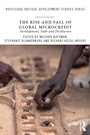
Milford Bateman | Stephanie Blankenburg | Richard Kozul-Wright
The Rise and Fall of Global Microcredit
Development, debt and disillusion
E-Book
10/2018
1st Edition
Routledge
€52.49
Available for download
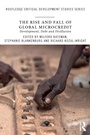
Milford Bateman | Stephanie Blankenburg | Richard Kozul-Wright
The Rise and Fall of Global Microcredit
Development, debt and disillusion
E-Book
10/2018
1st Edition
Routledge
€52.49
Available for download
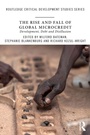
Milford Bateman | Stephanie Blankenburg | Richard Kozul-Wright
The Rise and Fall of Global Microcredit
Development, debt and disillusion
Book
09/2018
1st Edition
Routledge
€60.70
Shipment within 10-20 days
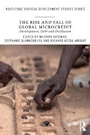
Milford Bateman | Stephanie Blankenburg | Richard Kozul-Wright
The Rise and Fall of Global Microcredit
Development, Debt and Disillusion
Book
04/2017
1st Edition
Routledge
€126.28
The article will not be published
Milford Bateman | Stephanie Blankenburg | Richard Kozul-Wright
The Rise and Fall of Global Microcredit
Development, Debt and Disillusion
Book
04/2017
1st Edition
Routledge
€57.13
The article will not be published
Persons
Milford Bateman, Visiting Professor of Economics, Juraj Dobrila at Pula University, Croatia, and Adjunct Professor of Development Studies, St Mary's University, Halifax, Canada.
Stephanie Blankenburg is Head of the Debt and Development Finance Branch, Division on Globalization and Development Strategies, UNCTAD.
Richard Kozul-Wright is Director of the Division on Globalization and Development Strategies, UNCTAD.
Stephanie Blankenburg is Head of the Debt and Development Finance Branch, Division on Globalization and Development Strategies, UNCTAD.
Richard Kozul-Wright is Director of the Division on Globalization and Development Strategies, UNCTAD.
Content
Contents
Preface
Acronyms
Notes on contributors
Part I: An overview
Introduction
Milford Bateman, Stephanie Blankenburg and Richard Kozul-Wright
Development prospects in an era of financialization
Richard Kozul-Wright
Impacts of the microcredit model: does theory reflect actual practice?
Milford Bateman
Part II: Country case studies
Looking through the glass, darkly: microcredit in Peru
Matthew D. Bird
Brazil: Latin America's unsung hero
Fernanda Feil and Andrej Slivnik
Colombia: A critical look
Daniel Munevar
Mexico and the microcredit model
Eugenia Correa and Laura Vidal
Sustainability paradigm to paradox: a study of microfinance clients' livelihoods in Bangladesh
Mathilde Maitrot
Cambodia: the next domino to fall?
Milford Bateman
The instability of commercial microcredit: understanding the Indian crisis with Minsky
Philip Mader
11. Collective resistances to microcredit in Morocco
Solene Morvant-Roux and Jean-Yves Moisseron
12. Microcredit as post-apartheid South Africa's own US-style sub-prime crisis
Milford Bateman
Part III: Policy implications
13. Delivering development finance in 'the time of cholera': a 'bottom-up' agenda for pro-development financial resource mobilisation
Stephanie Blankenburg
14. Conclusion
Milford Bateman, Stephanie Blankenburg and Richard Kozul-Wright
Preface
Acronyms
Notes on contributors
Part I: An overview
Introduction
Milford Bateman, Stephanie Blankenburg and Richard Kozul-Wright
Development prospects in an era of financialization
Richard Kozul-Wright
Impacts of the microcredit model: does theory reflect actual practice?
Milford Bateman
Part II: Country case studies
Looking through the glass, darkly: microcredit in Peru
Matthew D. Bird
Brazil: Latin America's unsung hero
Fernanda Feil and Andrej Slivnik
Colombia: A critical look
Daniel Munevar
Mexico and the microcredit model
Eugenia Correa and Laura Vidal
Sustainability paradigm to paradox: a study of microfinance clients' livelihoods in Bangladesh
Mathilde Maitrot
Cambodia: the next domino to fall?
Milford Bateman
The instability of commercial microcredit: understanding the Indian crisis with Minsky
Philip Mader
11. Collective resistances to microcredit in Morocco
Solene Morvant-Roux and Jean-Yves Moisseron
12. Microcredit as post-apartheid South Africa's own US-style sub-prime crisis
Milford Bateman
Part III: Policy implications
13. Delivering development finance in 'the time of cholera': a 'bottom-up' agenda for pro-development financial resource mobilisation
Stephanie Blankenburg
14. Conclusion
Milford Bateman, Stephanie Blankenburg and Richard Kozul-Wright