

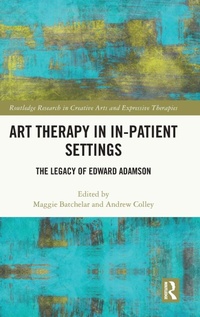
Art Therapy in In-patient Settings
The Legacy of Edward Adamson
1st Edition
Published on 5. May 2026
Book
Hardback
184 pages
978-1-041-01161-3 (ISBN)
Description
Bringing together the voices of academics, art psychotherapists, and service users, this unique volume explores the contemporary impact of Edward Adamson's pioneering work on art therapy practices in in-patient settings.
Drawing on both primary and secondary sources, as well as case studies, the book explores the extent to which Adamson's work has become a conceptual framework for art therapy in a variety of in-patient settings today. It describes how practice contributes to the shift in mental health provision towards a trauma-informed culture, and represents a research-led rationale for increased and reliable provision of arts therapies in in-patient settings as a vital contribution to patient experience and recovery. Chapters cover key elements such as the open studio model, the role of the art therapist, art therapy as personal narrative, art therapy in forensic settings, and its use in supporting the wellbeing of staff in in-patient settings. The volume locates Adamson's legacy within a changing healthcare framework, reflecting on the future of art therapy in the context of evolving government policy, financial restraints and - in the UK - the changing face of the NHS.
This volume will be of interest to researchers, scholar-practitioners, psychotherapists and postgraduate students in the fields of arts therapies, the history of psychology and mental health provision and, more broadly, mental health nursing and policy. It will give senior leaders an opportunity to understand the contribution of arts therapists to improving the quality of care for service users and staff.
Drawing on both primary and secondary sources, as well as case studies, the book explores the extent to which Adamson's work has become a conceptual framework for art therapy in a variety of in-patient settings today. It describes how practice contributes to the shift in mental health provision towards a trauma-informed culture, and represents a research-led rationale for increased and reliable provision of arts therapies in in-patient settings as a vital contribution to patient experience and recovery. Chapters cover key elements such as the open studio model, the role of the art therapist, art therapy as personal narrative, art therapy in forensic settings, and its use in supporting the wellbeing of staff in in-patient settings. The volume locates Adamson's legacy within a changing healthcare framework, reflecting on the future of art therapy in the context of evolving government policy, financial restraints and - in the UK - the changing face of the NHS.
This volume will be of interest to researchers, scholar-practitioners, psychotherapists and postgraduate students in the fields of arts therapies, the history of psychology and mental health provision and, more broadly, mental health nursing and policy. It will give senior leaders an opportunity to understand the contribution of arts therapists to improving the quality of care for service users and staff.
More details
Series
Language
English
Place of publication
London
United Kingdom
Publishing group
Taylor & Francis Ltd
Target group
College/higher education
Professional and scholarly
Academic and Postgraduate
Product notice
sewn/stitched
Cloth over boards
Illustrations
10 Farbfotos bzw. farbige Rasterbilder, 1 s/w Tabelle, 10 farbige Abbildungen
1 Tables, black and white; 10 Halftones, color; 10 Illustrations, color
Dimensions
Height: 238 mm
Width: 159 mm
Thickness: 16 mm
Weight
420 gr
ISBN-13
978-1-041-01161-3 (9781041011613)
Copyright in bibliographic data and cover images is held by Nielsen Book Services Limited or by the publishers or by their respective licensors: all rights reserved.
Schweitzer Classification
Other editions
Additional editions
E-Book
05/2026
Taylor & Francis
€55.49
Available for download
E-Book
05/2026
Taylor & Francis
€55.49
Available for download
Persons
Maggie Batchelar is a Lead Art Psychotherapist in Norfolk and Suffolk NHS Foundation Trust, UK.
Andrew Colley is a former Senior Lecturer in Special Education, University of East London, UK.
Andrew Colley is a former Senior Lecturer in Special Education, University of East London, UK.
Content
Introduction: by Siobhan Lennon, with Andrew Colley
Part One: Edward Adamson
Chapter One: Edward Adamson and Netherne Hospital by Dr Chris Wood, with Andrew Colley.
Chapter Two: Adamson in Context by Dr Chris Wood
Chapter Three: The Adamson Collection and its Relevance to Contemporary Art Therapy Practice by Dr Val Huet
Part Two: The Enabling Space
Chapter Four: Enabling Spaces by Maggie Batchelar and Kate Lawrence
Chapter Five: Finding a Meeting Place: Art Therapy Practice on Inpatient Wards by Maggie Batchelar and Joanne Noble.
Chapter Six: Arts in Recovery: Narrative Case Studies Exploring Artmaking as a Pathway to Becoming and Belonging by Alan Johnson and Dr Tess Rendoth.
Chapter Seven: Art Psychotherapy with Adults in a High Secure Setting by Emma Allen.
Chapter Eight: Working Collaboratively with Patients and Staff by Fiona Grainger.
Chapter Nine: Art Therapy and Staff Wellbeing by Fiona Williams.
Chapter Ten: The Common Language of Arts Psychotherapies by Jackie Edwards and Estelle Kane.
Chapter Eleven: Evidencing the Impact of Art Therapy using Outcome Measures by Runa Park and Tim Wright.
Part Three: The Way Ahead
Chapter Twelve: Improving Equality of Access to Psychological Therapy through Art Therapy: A contemporary pilot project in an NHS service by Poppy Tomkinson and Dr Jed Jerwood.
Chapter Thirteen: Art Therapy and the Changing face of the NHS by Maggie Batchelar and Tim Wright.
Chapter Fourteen: The Wider Context - Growth in Arts & Wellbeing Provision Nationally and Internationally, by Maggie Batchelar and Andrew Colley
Part One: Edward Adamson
Chapter One: Edward Adamson and Netherne Hospital by Dr Chris Wood, with Andrew Colley.
Chapter Two: Adamson in Context by Dr Chris Wood
Chapter Three: The Adamson Collection and its Relevance to Contemporary Art Therapy Practice by Dr Val Huet
Part Two: The Enabling Space
Chapter Four: Enabling Spaces by Maggie Batchelar and Kate Lawrence
Chapter Five: Finding a Meeting Place: Art Therapy Practice on Inpatient Wards by Maggie Batchelar and Joanne Noble.
Chapter Six: Arts in Recovery: Narrative Case Studies Exploring Artmaking as a Pathway to Becoming and Belonging by Alan Johnson and Dr Tess Rendoth.
Chapter Seven: Art Psychotherapy with Adults in a High Secure Setting by Emma Allen.
Chapter Eight: Working Collaboratively with Patients and Staff by Fiona Grainger.
Chapter Nine: Art Therapy and Staff Wellbeing by Fiona Williams.
Chapter Ten: The Common Language of Arts Psychotherapies by Jackie Edwards and Estelle Kane.
Chapter Eleven: Evidencing the Impact of Art Therapy using Outcome Measures by Runa Park and Tim Wright.
Part Three: The Way Ahead
Chapter Twelve: Improving Equality of Access to Psychological Therapy through Art Therapy: A contemporary pilot project in an NHS service by Poppy Tomkinson and Dr Jed Jerwood.
Chapter Thirteen: Art Therapy and the Changing face of the NHS by Maggie Batchelar and Tim Wright.
Chapter Fourteen: The Wider Context - Growth in Arts & Wellbeing Provision Nationally and Internationally, by Maggie Batchelar and Andrew Colley