

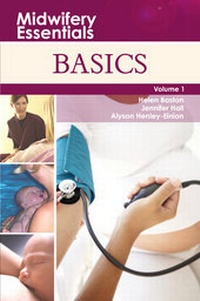
Midwifery Essentials: Basics
Volume 1
Published on 3. September 2009
Book
Paperback/Softback
208 pages
978-0-443-10353-7 (ISBN)
Description
Basics is the first title in the Midwifery Essentials series and prepares the reader to understand and master a range of clinical skills safely and with confidence.
The jigsaw model of midwifery care is introduced and explained, providing a framework to explore the application of each of the clinical skills described in subsequent chapters. Central to undertaking each of the skills discussed is the need to communicate effectively with women and their families.
Effective communication for each clinical skill
Principles of infection control and hygiene
Essential observations of blood pressure, temperature and pulse
Collection of specimens and blood from woman and baby, urinalysis, and venepuncture
Principles of medicines management and injection technique
Fundamentals of surgical care.
Midwifery Essentials consists of a series of four pocketbooks, based on the popular and successful 'Midwifery Basics' articles published in 'The Practising Midwife' journal. They have been written in response to many requests from students, midwives and supervisors to combine these articles into a handy text.
The books remain true to the style of the articles and have been updated and expanded to create a user-friendly source of information on different aspects of midwifery care. They will stimulate debate and require the reader both to reflect on their current practice, local policies and procedures and to challenge care that is not woman centred.
There are many dimensions to the provision of woman-centred care that practitioners need to consider and understand so the series is based on the principles of holistic care, using a 'jigsaw' model as a framework. Each aspect of the jigsaw should be considered during the assessment, planning, implementation and evaluation of woman-centred maternity care, for example:
how does a midwife obtain consent from a woman for a procedure, maintain a safe environment during the delivery of care and make the most of the opportunity to promote health?
what are the professional and legal issues in relation to the procedure and is this practice based on the best available evidence?
which members of the multi-professional team contribute to this aspect of care and how is it influenced by the way in which care is organised?
Series features:
Provides information essential for best practice at all stages of pregnancy and birth
'Jigsaw' model promotes holistic care
Scenarios help readers understand the context of maternity care
Activities encourage further exploration and debate.
The jigsaw model of midwifery care is introduced and explained, providing a framework to explore the application of each of the clinical skills described in subsequent chapters. Central to undertaking each of the skills discussed is the need to communicate effectively with women and their families.
Effective communication for each clinical skill
Principles of infection control and hygiene
Essential observations of blood pressure, temperature and pulse
Collection of specimens and blood from woman and baby, urinalysis, and venepuncture
Principles of medicines management and injection technique
Fundamentals of surgical care.
Midwifery Essentials consists of a series of four pocketbooks, based on the popular and successful 'Midwifery Basics' articles published in 'The Practising Midwife' journal. They have been written in response to many requests from students, midwives and supervisors to combine these articles into a handy text.
The books remain true to the style of the articles and have been updated and expanded to create a user-friendly source of information on different aspects of midwifery care. They will stimulate debate and require the reader both to reflect on their current practice, local policies and procedures and to challenge care that is not woman centred.
There are many dimensions to the provision of woman-centred care that practitioners need to consider and understand so the series is based on the principles of holistic care, using a 'jigsaw' model as a framework. Each aspect of the jigsaw should be considered during the assessment, planning, implementation and evaluation of woman-centred maternity care, for example:
how does a midwife obtain consent from a woman for a procedure, maintain a safe environment during the delivery of care and make the most of the opportunity to promote health?
what are the professional and legal issues in relation to the procedure and is this practice based on the best available evidence?
which members of the multi-professional team contribute to this aspect of care and how is it influenced by the way in which care is organised?
Series features:
Provides information essential for best practice at all stages of pregnancy and birth
'Jigsaw' model promotes holistic care
Scenarios help readers understand the context of maternity care
Activities encourage further exploration and debate.
More details
Series
Language
English
Place of publication
London
United Kingdom
Publishing group
Elsevier Health Sciences
Target group
Professional and scholarly
Student and practising midwives; labour ward personnel; nurses undertaking midwifery training.
ISBN-13
978-0-443-10353-7 (9780443103537)
Copyright in bibliographic data and cover images is held by Nielsen Book Services Limited or by the publishers or by their respective licensors: all rights reserved.
Schweitzer Classification
Other editions
New editions
Book
06/2017
2nd Edition
Elsevier
€16.50
Shipment within 10-20 days
Additional editions
MMedSci Baston BA(Hons) | Jennifer Hall EdD MSc RN RM ADM PGDip(HE) SFHEA FRCM | Ma Einion BSc(Hons)
Midwifery Essentials: Basics E-Book
Midwifery Essentials: Basics E-Book
E-Book
09/2009
Elsevier
€11.99
Available for download
Persons
Content
Basics Volume:
1. Introduction
2. Communication
3. Hygiene and infection control: the immobile woman
4. Blood pressure measurement
5. Temperature measurement
6. Pulse and respiration
7. Collection of specimens
8. Urinalysis
9. Venepuncture
10. Neonatal blood tests
11. Administration of medicines
12. Administration of injections
13. Surgical care
1. Introduction
2. Communication
3. Hygiene and infection control: the immobile woman
4. Blood pressure measurement
5. Temperature measurement
6. Pulse and respiration
7. Collection of specimens
8. Urinalysis
9. Venepuncture
10. Neonatal blood tests
11. Administration of medicines
12. Administration of injections
13. Surgical care