

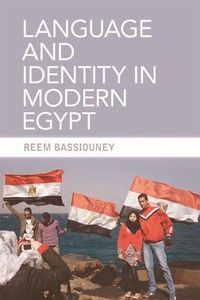
Language and Identity in Modern Egypt
Published on 16. March 2014
Book
Hardback
416 pages
978-0-7486-8964-4 (ISBN)
Description
How is language used in Egyptian public discourse to express the collective identity of Egyptians? How does this identity relate to language form and content? Reem Bassiouney explores these questions by drawing on a broad selection of data, including newspaper articles, caricatures, blogs, patriotic songs, films, school textbooks, TV talk-shows, poetry and novels. As well as deepending their understanding of the relationship between identity and language in general, readers will gain insights about the intricate ways in which media and public discourse help shape and outline identity through linguistic processes.
Reviews / Votes
This study provides an interesting insight into the link between identity and language in a barely investigated diglossic context, combining sociolinguistics and discourse analysis.' -- Carmen Ebner * Language In Society * Bassiouney's good command of both Arabic and English, sophisticated understanding of sociolinguistics, deep insight into the linguistic subtleties and discursive nuances of the data analyzed, and sound theoretical proposals presented render this book an indispensable reference to any researcher interested in the ways in which language plays a role in constructing national identity particularly in linguistically complex environments.' * Multilingua * [Reem Bassiouney's] work tackles exciting and complex issues through the analysis of a rich and diverse corpus. There are few books that put on the same level of analysis of popular songs, TV shows, newspaper articles, novels, and political speeches...This book will certainly remain one of the important references in the field of studies of linguistic ideologies in the Arab world.' -- Catherine Miller * Revue des mondes musulmans et de la Mediterranee * [Reem Bassiouney's] work tackles exciting and complex issues through the analysis of a rich and diverse corpus. There are few books that put on the same level of analysis of popular songs, TV shows, newspaper articles, novels, and political speeches...This book will certainly remain one of the important references in the field of studies of linguistic ideologies in the Arab world.' -- Catherine Miller * Revue des mondes musulmans et de la Mediterranee * This is a timely book by a knowledgeable scholar who has a deep and sophisticated appreciation of the complexities of language and identity in Egypt. -- Abbas Benmamoun, University of IllinoisMore details
Language
English
Place of publication
Edinburgh
United Kingdom
Target group
Professional and scholarly
Product notice
sewn/stitched
Cloth over boards
Illustrations
4 black and white illustrations
Dimensions
Height: 239 mm
Width: 155 mm
Thickness: 33 mm
Weight
862 gr
ISBN-13
978-0-7486-8964-4 (9780748689644)
Copyright in bibliographic data and cover images is held by Nielsen Book Services Limited or by the publishers or by their respective licensors: all rights reserved.
Schweitzer Classification
Other editions
Additional editions
Reem Bassiouney
Language and Identity in Modern Egypt
E-Book
01/2015
Edinburgh University Press
€29.49
Available for download
Reem Bassiouney
Language and Identity in Modern Egypt
E-Book
03/2014
Edinburgh University Press
€0.00
Available for download
Person
Reem Bassiouney is Professor of Linguistics in the Department of Applied Linguistics at the American University in Cairo. Her academic books include, Functions of code-switching in Egypt (2006), Arabic Sociolinguistics (2008), Arabic and the Media (2010), Arabic Language and Linguistics 2012 (co-ed). Her research and publications focus on topics in Arabic sociolingusitics, including code-switching, language and gender, leveling, register, language policy and discourse analysis. She is also an award winning novelist.
Content
Introduction; 1. Identity and beyond: Setting the framework of analysis; 2. A historical overview of the development of national identity in modern Egypt with reference to language: The formative period; 3."Arabic" indexes amidst a nation and a nation-state: Ideologies, attitudes and linguistic realities; 4. Social attributes of Egyptian identity; 5. Narration and identity construction; 6. The politics of identity and linguistic unrest: The case of the Egyptian revolution; 7. Conclusions; List of abbreviations