

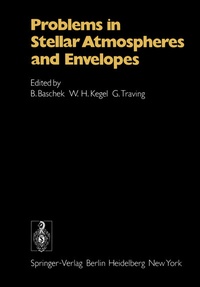
Problems in Stellar Atmospheres and Envelopes
Published on 19. January 2012
Book
Paperback/Softback
XX, 378 pages
978-3-642-80921-7 (ISBN)
Description
The Energy Flux of the Sun A Critical Discussion of Standard Values for the Solar Irradiance.- 1. Introduction.- 2. High Altitude Experiments.- 3. Discussion of the Results.- 4. Results of Measurements in the Far Ultraviolet.- References.- Model Stellar Atmospheres and Heavy Element Abundances.- 1. Introduction.- 2. The Temperature Stratification.- 3. The Gas and Electron Pressures.- 4. The Energy Distribution in the Continuum.- 5. The Line Absorption.- 6. The UBV Colors.- 7. The Temperature Calibrations.- 8. The Bolometric Correction.- 9. Convection and Metal Abundances.- References.- Properties and Problems of Helium Stars.- 1. Introduction.- 2. General Properties.- 3. Spectrum.- 4. Atmospheric Structure.- 5. Individual Obj ects.- 6. Abundances.- 7. Evolution of Model Helium Stars and the (g, Teff) -Diagram.- 8. Empirical (g, Teff) -Diagram.- 9. Variability and Atmospheric Motions.- 10. Conclusion.- References.- Abundance Anomalies in Early-Type Stars.- 1. Introduction.- 2. Problems Related to the Determination of Abundance Anomalies.- 3. The Population I Peculiar B Stars.- 4. The CNO Stars.- 5. The Population II B Stars.- 6. On the Origin of the Ap Phenomenon.- References.- A-Type Horizontal-Branch Stars.- 1. Introduction.- 2. Characteristics of A-Type Atmospheres.- 3. Observational Quantities.- 4. Field Horizontal-Branch Stars.- 5. Horizontal-Branch Stars in Globular Clusters.- 6. Chemical Composition and Mass-Luminosity Relation.- References.- White Dwarfs: Composition, Mass Budget and Galactic Evolution.- 1. Introduction.- 2. The Atmospheres of White Dwarfs.- 3. Composition of Interiors and Envelopes. White-Dwarf Formation.- 4. Interpretation of Atmospheric Composition Differences DA vs. Non-DA Stars.- 5. White Dwarfs: Mass Budget and Galactic Evolution.- References.- Herbig-Haro Objects and T Tauri Nebulae.- 1. Introduction.- 2. Observation of Herbig-Haro Obj ects.- 3. Theory and Theoretical Deductions from the Observations.- 4. The T Tauri Emission Nebula.- References.- Circumstellar Envelopes and Mass Loss of Red Giant Stars.- 1. Introduction.- 2. Circumstellar Absorption Lines.- 3. Dust and Molecules in the Circumstellar Envelopes of Red Giants.- 4. The Dependence of Mass Loss on Basic Stellar Parameters.- 5. Consequences for Stellar Evolution.- References.- Cosmic Masers.- 1. Introduction.- 2. Observational Characteristics.- 3. Radiative Transfer.- 4. Polarization.- 5. Pumping Mechanisms.- 6. Models.- 7. Discussion and Conclusion.- References.- Radio Emission from Stellar and Circumstellar Atmospheres.- 1. Introduction.- 2. Stellar Chromospheres and Coronas.- 3. Solar-Type Activity on Stars.- 4. Flare Stars: UV Cet et al.- 5. Radio Emission from Close Binaries.- 6. Radio Emission from Objects with Circumstellar Envelopes.- 7. X-Ray Stars as Radio Emitters.- 8. The Remaining Stellar Observations.- References.- Line Formation in Turbulent Media.- 1. Introduction.- 2. General Structure of the Problem.- 3. Line Formation in Discontinuous Velocity Fields.- 4. Line Formation in Media with Continuous Velocity Fields.- 5. Solution of the Generalized Transfer Equation.- 6. An Approach to NLTE Line Formation in Turbulent Media.- 7. Concluding Remarks.- References.- Index of Astronomical Objects.
More details
Edition
Softcover reprint of the original 1st ed. 1975
Language
English
Place of publication
Berlin
Germany
Publishing group
Springer Berlin
Target group
Professional and scholarly
Research
Illustrations
XX, 378 p.
Dimensions
Height: 244 mm
Width: 170 mm
Thickness: 22 mm
Weight
688 gr
ISBN-13
978-3-642-80921-7 (9783642809217)
DOI
10.1007/978-3-642-80919-4
Schweitzer Classification
Other editions
Additional editions
B. Baschek | W.H. Kegel | G. Traving
Problems in Stellar Atmospheres and Envelopes
Book
04/1975
Springer
€85.55
Article exhausted; check different version
Content
The Energy Flux of the Sun A Critical Discussion of Standard Values for the Solar Irradiance.- 1. Introduction.- 2. High Altitude Experiments.- 3. Discussion of the Results.- 4. Results of Measurements in the Far Ultraviolet.- References.- Model Stellar Atmospheres and Heavy Element Abundances.- 1. Introduction.- 2. The Temperature Stratification.- 3. The Gas and Electron Pressures.- 4. The Energy Distribution in the Continuum.- 5. The Line Absorption.- 6. The UBV Colors.- 7. The Temperature Calibrations.- 8. The Bolometric Correction.- 9. Convection and Metal Abundances.- References.- Properties and Problems of Helium Stars.- 1. Introduction.- 2. General Properties.- 3. Spectrum.- 4. Atmospheric Structure.- 5. Individual Obj ects.- 6. Abundances.- 7. Evolution of Model Helium Stars and the (g, Teff) -Diagram.- 8. Empirical (g, Teff) -Diagram.- 9. Variability and Atmospheric Motions.- 10. Conclusion.- References.- Abundance Anomalies in Early-Type Stars.- 1. Introduction.- 2. Problems Related to the Determination of Abundance Anomalies.- 3. The Population I Peculiar B Stars.- 4. The CNO Stars.- 5. The Population II B Stars.- 6. On the Origin of the Ap Phenomenon.- References.- A-Type Horizontal-Branch Stars.- 1. Introduction.- 2. Characteristics of A-Type Atmospheres.- 3. Observational Quantities.- 4. Field Horizontal-Branch Stars.- 5. Horizontal-Branch Stars in Globular Clusters.- 6. Chemical Composition and Mass-Luminosity Relation.- References.- White Dwarfs: Composition, Mass Budget and Galactic Evolution.- 1. Introduction.- 2. The Atmospheres of White Dwarfs.- 3. Composition of Interiors and Envelopes. White-Dwarf Formation.- 4. Interpretation of Atmospheric Composition Differences DA vs. Non-DA Stars.- 5. White Dwarfs: Mass Budget and Galactic Evolution.- References.- Herbig-Haro Objects and T Tauri Nebulae.- 1. Introduction.- 2. Observation of Herbig-Haro Obj ects.- 3. Theory and Theoretical Deductions from the Observations.- 4. The T Tauri Emission Nebula.- References.- Circumstellar Envelopes and Mass Loss of Red Giant Stars.- 1. Introduction.- 2. Circumstellar Absorption Lines.- 3. Dust and Molecules in the Circumstellar Envelopes of Red Giants.- 4. The Dependence of Mass Loss on Basic Stellar Parameters.- 5. Consequences for Stellar Evolution.- References.- Cosmic Masers.- 1. Introduction.- 2. Observational Characteristics.- 3. Radiative Transfer.- 4. Polarization.- 5. Pumping Mechanisms.- 6. Models.- 7. Discussion and Conclusion.- References.- Radio Emission from Stellar and Circumstellar Atmospheres.- 1. Introduction.- 2. Stellar Chromospheres and Coronas.- 3. Solar-Type Activity on Stars.- 4. Flare Stars: UV Cet et al.- 5. Radio Emission from Close Binaries.- 6. Radio Emission from Objects with Circumstellar Envelopes.- 7. X-Ray Stars as Radio Emitters.- 8. The Remaining Stellar Observations.- References.- Line Formation in Turbulent Media.- 1. Introduction.- 2. General Structure of the Problem.- 3. Line Formation in Discontinuous Velocity Fields.- 4. Line Formation in Media with Continuous Velocity Fields.- 5. Solution of the Generalized Transfer Equation.- 6. An Approach to NLTE Line Formation in Turbulent Media.- 7. Concluding Remarks.- References.- Index of Astronomical Objects.