

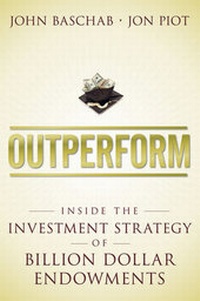
Outperform
Inside the Investment Strategy of Billion Dollar Endowments
1st Edition
Published on 27. August 2010
Book
Hardback
316 pages
978-0-470-44213-5 (ISBN)
Description
How individual investors can benefit from today's academic endowment investing strategies
Inside Billion-Dollar Endowments is an approachable, pragmatic guide for individual investors who want to use the proven investment strategies of large academic endowments. It provides a unique look into the world of endowment investing through extensive interviews with the CIOs of several dozen endowments, as well as other related endowment fund managers. Divided into three informative parts, the book provides specific practices and tools for replicating the investment decisions of top endowments, including asset allocation, fund evaluation, and alternative investment access, and highlights key differences between individual investors and institutional investors that must be taken into account when duplicating the strategies of top endowments. Inside Billion-Dollar Endowments not only describes why academic endowments consistently beat the market, but also translates these concepts into prescriptive advice for the individual investor.
John Baschab (Dallas, TX) was a cofounder of Impact Innovations Group, a $100 million business services company. Jon Piot (Dallas, TX) is a partner at Redpoint Capital Group, a private equity investment group. He was a cofounder and CEO of Impact Innovations Group.
Inside Billion-Dollar Endowments is an approachable, pragmatic guide for individual investors who want to use the proven investment strategies of large academic endowments. It provides a unique look into the world of endowment investing through extensive interviews with the CIOs of several dozen endowments, as well as other related endowment fund managers. Divided into three informative parts, the book provides specific practices and tools for replicating the investment decisions of top endowments, including asset allocation, fund evaluation, and alternative investment access, and highlights key differences between individual investors and institutional investors that must be taken into account when duplicating the strategies of top endowments. Inside Billion-Dollar Endowments not only describes why academic endowments consistently beat the market, but also translates these concepts into prescriptive advice for the individual investor.
John Baschab (Dallas, TX) was a cofounder of Impact Innovations Group, a $100 million business services company. Jon Piot (Dallas, TX) is a partner at Redpoint Capital Group, a private equity investment group. He was a cofounder and CEO of Impact Innovations Group.
More details
Edition
1., Auflage
Language
English
Place of publication
Chichester
United Kingdom
Publishing group
John Wiley and Sons Ltd
Target group
Professional and scholarly
Illustrations
Illustrations
Dimensions
Height: 23.6 cm
Width: 16.4 cm
Thickness: 2.9 cm
Weight
530 gr
ISBN-13
978-0-470-44213-5 (9780470442135)
Schweitzer Classification
Other editions
Additional editions
Book
09/2014
Wiley
€27.90
Shipment within 15-20 days
E-Book
08/2010
Wiley
€18.99
Available for download
E-Book
07/2010
Wiley
€18.99
Available for download
Persons
JOHN BASCHAB is Senior Vice President at Technisource, a leading business services company and a division of SFN Group. He was a cofounder and president of consulting services at Impact Innovations Group before successfully selling the company to Technisource in 2005. After receiving his MBA with honors from the University of Chicago Booth School of Business, Baschab worked as a technology consultant to Fortune 500 companies in the Chicago office of management consultancy Booz & Company. He began his career at AT&T following graduation from the University of Alabama. John is an adjunct professor at Southern Methodist University.
JON PIOT received a bachelor of science from Southern Methodist University and an MBA from Harvard Business School. He began his career at Andersen Consulting (now Accenture) and provided consulting services to Fortune 500 companies at management consultancy Booz-Allen Hamilton. As co-founder and CEO of Impact Innovations Group, Jon led the sale of Impact Innovations to Technisource in 2005 and was part of the executive team responsible for the sale of Technisource to Spherion Corp. He is currently the managing partner at Redpoint Capital, a private equity investment group, and an adjunct professor at Southern Methodist University.
JON PIOT received a bachelor of science from Southern Methodist University and an MBA from Harvard Business School. He began his career at Andersen Consulting (now Accenture) and provided consulting services to Fortune 500 companies at management consultancy Booz-Allen Hamilton. As co-founder and CEO of Impact Innovations Group, Jon led the sale of Impact Innovations to Technisource in 2005 and was part of the executive team responsible for the sale of Technisource to Spherion Corp. He is currently the managing partner at Redpoint Capital, a private equity investment group, and an adjunct professor at Southern Methodist University.
Content
Preface.
Acknowledgments.
Part I Academic Endowments.
Chapter 1 Academic Endowments Overview.
The World of Endowments.
History of Endowments.
Academic Endowments in the Context of the Investment World.
Large Academic Endowments.
Implications for Individual Investors.
Summary.
Notes.
Chapter 2 Historical Endowment Performance.
Investment Returns.
Asset Allocation.
Summary.
Notes.
Chapter 3 A Look Inside Endowments.
Endowments Are Different.
Endowments Define Asset Classes Broadly.
Endowments Achieved a One-time Sophistication Improvement.
Endowments Are Nimble.
Endowments are Evaluating Approaches to Managing Tail Risk.
Endowments also Manage Working Capital.
Endowments Manage Liquidity Carefully.
Endowments are Changing their Approach to Performance Management.
Performance Measurement.
Summary.
Part II Public Universities.
Chapter 4 Jonathan Hook, Chief Investment Officer, The Ohio State University.
Chapter 5 Guy Patton, President and CEO, The University of Oklahoma Foundation.
Chapter 6 Bruce Zimmerman, Chief Investment Officer, University of Texas Investment Management Company.
Part III Private Universities.
Chapter 7 James H.C. Walsh, Chief Investment Officer, Cornell University.
Chapter 8 Sally J. Staley, Chief Investment Officer, and Anjum Hussain, Director of Risk Management, Case Western Reserve University.
Chapter 9 Mary Cahill, Vice President of Investments and Chief Investment Officer, Emory University.
Chapter 10 Don Lindsey, Chief Investment Officer, George Washington University.
Chapter 11 Scott W. Wise, President Rice Management Company.
Chapter 12 James (Jim) Hille, Chief Investment Officer, Texas Christian University.
Chapter 13 Jeremy Crigler, Chief Investment Officer, Tulane University.
Part IV Advisors and Managers.
Chapter 14 Sandy Urie, President and Chief Executive Officer, and Celia Dallas, Co-Director of Research and Managing Director, Cambridge Associates.
Chapter 15 Lyn Hutton, Chief Investment Officer, Commonfund.
Chapter 16 Thruston Morton, CEO and Chief Investment Officer, Global Endowment Management.
Chapter 17 Mark W. Yusko, CEO and Chief Investment Officer, Morgan Creek Capital Management.
Chapter 18 Rafe de la Gueronniere, Principal, New Providence Asset Management.
Chapter 19 Bob Boldt, Chief Executive Officer, Boldt Ventures.
Conclusion Concepts for Individual Investors.
Lessons for Individual Investors.
Trends.
Predictions for Endowments.
Summary.
Glossary.
About the Authors.
Index.
Acknowledgments.
Part I Academic Endowments.
Chapter 1 Academic Endowments Overview.
The World of Endowments.
History of Endowments.
Academic Endowments in the Context of the Investment World.
Large Academic Endowments.
Implications for Individual Investors.
Summary.
Notes.
Chapter 2 Historical Endowment Performance.
Investment Returns.
Asset Allocation.
Summary.
Notes.
Chapter 3 A Look Inside Endowments.
Endowments Are Different.
Endowments Define Asset Classes Broadly.
Endowments Achieved a One-time Sophistication Improvement.
Endowments Are Nimble.
Endowments are Evaluating Approaches to Managing Tail Risk.
Endowments also Manage Working Capital.
Endowments Manage Liquidity Carefully.
Endowments are Changing their Approach to Performance Management.
Performance Measurement.
Summary.
Part II Public Universities.
Chapter 4 Jonathan Hook, Chief Investment Officer, The Ohio State University.
Chapter 5 Guy Patton, President and CEO, The University of Oklahoma Foundation.
Chapter 6 Bruce Zimmerman, Chief Investment Officer, University of Texas Investment Management Company.
Part III Private Universities.
Chapter 7 James H.C. Walsh, Chief Investment Officer, Cornell University.
Chapter 8 Sally J. Staley, Chief Investment Officer, and Anjum Hussain, Director of Risk Management, Case Western Reserve University.
Chapter 9 Mary Cahill, Vice President of Investments and Chief Investment Officer, Emory University.
Chapter 10 Don Lindsey, Chief Investment Officer, George Washington University.
Chapter 11 Scott W. Wise, President Rice Management Company.
Chapter 12 James (Jim) Hille, Chief Investment Officer, Texas Christian University.
Chapter 13 Jeremy Crigler, Chief Investment Officer, Tulane University.
Part IV Advisors and Managers.
Chapter 14 Sandy Urie, President and Chief Executive Officer, and Celia Dallas, Co-Director of Research and Managing Director, Cambridge Associates.
Chapter 15 Lyn Hutton, Chief Investment Officer, Commonfund.
Chapter 16 Thruston Morton, CEO and Chief Investment Officer, Global Endowment Management.
Chapter 17 Mark W. Yusko, CEO and Chief Investment Officer, Morgan Creek Capital Management.
Chapter 18 Rafe de la Gueronniere, Principal, New Providence Asset Management.
Chapter 19 Bob Boldt, Chief Executive Officer, Boldt Ventures.
Conclusion Concepts for Individual Investors.
Lessons for Individual Investors.
Trends.
Predictions for Endowments.
Summary.
Glossary.
About the Authors.
Index.